
Most parents assume schools are prepared for fires, weather drills, and lockdown situations. But when it comes to sudden cardiac emergencies in teens, many communities may not be as ready as we think.
While awareness of youth cardiac arrest is growing, preparedness still falls short. Nearly half of parents say they’ve heard of sudden cardiac arrest in young people, yet only about half know whether their teen’s school even has an automated external defibrillator (AED) on campus. Even fewer feel confident that staff could use it properly in an emergency.
Polling on school and family preparedness for teen cardiac arrest suggests that many districts lack comprehensive response plans, regular training, or consistent communication with parents.
When Seconds Matter
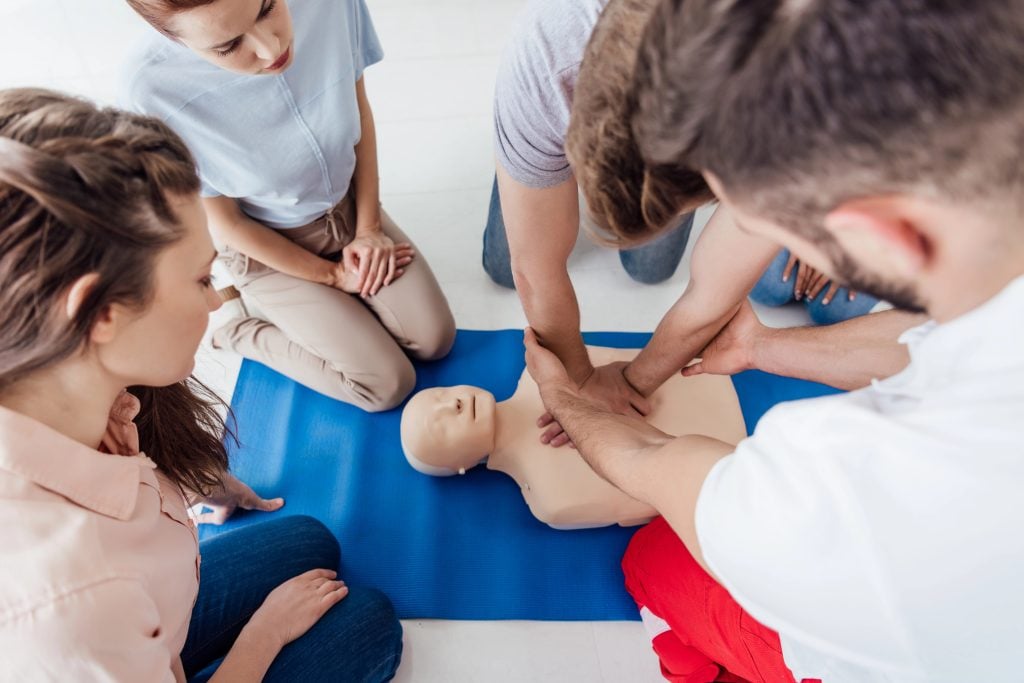
Sudden cardiac arrest is rare in children and teens, but when it happens, survival depends on immediate action. According to the Chain of Survival model used in emergency medicine, early recognition, rapid CPR, prompt AED use, and fast emergency response are critical steps that must happen within minutes.
Brain injury can begin within three to five minutes after the heart stops, often before emergency medical services arrive. That’s why access to AEDs and trained responders is so important.
The University of Michigan recently shared a video featuring Emily Orta, who, at 14, collapsed from an undetected heart condition. Emily survived thanks to CPR, an AED and care at U-M Health C.S. Mott Children’s Hospital and she is now a mother of two young boys.
While Emily was lucky to receive quick support from a local medical team, not all cardiac events result in a positive outcome, and many of those negative outcomes comes down to a lack of training and screening.
Parents Support Screening, But Training Is Lacking

Many parents say they support better screening and prevention efforts. Yet only a small percentage of teens receive cardiac evaluations beyond routine sports physicals. Even fewer have received CPR or AED training themselves.
Medical experts emphasize that some dangerous heart conditions show no obvious warning signs. That makes preparation — not prediction — the most reliable safeguard.
The American Heart Association outlines what schools should have in place in its guidance on cardiac emergency planning for schools. Recommended measures include:
- A written Cardiac Emergency Response Plan
- Clearly marked and accessible AEDs
- Regular CPR and AED training for staff
- Practice drills to rehearse emergency response
Many campuses technically have AEDs. But without consistent training and clear procedures, equipment alone may not be enough.
Policy Gaps Leave Families Vulnerable

Some states are pushing for stronger protections. Proposed legislation such as the Smart Heart Act would require AEDs in schools, formal emergency response planning, and regular training so preparedness doesn’t depend on zip code.
Advocates argue that cardiac preparedness should be treated the same way schools treat fire safety: not optional, not assumed, and not reactive.
Questions Every Parent Should Ask
If you have a teen, especially one involved in athletics, these are reasonable questions to bring to your school district:
- Does our school have a formal Cardiac Emergency Response Plan?
- Where are AEDs located, and are they accessible during after-school activities?
- How often are staff trained in CPR and AED use?
- Are students offered CPR certification opportunities?
- When was the last cardiac emergency drill conducted?
Sudden cardiac arrest in teens is uncommon. But when it happens, preparation determines survival.
Awareness is growing. The next step is accountability.