

The details may vary, but most parents have a similar story.
It goes something like, “I walked into the room and asked my three-year-old what he was doing. He yelled ‘Nothing!’ and hid his hands behind his back, but I had already spotted the open container of [diaper cream/my favorite nail polish/something else messy and gooey] all over him, and the room.”
The next part of the story has two elements: the horror of cleaning up whatever specific mess this was, and the parents’ terror that they have raised a liar. The good news is that it hasn’t happened, and there’s still plenty of time to prevent it.
Lying And Theory Of Mind
When my firstborn lied for the first time, I was shocked and horrified. By the time my youngest kids told their first (real) lies, I celebrated that they had reached a developmental stage that allowed them to understand the concepts necessary to tell a lie.
No, I don’t want my kids to tell lies, and I’m actively teaching them to be honest. But the very ability to lie is connected to an understanding of reality and of other people as separate entities who can have different understandings of it. That is huge.
Theory of mind is the term we apply to the ability to understand that other people can hold thoughts, beliefs, and feelings different from one’s own.
If you and I look at the same block and I say it’s orange and you say it’s red, theory of mind is the skill that allows us both to understand that the other is not necessarily lying or even ‘wrong,’ just seeing things differently.
Or, to put it another way, it’s a tool necessary for skills including empathy, functional communication, and deception.
What Happens When Your Child Lies?
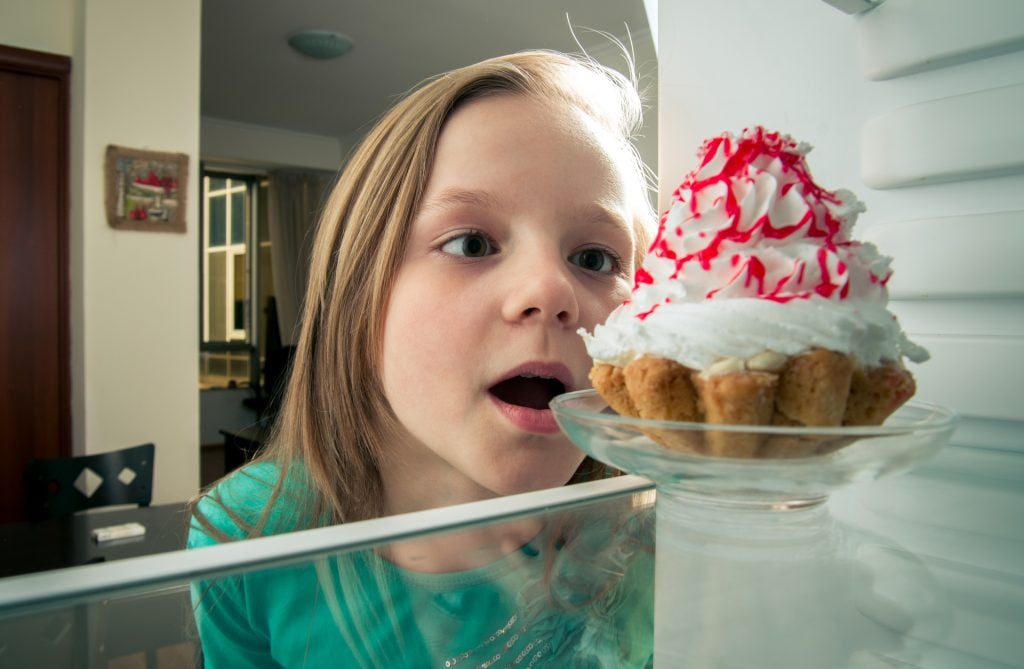
If you ask your three-year-old whether he snuck a donut, and through a mouthful of crumbs, he says, “No,” he’s not necessarily lying, at least in the sense of deliberate deception.
Sure, he said something that’s demonstrably not true, and he probably said it because he didn’t want to get in trouble, but he’s likely not going through a thought process that includes, “Mom will get angry if she knows I took the donut, so I should convince her I didn’t.” Instead, it’s more like an instinct to say the word that he believes his mommy wants to hear, the one that he is pretty sure is the ‘right answer’ (as opposed to the true answer) to her question.
At some point, he realizes that it’s possible for Mommy to think that his boots are by the door even when he can see them in the living room floor, or that Mommy can believe he hasn’t had a cookie yet when he’s had two, or that Mommy can think it’s too wet to play outside while he thinks it isn’t.
This is a huge, stunning leap in development: Mommy is a separate person, and other people can think different things, even wrong things.
Knowing this, he can take further steps, like showing Mommy where the boots are, or tricking Mommy into giving him a third cookie.
Deception Is A Developed Skill

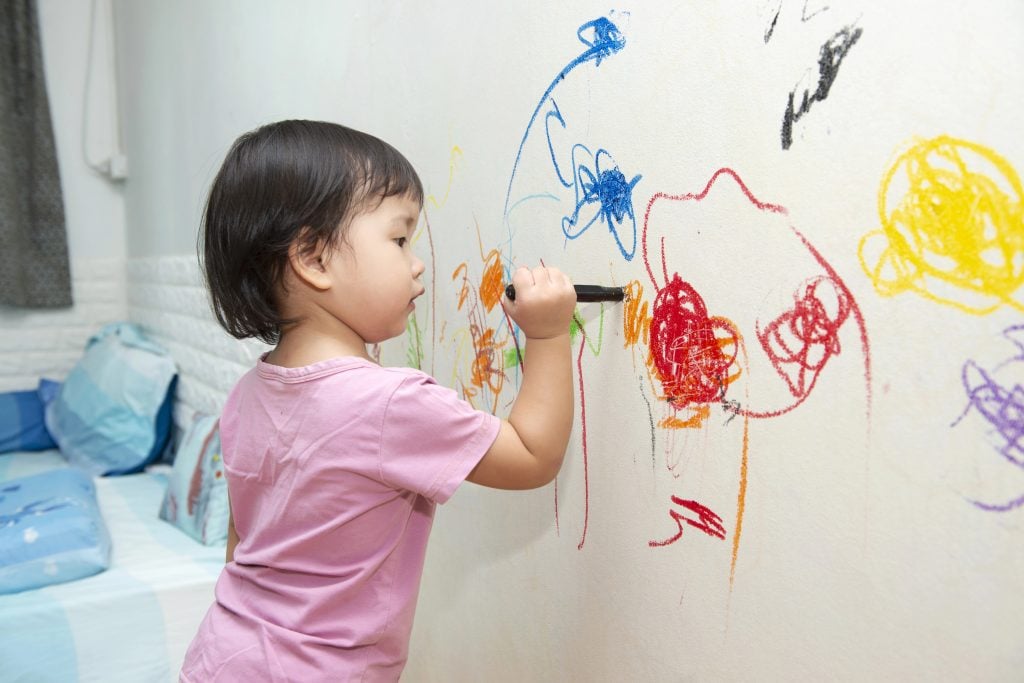
Now your child can learn how to use this skill for deception. He can assure you he’s not the one who used the markers on the kitchen wall, and that he hasn’t had any ice cream today, and that the cat told him he could play with her ball. He can also use it for surprises and to better understand others’ feelings.
Theory of mind is a skill kids develop, usually between ages 3 and 5, and it can be taught. One group of researchers tested three-year-olds who didn’t yet have the skill of intentionally lying to earn a prize. According to Psychological Science, they then trained these kids on theory-of-mind tasks.
“The theory-of-mind training included the standard false-contents task, in which children were shown a pencil box and asked what they thought was inside. When it was revealed that the box didn’t actually contain pencils, they were asked to reason about what other people would think was in the box. The goal of the training was to teach kids that people can know and believe different things — that is, even though the child has learned the true contents of the box, someone else would probably believe that the box contained pencils.”
At the end of the training, these kids were given another opportunity to earn a prize and now understood how to use deception to win!
Okay, So Learning To Lie Is A Milestone — Now What?
Learning to lie is an exciting milestone because it shows us what it reveals about our child’s developing mind. However, that doesn’t mean we’re actually happy about them lying (especially as they get better at it).
However, when we overreact with a punishment or scolding, when our kids don’t really understand why lying is wrong or off-limits, they don’t learn that lying is the problem. They just learn that their parents get upset when they say the wrong words, which can make them struggle even more to give “right” answers (which, again, differ from “true” answers).
However, the American Association of Child & Adolescent Psychiatry (AACAP) explains that early childhood lying is usually not a problem. It’s generally a way of interacting with their world, experimenting with their imagination, and practicing their theory of mind skills.
“Young children (ages 4-5) often make up stories and tell tall tales. This is normal activity because they enjoy hearing stories and making up stories for fun. These young children may blur the distinction between reality and fantasy.”
When lies become self-serving (such as to avoid responsibility for a behavior or a chore), AACAP recommends talking to your child about the importance of honesty and trust.
Habitual lying beyond young childhood may call for a more serious response, but while they’re little, parents can emphasize honesty while appreciating that developing brain.
