

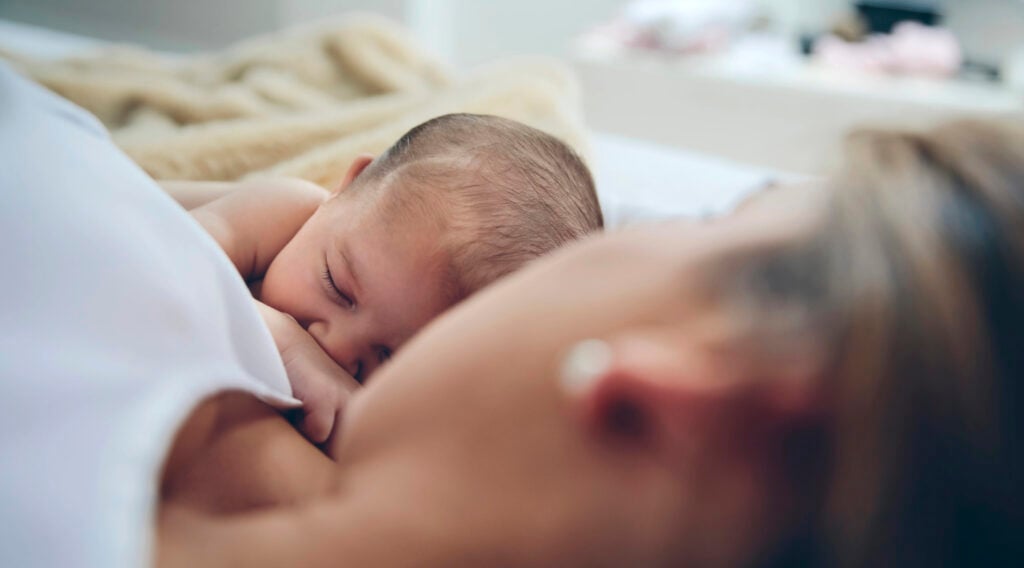
Heidi Montag’s frank admission that sharing a bed with her son was “awful” is resonating with exhausted parents everywhere, and for good reason. The former Hills star made the confession during the April 29 episode of The Squeeze podcast, hosted by Taylor Lautner and his wife, Taylor, and her words landed squarely in the middle of one of parenting’s most quietly universal struggles.
Montag, 39, told listeners that a sleep training program ultimately turned things around for her family. “Taking Cara Babies changed my life. I did cosleeping with my older son [Gunner]… and he just started being a good sleeper. And he’s 8,” Montag said on the podcast, crediting the program with helping her son develop independent sleep habits. Her candor is rare in celebrity parenting conversations, where the topic of cosleeping tends to attract swift and harsh public judgment.
More Common Than Anyone Admits
What makes Montag’s admission interesting is not that she co-slept, but that she talked about it. Cosleeping is widely practiced but dramatically underreported, particularly in Western countries where cultural norms push strongly toward children sleeping alone.
Sarah Blunden, Associate Professor and Head of Pediatric Sleep Research at CQUniversity Australia, writes about whether there is such a thing as being too old to cosleep with your child. She notes that global figures tell a revealing story: roughly a quarter of pre-adolescents in China share a bed with a parent, while rates climb even higher in Brazil and Italy, where school-aged children cosleep at rates approaching half the population in some studies.
In the United States, the numbers are harder to pin down, but surveys suggest the practice is far from rare. Data cited in Psychology Today indicate that nearly half of mothers with children ages 8 to 12 allow them into bed on occasion, and roughly one in eight do so every single night.
Blunden, who directs a clinic specializing in sleep difficulties in children from birth to 18 years, offered a perspective that challenges the cultural stigma head-on, writes in The Conversation: “While we need to be mindful of safety and SIDS when cosleeping with infants, there is no problem with cosleeping with older children in and of itself.”
That view stands in contrast to the experience many parents describe — one where cosleeping begins as a temporary fix and quietly becomes a year-long arrangement. As one anonymous mother told Psychology Today, describing how her 12-year-old came to sleep in her bed nightly, “It sort of crept up on us, and here we are.”
When Anxiety Drives The Bedtime Routine
One of the most significant factors pushing children into their parents’ beds is anxiety. A peer-reviewed study published in PMC recruited 113 children aged 6 to 12, dividing them into a group of 75 diagnosed with generalized anxiety disorder and a comparison group of 38 healthy controls, then tracked their cosleeping behaviors and objective sleep patterns over one week of actigraphy.
The study’s authors, led by Cara A. Palmer, concluded: “Cosleeping is highly common in anxious school-aged children, with more than 1 in 3 found to cosleep at least sometimes (2–4 times a week).”
The research also found that cosleeping in anxious children was associated with delayed sleep timing and greater night-to-night variability in sleep duration — meaning these children were not only sleeping in their parents’ beds more often, but also sleeping less consistently overall. The study noted that children with anxiety disorders are frequently referred for treatment specifically because they cannot sleep independently, and that parents accommodating cosleeping requests is among the most common responses to a child’s nighttime distress.
This dynamic helps explain why so many families find themselves in Montag’s position: what begins as a compassionate response to a struggling child can gradually reshape the entire household’s sleep architecture.
What Happens To Sleep Quality Over Time
The long-term effects of cosleeping are where researchers begin to diverge most sharply. A Psychology Today analysis of chronic cosleeping with older children found that the consequences can extend well beyond tired mornings, with potential links to memory problems, persistent fatigue, depression, and weight gain in both children and adults. The piece also pointed to rising childhood anxiety — fueled by higher divorce rates, overscheduling, and constant digital connectivity — as a key driver of the trend, arguing that many children today simply have not been given the tools to manage bedtime alone.
For infants, the picture is more nuanced. A 2024 cross-sectional study of 276 children published in PMC found that cosleeping practiced during the first year of life carries real benefits, particularly in supporting successful breastfeeding, but also concluded that cosleeping during the first year of life appears to be associated with poorer sleep patterns in young preschoolers.
The researchers applied a validated sleep questionnaire alongside latent class analysis, which sorted participants into two qualitatively distinct groups; the poorer-quality cluster showed a meaningful association with early cosleeping history. Their recommendation was that routine pediatric visits should help parents weigh the early benefits of cosleeping against the longer-term goal of building independent sleep skills.
Sleep Training As A Path Forward
For families ready to make a change, structured sleep training programs have become an increasingly popular tool. Montag’s endorsement of Taking Cara Babies reflects a broader trend of parents turning to evidence-informed frameworks to help children build independent sleep habits. Child psychologists and pediatricians are also increasingly offering behavioral interventions that involve gradually withdrawing parental presence at bedtime, replacing it with nurturing attention before and after sleep rather than during sleep.
The research supports a patient, supportive approach over abrupt changes. Studies suggest that children who are gently guided toward solo sleeping tend to develop greater resilience over time, and that cosleeping does not permanently prevent a child from eventually sleeping independently. As children grow and their capacity for self-regulation increases, the need for parental presence at bedtime typically decreases on its own.
What Heidi Montag did on that podcast — name the struggle, describe the exhaustion, and share what actually helped- is something most parents quietly wish they could do without fear of judgment.
The gap between what families actually do at bedtime and what they feel comfortable admitting publicly is enormous, leaving many parents navigating a genuinely complex issue without honest community support. When a celebrity puts a real face on that experience, it creates space for the broader, more useful conversation that pediatric sleep researchers have been trying to have for years.

