
Growing up in the ’90s and early 2000s, bullying was something that typically started and ended at school. The rude words or threats didn’t follow a kid home because cell phones and social media weren’t as mainstream as they are today. Kids today, however, are constantly faced with harsh words and dangers from their bullies. The menacing threats can feel constant, and it’s a lot to emotionally comprehend as a child or teen.
Not every child tells their parents they’re being bullied. On the contrary, 60% of kids stay silent on the matter and don’t tell their parents. There are countless reasons why kids don’t tell their parents that something upsetting is happening to them. It could be embarrassment, fear of being blamed, worry that nothing will come from seeking help, etc…
Knowing that more than half of kids and teens don’t go to their parents when they’re being bullied is alarming and something to prepare for. With the help of experts in the field of bullying, I have some wonderful examples of how parents can talk to their child about what bullying is, if they’re being bullied, and how to repair the damage.
First Things First: What Is Bullying?
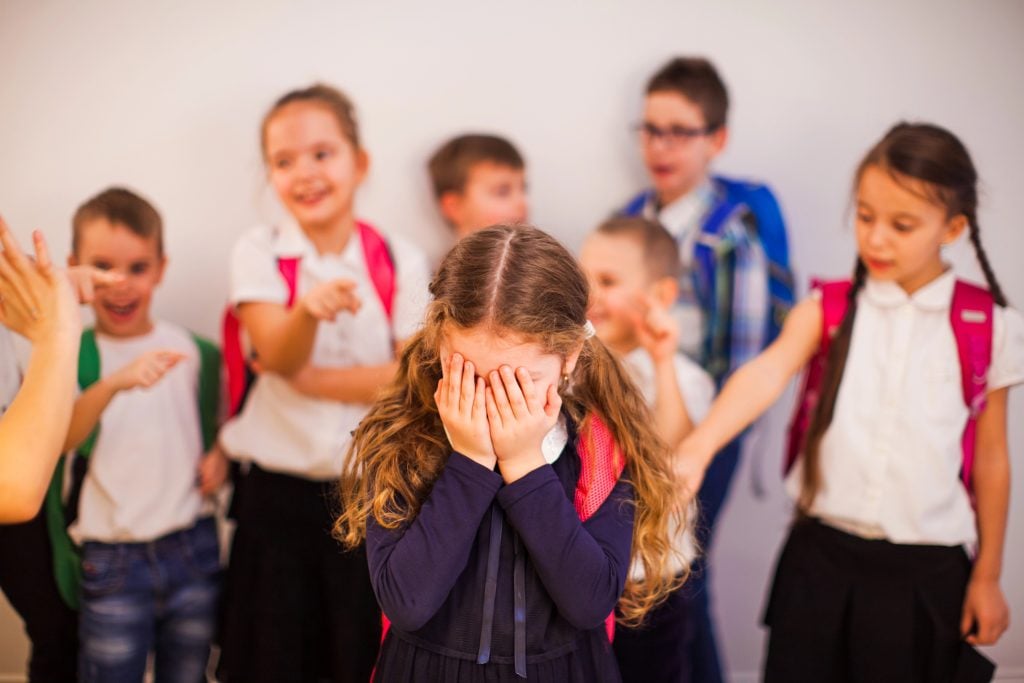
The official government site for bullying defines the heinous act as “Bullying is unwanted, aggressive behavior among school-aged children that involves a real or perceived power imbalance.” Oftentimes, bullying continues and is rarely a one-time encounter. Countless dangers can stem from bullying.
- Those who are bullied may lose confidence, keep secrets from safe adults, skip school or activities where they’re being bullied, start bullying others as a way to release the pain, or self-harm (to name a few).
- The imbalance of power and repetition also compartmentalizes bullying.
Unfortunately, bullying takes many forms: Verbal, Physical, and Social.
Verbal Bullying: Verbal bullying is saying or writing cruel things about another person. This can be done in person, through text or a phone call, and can involve name-calling or taunting.
Physical Bullying: When things turn physical, bullying is at its worst. Hitting, kicking, spitting, tripping, and pushing can all be classified as physical bullying.
Social Bullying: Social bullying takes place in public social settings, such as in class or at practice. Leaving someone out of an activity on purpose, spreading rumors, or publicly embarrassing someone are all considered social bullying.
There are different classifications and departments for bullying, but the main thing that stays true: bullying is unjustifiable, cruel, and life-altering. With so many forms, experts offer their insights into how to talk to your child about bullying in general.
Don’t Wait To Have The Bullying Discussion

The official government website for bullying suggests having the bullying talk sooner rather than later. You may think your child is too young to understand the concept of bullying or not old enough to face bullying, but it’s starting younger and younger.
The National Center for Education Statistics shared that 19% of kids claimed they were bullied between the ages of 12 and 18 years old. Knowing that those prepubescent years are most susceptible to bullying, it’s wise to have the conversation before they reach middle school.
Experts reiterate that your child is more likely to come clean about being bullied if you’ve had discussions around the topic before, and if they know their parents are a safe space.
What the Experts from Stop Bullying Suggests: “Parents create trust with children by initiating open, honest discussions. These dialogues provide opportunities to communicate values and learn about your child’s experience. They make it easier for your children to turn to you if they witness or experience bullying.”
Have thoughtful conversations with your child from a young age to build trust and good listening practices. Ask about their experiences, who their friends are, and what the best or worst parts of their days were. Validate their feelings, ask whether they know what bullying is, whether they’ve ever witnessed bullying, and how it makes them or those around them feel.
Become a safe space for your child and be involved in their day-to-day to notice changes in attitudes or behaviors.
Create ‘Inclusion Culture’
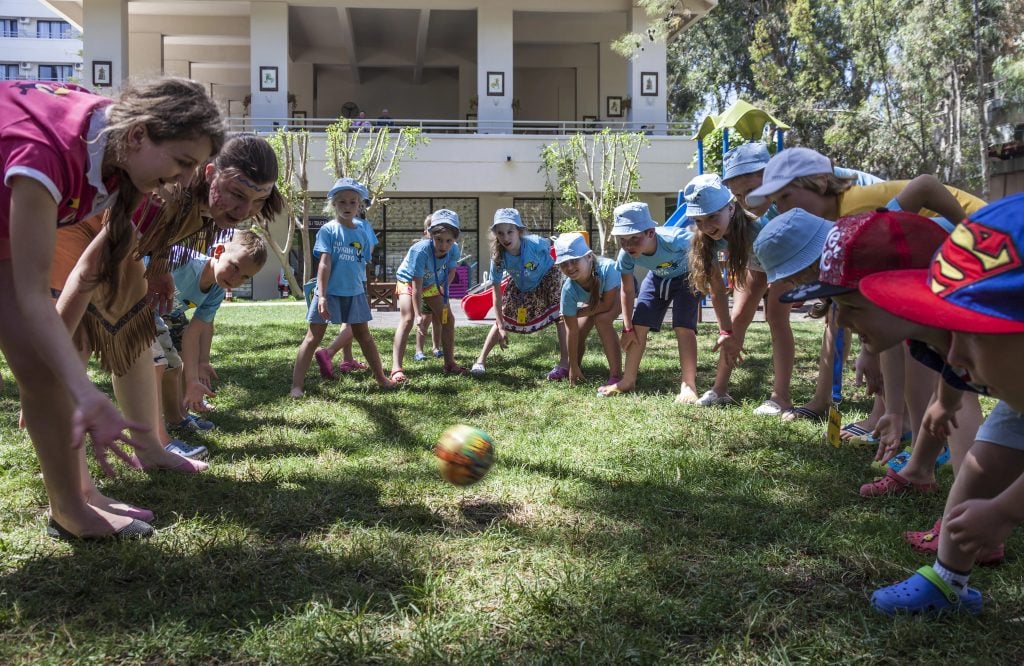
Melissa Ann Faith, PhD, from Johns Hopkins Medicine, shares insights on what parents can teach their children to conquer bullying. One of the most important bullets was teaching children about inclusion.
Starting at a young age, teach your child about inclusion in social settings, what it is, and what it feels like when they’re not included. This is a great way to help your kids understand their emotions and comprehend how someone else would feel in dark times. Share some acceptable social behaviors and walk through reasonable scenarios.
On the flip side, talk about situations that are not okay. More importantly, why they’re not acceptable and how those situations can make a child feel. This helps children learn about inclusion and the ramifications of not feeling included.
What Melissa Ann Faith, PhD, Suggests: “As a parent, you can reach out to the parents of a friend your child trusts and encourage them to help and have conversations with their child about what it means to leave someone out and what things they can do when they see someone being excluded from activities.”
Be involved in your child’s life and be empathetic to their points of view. Getting involved at school or in their extracurricular activities is also a great way to see your child’s behavior in a social setting. You can use examples from what you observed to discuss inclusion, bullying, and manners.
Teach Your Child To Be Assertive And Confident

Mental Health America offered tips to parents of children who have been bullied, and one of the most substantial is teach your children about confidence. Whether they’re being bullied or you’re starting the conversation about being assertive and strong while they’re young, talking about it can go a long way.
Start teaching your child about confidence at a young age. Boost their trust and confidence by reiterating the amazing things they did that day. Affirm how strong and capable they are in vast settings. Once they catch on to how they should confidently speak to themselves, they’ll soon believe it. In theory, if bullied, they should be confident in their self-worth to ignore and report bullying remarks.
More importantly, always note that although they are confident and strong, this doesn’t mean they need to enforce physical retaliation. Remind them to walk away, report their bully’s behavior to a trusted adult, and ignore the insults.
What Experts from Mental Health America Suggest: “Encourage your children to express their feelings clearly, say no when they feel uncomfortable or pressured, stand up for themselves without fighting, and walk away in dangerous situations.”
Editorial Note: It’s important to note that while you may have taught your child to be confident and assertive in bullying situations, it doesn’t necessarily mean they’ll put what they’ve been taught into practice. Despite having a strong child at home, their personalities or reactions may be softer elsewhere. Always be vigilant and empathetic regarding bullying.
Are There Ways To Repair A Bullied Child Once It’s Started?

With almost 20% of today’s youth being bullied between the ages of 12 and 18, your child may either face a bully or see bullying happening. If you have a suspicion that your child is being bullied, or your child was brave enough to tell you they’re being bullied, there are ways to heal after trauma.
Those at the Child Therapy Center offered their insight on supporting your child. As a parent or guardian, your first instinct is to protect your child and to rectify what the bully or the bully’s parents have done. However, it’s wise to take some deep breaths, ask important questions, and create a safe, open space for your child before emotionally reacting.
- Understand what your child has experienced.
- Acknowledge where your child needs extra support (school, attendance, anger issues, anxiety, withdrawing from social circles, etc…)
- Create a safe atmosphere.
- Work with your child’s school or therapist.
- Support their emotions through recovery.
- Understand when to seek professional help.
What Experts from Child Therapy Centers Suggest: “Bullying can leave a child’s nervous system stuck in fight, flight, or freeze. Gentle sensory-regulating activities—like deep breathing, rhythmic movement, or cozy, grounding textures—help their body return to balance.”
Teach your child about “body signals” and what does or doesn’t feel right. These moments can help children in the future if additional bullying continues. Continue to be a safe and patient person during their time of need, supporting them emotionally and physically. If bullying has reached a dangerous spot, text “HOME” or “4hope” to 741741 for the Crisis Text Hotline, call the school, or call a professional.
What If Your Child Is The Bully?

If you think or know that your child is bullying others, take a deep breath. It doesn’t necessarily mean that you’re a bad parent or that your child is a bad kid. However, there is a deeper reason they’re lashing out, and it’s vital to understand it.
Why Kids Bully:
- Seeking attention.
- Trying to fit in.
- They’re bullied or abused themselves.
- A desire for power.
- Low self-esteem.
- Emotional regulation issues.
If you learn that your child is bullying others, you have to do your homework to find out why they’re behaving this way. Have an open dialogue with them by asking questions and listening intently. Coming off too strong could have the opposite effect of what you want, so try not to judge too harshly.
Communicating and learning more about their friends, classes, fears, and dreams could lend huge insight into why they bully others. Learning the root of the issue can lead to a comprehensive healing journey.
Dr. James Howard of the Child Mind Institute shared advice for parents of a bully.
What Dr. James Howard Suggests: “Have lots of different solutions to various issues that are likely to come up, and give clear examples about how you expect your child to respond.” He continues, “I would try to frame it as friendship behavior, rather than, ‘Don’t be a bully.’ Kids respond better to being told what to do than what not to do.”
Encourage your child to see the situation from another kid’s shoes and to imagine how they’re feeling. Look inward and help them with empathy for others.
Bullying is a dark and nerve-wracking conversation. Kids are afraid to tell their parents they’re being bullied for fear of the outcome, and parents are nervous to talk to their kids about bullying for fear of learning the truth. However, the biggest takeaways are clear communication from a young age, being a safe place for your child, and being involved in their lives to find root issues if there are any. ssss
If you or someone you know is being bullied, it’s important to call or text 988 to reach the Suicide and Crisis hotline to speak to counselors centered on bullying.