
Do you remember what recess was like when you were a kid? Maybe it meant going outside, spending time with friends, or jumping into a pickup soccer game before heading back to class.” But in many schools today, recess is becoming increasingly rare.
The AAP just released new guidelines for recess, and they’re an eye-opening reminder for parents and educators alike.
New Guidelines For Recess
The new AAP guidelines focus on two key issues: time for recess and access to it.
The guidelines recommend that all students in grades K–12 have at least 20 minutes of recess during the school day. They also emphasize that recess should never be withheld as punishment for behavior issues.
The guidelines also note that in middle and high school, recess often shifts into unstructured social time spent on devices rather than active play.
The AAP encourages schools to prioritize movement, outdoor time, and play, even for older students. Older students still benefit from recess that includes physical activity, time outdoors, and opportunities to relax or socialize away from screens.
The Benefits Of Recess Are Real
We know from experience that recess plays a crucial role in children’s development. It’s not just about the physical activity, although the physical benefits are important.
With childhood obesity rates rising and physical fitness declining, recess matters now more than ever. Children need enough time for physical play—to run, climb, jump, and move their bodies during the school day.
Recess Helps Kids Build Social Skills
In addition to its physical benefits, recess supports children’s social and emotional development. During recess, children practice emotional regulation, cooperation, problem-solving, and conflict resolution.
Younger children may still need adult support as they learn to navigate conflicts with peers. As children mature, they benefit from more independence and more opportunities to interact meaningfully with classmates and friends.
Children Need A Mental Break
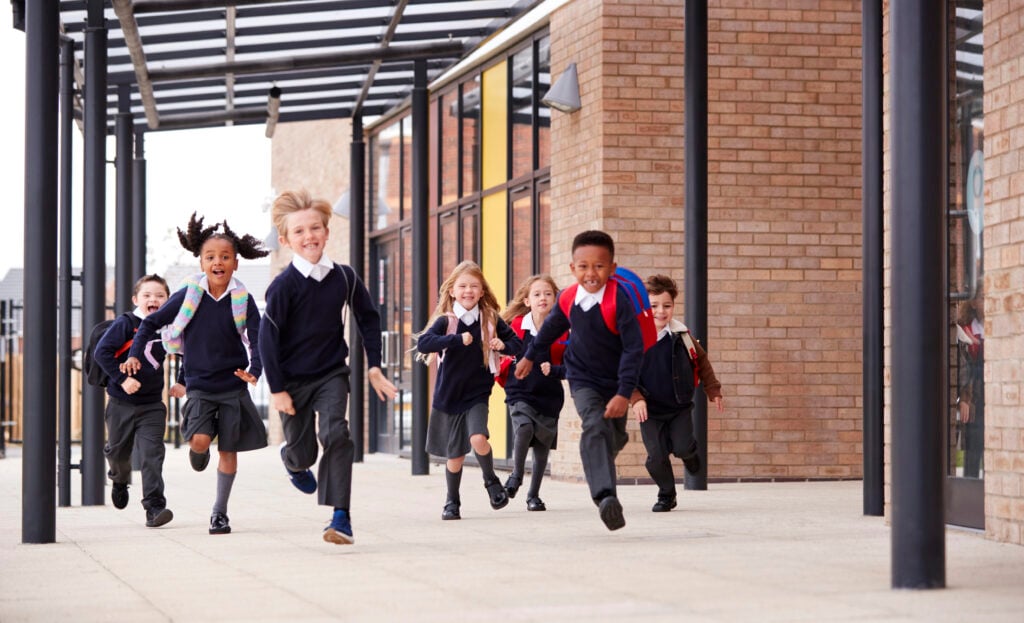
What’s often overlooked when schools reduce recess to make room for more instructional time is that they may be unintentionally limiting students’ ability to learn effectively.
The AAP describes recess as a form of ‘wakeful rest’—a break from focused cognitive activity. This allows children’s brains to reset and to consolidate the information they’ve learned.
This matters because without periods of wakeful rest, children may struggle to retain and apply what they learn.
As the AAP document points out, recess can provide an offline brain break, so their brains can really make sense of the information they’re learning.
Research supports this, showing that breaks from cognitive demands improve attention, information processing, and long-term memory.
Recess Needs To Be Unstructured
Another important point that the AAP guidelines highlight is that recess is different from physical education (PE). During PE, there’s a guided curriculum that helps kids focus on a sport or specific activity.
In contrast, recess needs to be unstructured and provide kids the freedom and autonomy to play as they want (within safety guidelines, of course). Children benefit from this kind of open-ended play because it encourages creativity, problem-solving, and self-regulation.
The AAP makes an important distinction: recess should not become another version of PE.
As parents, it’s helpful to read these new AAP guidelines because they’re about more than just recess. It’s about the value of play in general during childhood.
If your school is reducing recess, this would be an important resource to advocate for your child’s need for movement, play, and social connection during the school day.