


A mother in England said her family dog saved her baby’s life. The dog whimpered, barked and wouldn’t leave the child, which pushed the mom to get him checked. Doctors then found his heart was racing at 280 beats per minute.
Kim Reynolds told ABC News in a November 18 report that the family’s pet Doberman, named Saraya, has always loved being close to her baby son, Alexander. But when Alexander was 5 months old, the dog’s behavior changed. She became more intense and would not leave his side.
“She’s always kind of a Velcro dog and a bit clingy, but nothing like she did that day,” Kim said, per the outlet. “She clearly knew something before I did,” the mother added.
Doctors Found a Racing Heart
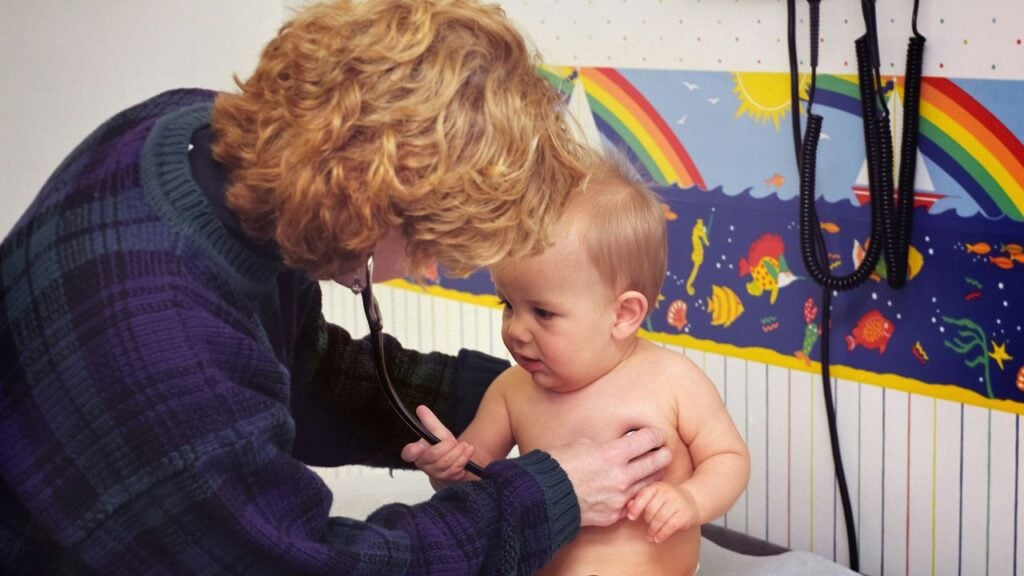
Later that day, Alexander woke from a nap and was crying hysterically. Kim took him to the hospital for an examination. There, doctors found his heart rate was 280 beats per minute. This is double what it should be for a baby his age.
Doctors first put the baby in an ice bath to bring his heart rate down, Kim said, per Good Morning America.
It was not enough. Alexander eventually needed three doses of medication given through an IV before his heart rate came down.
Doctors Diagnosed a Rare Heart Condition
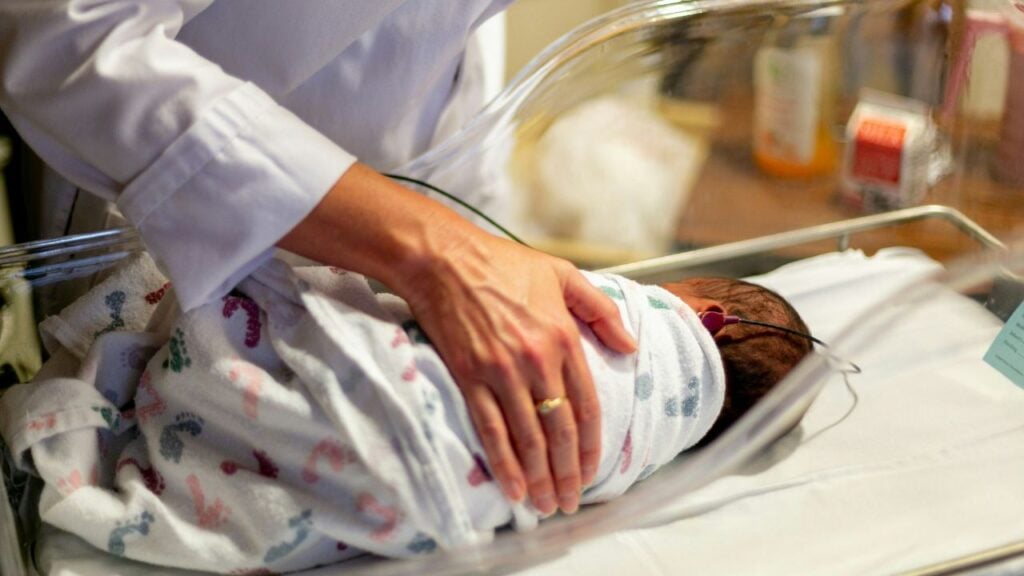
Doctors later diagnosed Alexander with Wolff-Parkinson-White (WPW) syndrome. It is a relatively rare congenital heart condition, which means a baby is born with it.
The Mayo Clinic describes the condition as “an extra pathway for signals to travel between the heart’s upper and lower chambers.” The result is a fast heartbeat. This means the heart has to work harder than it should.
Younger children and adults may have chest pain, feel anxious, struggle to breathe or feel dizzy. Babies can show it in other ways. They may be restless, eat poorly or be cranky and their skin and nails may look discolored. Many of those signs are easy to mistake for an ordinary fussy day.
This is what worried Kim most when she looked back. She said things could have gone very differently if the dog had not made her stop and pay attention to her son.
“Had I just thought he was being a fussy baby, put him in his cot and walked away, I don’t like to think what would have happened. I had her behavior in the back of my mind,” Kim said.
Saraya, the Dog, Raised the Alarm Again

Alexander is now 7 months old. He is doing much better and has started to crawl.
Saraya has also alerted the family to a second health problem. Once again, she refused to leave his side. This time, Kim took the hint and brought him to the doctor. Alexander was diagnosed with tonsillitis.
The mother said the dog hasn’t changed her habits since: “Every opportunity, she will be next to him.”

