
Charlotte's Web (1973)
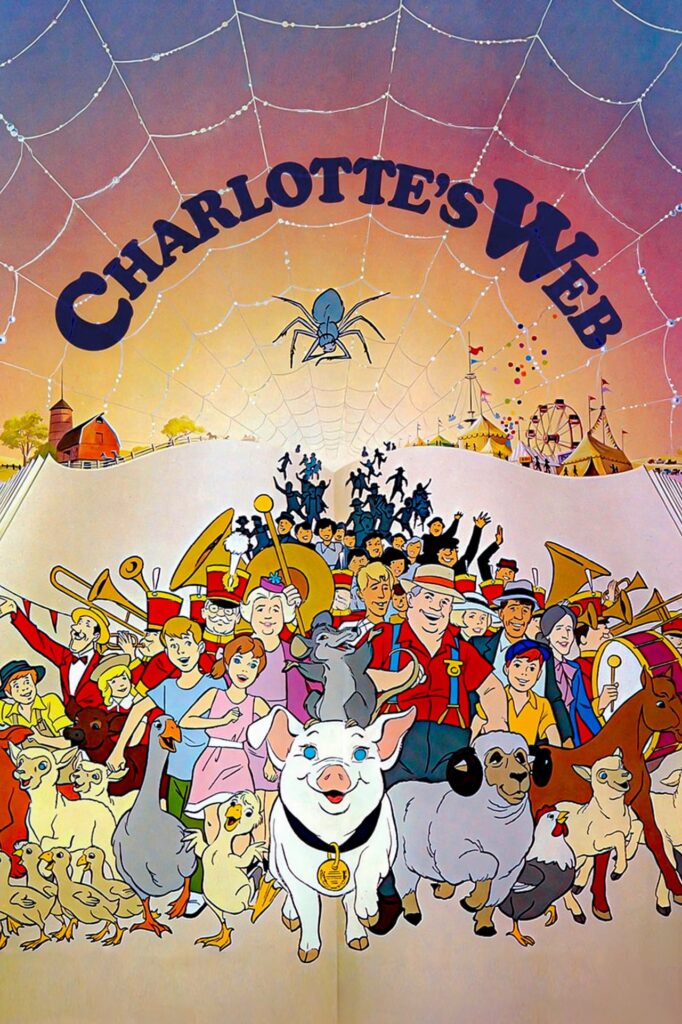
Synopsis:
Wilbur is a young pig who discovers that when the season ends, he's destined to become dinner for the farmer's family. Frightened by this grim fate, he forms an unlikely friendship with Charlotte, a clever spider who lives in his pen. Together, they devise a plan to save Wilbur's life and ensure he'll never end up on the dinner table. With help from other barnyard animals including Templeton the rat, a talkative goose, and a ram, Charlotte uses her remarkable web-spinning abilities to change Wilbur's destiny. This animated adaptation of E.B. White's beloved children's book brings to life a heartwarming tale of friendship, loyalty, and the power of compassion. Featuring the voices of Debbie Reynolds as Charlotte and Henry Gibson as Wilbur, the story explores themes of mortality and devotion in a way that resonates with young audiences while delivering an uplifting message about the bonds that connect us.
Where To Watch: Charlotte's Web
Parental Feedback
Charlotte’s Web (1973) carries a gentle, heartfelt tone that balances moments of warmth and friendship with emotional themes about mortality and the cycle of farm life. Parents should expect a slower, contemplative pace typical of classic animation, with humor that is subtle rather than slapstick. The story addresses weighty concepts like death and loss in a tender way that may prompt meaningful conversations, making it important for families to be prepared for scenes that could evoke sadness or questions from younger viewers.
Why Kids Should Watch Charlotte’s Web (1973)
Charlotte’s Web (1973) offers several valuable lessons wrapped in a timeless story of friendship and compassion.
The central relationship between Charlotte the spider and Wilbur the pig demonstrates selfless friendship and loyalty, showing children how true friends support each other through difficult times. Charlotte's determination to save Wilbur from becoming dinner illustrates the power of creative problem-solving and dedication.
The animation brings to life a classic story that has resonated with generations, featuring memorable voice performances including Debbie Reynolds as Charlotte and Paul Lynde as Templeton the rat. The musical elements and gentle storytelling style create an accessible entry point for younger viewers into longer narrative films.
Themes of acceptance and finding one's worth run throughout the story, as Wilbur learns to believe in himself with Charlotte's encouragement. The barnyard setting introduces children to farm animals and rural life in an engaging, educational context.
The story reinforces values of kindness, perseverance, and the importance of keeping promises, providing clear examples of positive character traits that children can understand and emulate in their own lives.
Why Kids Shouldn't Watch Charlotte’s Web (1973)
Despite its many strengths, Charlotte’s Web (1973) contains elements that may be challenging for some young viewers.
The central premise revolves around Wilbur facing the threat of being slaughtered for food, which introduces the concept of death in a direct way that may be frightening or confusing for very young children. This theme persists throughout the story and cannot be avoided.
The pacing is deliberate and slower than modern animated features, which may test the attention span of children accustomed to faster, more action-driven entertainment. Some scenes are dialogue-heavy and contemplative, requiring patience from younger audiences.
Emotional scenes, particularly those dealing with loss and saying goodbye, can be genuinely sad and may cause distress in sensitive children. Parents should be prepared to comfort children and discuss these feelings, as the story does not shy away from bittersweet moments.
Verdict: Parent Approved
Charlotte’s Web (1973) earns approval as a thoughtful, beautifully crafted story that teaches important lessons about friendship, sacrifice, and the natural cycle of life, though parents should be ready to support children through its emotional moments.
What Parents Should Know About Charlotte’s Web (1973)
| Question | Answer |
|---|---|
| Does this Movie model positive behavior that my child can understand and repeat? | Yes, Charlotte demonstrates selflessness, loyalty, and creative problem-solving while helping her friend, and these behaviors are presented clearly as admirable and worth emulating. |
| Does this Movie include emotional moments my child might find confusing or intense? | Yes, the story addresses death and loss in ways that may be sad or difficult for young children, particularly scenes involving Charlotte's fate and Wilbur's initial fear of being slaughtered. |
| Does this Movie show consequences for unkind or unsafe behavior? | The story focuses more on positive actions than negative consequences, though characters who show selfishness or unkindness, like Templeton initially, are portrayed less favorably than those who help others. |
| Does this Movie reinforce helpful social skills like sharing, apologizing, or teamwork? | Yes, the barnyard animals work together to support Wilbur, and Charlotte's plan requires cooperation and trust, demonstrating the value of teamwork and mutual support. |
| Will my child come away with any clear moral or message? | Yes, the story clearly conveys messages about the power of friendship, the importance of keeping promises, and how acts of kindness can have lasting impact even after we're gone. |
The Overall Sentiment From Parental Feedback
Parents generally appreciate Charlotte’s Web (1973) as a gentle introduction to complex themes, praising its faithful adaptation of the beloved book and its ability to spark meaningful conversations with children about life, death, and friendship. Many families value the wholesome content and positive messages, noting that the G rating accurately reflects the appropriate nature of the material for family viewing. However, parents consistently advise preparing children for the emotional weight of the story, particularly the bittersweet ending, and recommend having tissues ready. The classic animation style and slower pacing receive mixed reactions, with some families embracing the nostalgic quality while others note that very young or easily distracted children may struggle to remain engaged throughout the full runtime.
Official Charlotte's Web Trailer
Why Kids Love Charlotte's Web
Kids love watching Wilbur the pig team up with Charlotte the spider to outsmart the grown-ups and save him from becoming dinner. The unlikely duo hatches clever plans together, with Charlotte using her web-spinning skills in surprising ways while Wilbur's barnyard friends pitch in to help. It's exciting to see how these animal pals work together to solve what seems like an impossible problem.
Templeton the rat steals scenes with his sneaky antics and selfish personality, providing plenty of laughs as he reluctantly gets dragged into the rescue mission. The goose adds to the chaos with her chattering, while the ram and other farm animals create a lively crew of funny sidekicks. Paul Lynde's voice work makes Templeton especially memorable as he grumbles and complains his way through every task.
The movie keeps things moving with catchy musical numbers that kids can sing along to, featuring the barnyard characters breaking into song. Debbie Reynolds and Henry Gibson bring warmth to Charlotte and Wilbur's friendship through their voice performances. The animated farm setting buzzes with activity as all the animals band together, making it fun to watch how each creature contributes their special talents to the big plan.