

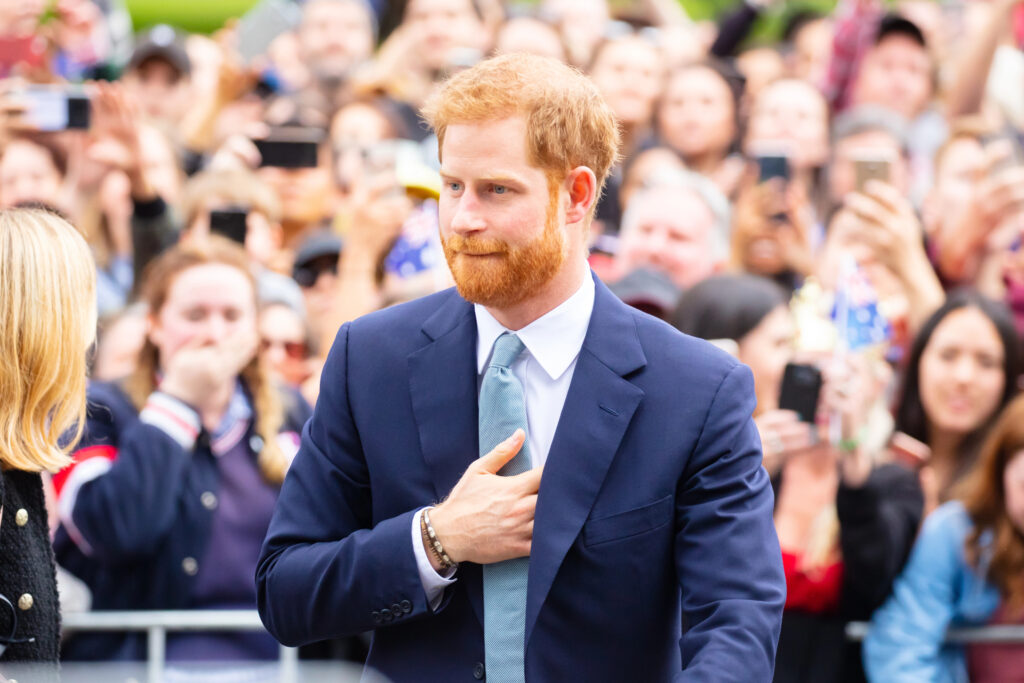
Prince Harry reflected on a common feeling of ‘disconnection’ among new dads while in Australia.
Standing before an audience of fathers at Melbourne’s Whitten Oval on Wednesday, Prince Harry described one of the most quietly universal experiences in parenthood: feeling like a bystander while his wife, Meghan, carried their child. “Certainly, I felt a disconnection because my wife was the one creating life, and I was there to witness it,” Harry told the crowd at the Movember mental health event, urging new dads everywhere that they are “not alone.”
The remarks came during a four-day private tour of Australia with Meghan — their first visit to the country since 2018 — and offered one of Harry’s most personal accounts yet of the emotional terrain of early fatherhood. The couple’s two children, Archie and Lilibet, stayed home in California.
Therapy, The Past, And Preparing To Be A Father
Harry did not frame his experience as one of failure, but of deliberate preparation. In a conversation on stage with Movember’s global director of men’s health research Dr. Zac Seidler, the Duke described entering therapy before his children were born as an act of intention rather than a response to crisis.
“Certainly, from a therapy standpoint, you want to be the best version of yourself for your kids. And I knew that I had stuff from the past that I needed to deal with, and therefore prepare myself to basically cleanse myself of the past,” Harry told the audience.
He also reflected on the generational shift he sees in modern parenting. “Even if you had the best upbringing in the world, the best parenting in the world, there’s still room for improvement,” Harry said at the Movember event in Melbourne. He described a philosophy of forward momentum, saying “our kids are our upgrades” — not a judgment on previous generations, but a recognition that the world children inhabit today demands something new from parents.
Harry also recalled the specific anxiety of those first weeks after Archie’s birth, noting that stress was not something he could conceal. Each time he came home from work carrying tension, he said, Archie would sense it immediately and begin to cry. The observation functioned as both a confession and a lesson: infants are acutely attuned to their caregivers’ emotional states, and fathers are not exempt from that feedback loop.
What The Science Says About Paternal Disconnection
Harry’s candor about feeling like a witness to pregnancy rather than a participant in it may resonate with a surprisingly large share of expectant fathers. Research into what scientists call Couvade syndrome, a condition in which non-pregnant partners experience physical and emotional pregnancy symptoms, suggests that the psychological and even hormonal experience of pregnancy extends well beyond the person carrying the child.
Prevalence estimates vary widely across countries, with some studies finding the syndrome affects anywhere from roughly one in five to more than half of expectant fathers, though it remains officially unclassified as a medical disorder.
“The best way to describe it is sympathetic pregnancy,” Catherine Caponero, an obstetrician-gynecologist at the Cleveland Clinic, told the BBC. “Essentially, it’s when a non-pregnant partner experiences pregnancy symptoms despite the fact that they’re not biologically pregnant.”
Researchers believe the condition is multifactorial, involving hormonal shifts — including measurable declines in testosterone and oestradiol in expectant fathers — alongside psychological stress and deep empathic identification with a pregnant partner.
The emotional turbulence does not necessarily end at birth. Research indicates that roughly one in ten new fathers develops clinically significant depression during the perinatal period, with rates climbing higher in the months immediately following birth. The cultural script around new parenthood focuses so heavily on the mother’s experience that fathers who struggle frequently do so without acknowledgment or support.
Personal accounts like that of Zack Fox, whose recovery from paternal postpartum depression involved medication, therapy, and open communication, illustrate how far-reaching the condition’s impact can be on families and workplaces. Growing advocacy in both Australia and the United Kingdom is pushing for mandatory perinatal mental health screening covering both parents, a policy shift that would have been unthinkable a generation ago.
A Message That Landed With The Room
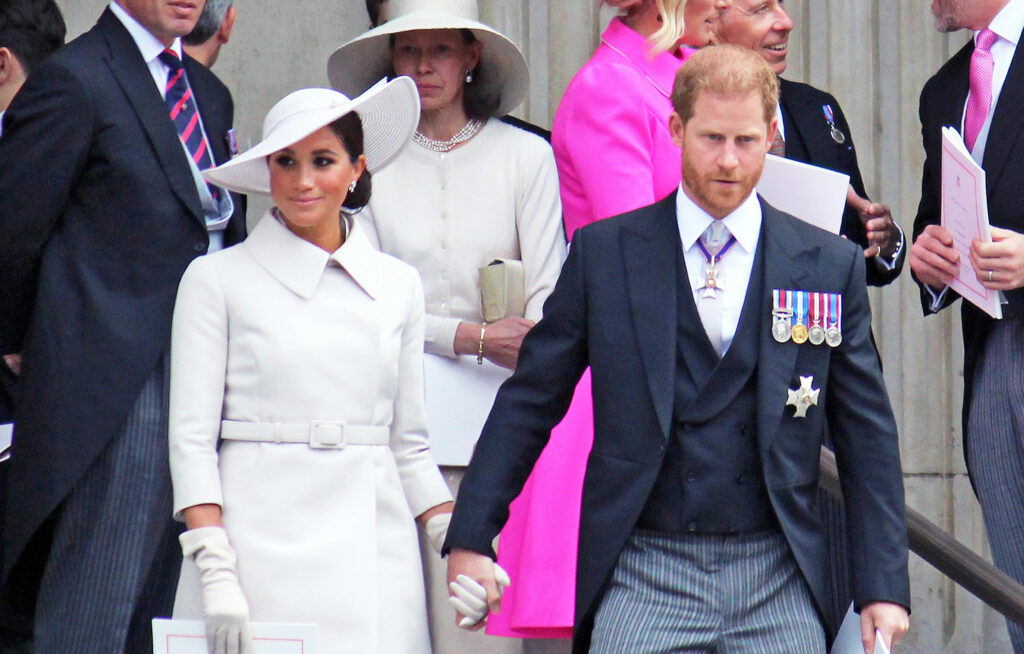
Dr. Seidler, who shared the stage with Harry, said the Duke’s willingness to speak from personal experience rather than from a script was what made the conversation meaningful. Seidler noted that Movember’s own research found one in five fathers felt extremely isolated after having a child, and that three in five fathers were never asked by a health professional how they were doing in the year after their baby was born.
“He’s really passionate about this, it matters to him, and he told us real stories that he had experienced, stuff that he’d spoken about with his wife, with his therapist,” Seidler told the BBC. “He really just wanted to get to the heart of it and talk about advocating for change.”
Harry also pointed to a broader intergenerational shift, describing conversations now happening between parents and children that simply did not exist between him and his own father. The Western Bulldogs presented him with personalized miniature AFL shirts bearing Archie and Lilibet’s names — a small gesture that visibly moved him before he headed out onto the oval for a kickabout with players.
Why This Conversation Matters For Every Parent
What stands out about Harry’s remarks is not their celebrity context but their ordinariness. The feeling of standing on the sidelines while a partner’s body does something extraordinary, and then scrambling to find your footing once a baby arrives, is one that millions of fathers navigate without language for it, without permission to name it, and often without anyone asking how they are doing. When someone with Harry’s platform says it plainly in a room full of dads, it does something that research papers and policy briefs cannot: it makes the experience feel speakable. That is not a small thing.
Harry closed his remarks at the Movember event with a direct appeal to any father who is struggling: “For so many years it has been seen as a weakness to stick your hands up. I find it’s the opposite,” he said.
As advocacy grows for screening both parents during the perinatal period, and as research continues to illuminate just how profoundly pregnancy and new parenthood reshape fathers as well as mothers, the cultural moment Harry stepped into on Wednesday in Melbourne may prove to be better timed than it first appears.

