

Are there two people on the planet who agree on a universal “best” way to parent? Probably not. We all have individual ideas, and each kid (even in the same household) has different needs.
Several parenting styles have been grouped under various names, though. Child development experts recognize four (authoritarian, authoritative, permissive, and neglectful), and parents have defined their own styles by names like almond mom, crunchy mom, or gummy bear mom.
One of the latest trending titles is 90s butter mom, and while there’s some variation on exactly what it means to people who identify with it, they all have one thing in common: it’s about nostalgia.
What’s A Butter Mom?
Ask a few dozen moms who call themselves butter moms, and you’ll probably get a few dozen different opinions.
Some say it’s about home-cooked meals from scratch, and not being afraid to use real butter. (On the other hand, I saw one person argue that 90s moms were not butter moms, they were margarine and Marlboro moms.) Others define it as meals cooked at home, but mostly from a box or can. Okay, we can probably all agree that Hamburger Helper was a significant part of the 90s.
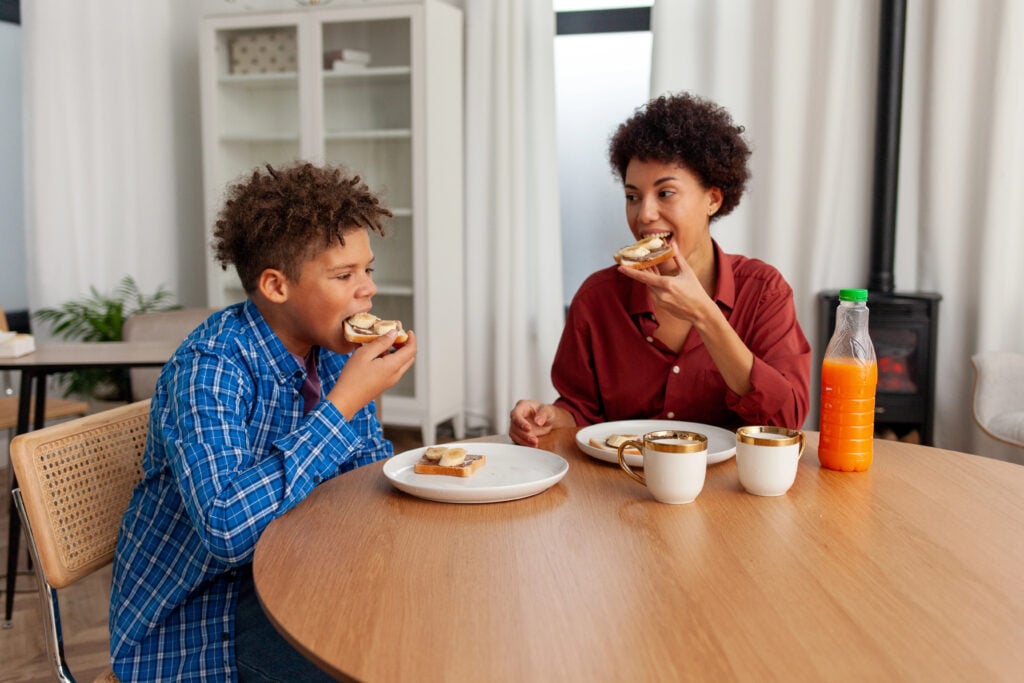
A big part of the trend is food. Whether your mom made drop biscuits from scratch or popped open a can of Pillsbury, it makes the cut. If she made shepherd’s pie from homemade mashed potatoes or Manwich from a can, they all fit.
There are two basic criteria for the food aspect of the trend that stay consistent. First, it just sort of feels like the 90s, and that’s the wobbly part, since that was different for each of us. Second, it’s about comfort, not about dietary rules, strict portion limits, being sugar-free, or avoiding processed foods and sodas.
The Trend Goes Beyond Food, though
For many moms, it’s more than the food. They see themselves as 90s butter moms because they choose comfort and warmth.
This transcends into their decor, which is functional and convenient. You probably won’t find a butter mom keeping the kids out of a living room full of pristine white furniture, or telling them they can’t play outside because that’s where the dirt is. Maybe they have a mudroom for shedding the filthiest layer when their kids come inside, but they want their kids to have a childhood that resembles the happiest moments from the sweetest sitcoms. A little more Wonder Years (even if it’s the wrong era) and Boy Meets World, a little less regimented perfection.
Moms are defining their own clothing styles in the trend, too. A 90s butter mom could probably jump on a bike and go for a ride with her kid right now, or join him to throw a football, or climb a tree, without having to change clothes. She’s not sloppy or unkempt, exactly. She’s just choosing clothes that are comfortable and functional, and if they look nice too, that’s a bonus.
Mostly, it’s about giving kids a childhood that feels good to remember. Maybe for some moms, it’s a little bit about reliving their own childhood vicariously, and for others, it’s about giving their kids the childhood they wish they’d had themselves.
Why Is This Even Controversial?
Honestly, every single person deserves an idyllic childhood. Every single human being deserves to grow up in a way they can look back on and smile about, with precious memories of being treasured and cared for.
The 90s, like any other era, were that for many children, but not all. Also, what “idyllic” looks like varies from one individual to another.
So, the result is that some folks who grew up in margarine households, or those who got the latchkey experience instead, or those who lived in households filled with turmoil and discomfort, are looking at this trend and saying, “No, that’s not what the 90s were like.”
Sometimes that’s just a difference of experience. Those of us who had to open several Country Crock containers to figure out which one actually had margarine and which had been repurposed as generic Tupperware to hold leftover spaghetti or peas didn’t necessarily have a less-ideal childhood than those who had real butter and a well-organized fridge with everything labeled. But for some folks, this aesthetic just looks so different from their own experience that it feels off.
It’s also definitely tinted by rose-colored glasses. (But isn’t nostalgia always?) Yes, the many now-grown 90s kids pointing out that it was the era of secondhand smoke (in the car with the windows up). For many, it was the era of diet culture and body-shaming. For others, it was an era not of coziness and treasured, but of being booted out in the morning and told not to come back in until the streetlights came on.
Nostalgia for any era will feel warm and cozy to some and fake to those who had a different experience, and that’s okay.
If your goal is to raise happy, healthy kids who know they’re loved and taken care of, you can do it with any aesthetic that suits your family.
