


For generations, keeping kids away from nicotine has been a parental hurdle. Though that goal hasn’t changed, the outside influences are shifting, and that makes a difference for parents, too.
Peer pressure has always been a significant factor in teen nicotine use. Now, a lot of that peer pressure is online, and may not even come from kids your child actually knows.
Instead, recent studies show that social media is a significant factor in kids’ nicotine use, which means parents will have to adjust how they address it.
TikTok Loves Vape Tricks
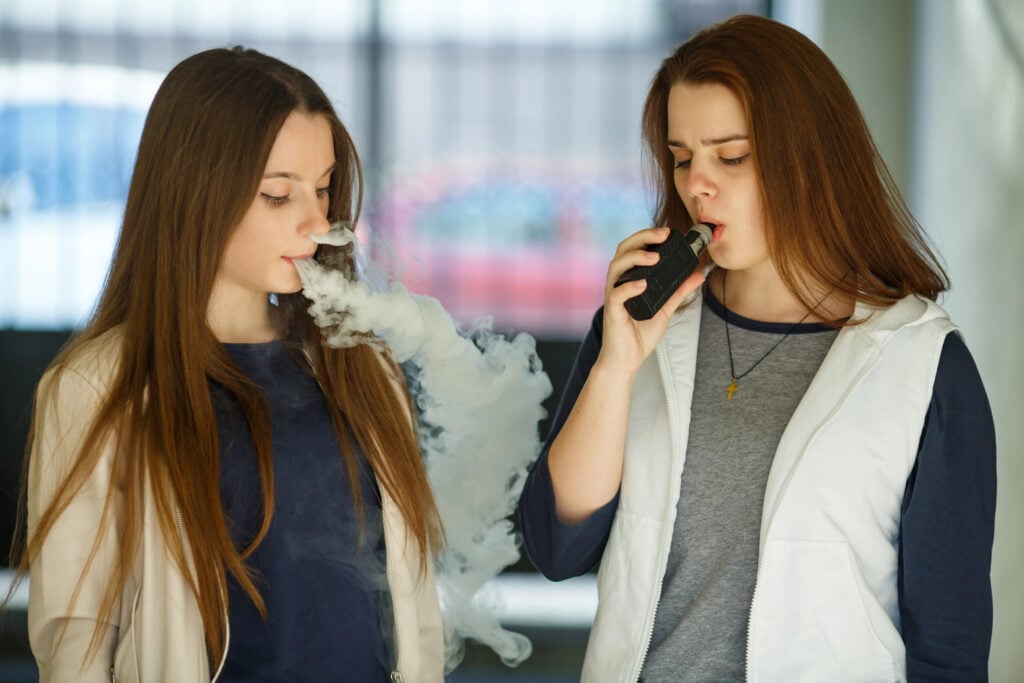
Vape tricks are pretty popular with teen nicotine users, and that’s not new.
A 2017 report in RTI International noted that 11% of high schoolers said they used vapes or e-cigs, and 4 out of 5 users had tried vape tricks. More recent data from the UW Center for Tobacco Research and Intervention suggest that the percentage of kids vaping has dropped slightly, to about 5.9% of middle and high schoolers.
At the same time, the percentage of those users who vape daily (instead of occasionally) has increased, and young adult vaping is also on the rise.
TikTok and other social media platforms are contributing to the trend as users push their vape trick videos and other vape-centered content.
Vape users (teens and adults) are showing how they blow smoke rings, or “ghost” or “waterfall” the vapor after an inhalation. One content analysis published in Society for the Study of Addiction found that a majority of vape content promoted, marketed, or romanticized vaping, and that these videos received more engagement than content that addressed vaping neutrally or in a negative light.
How Serious Is This Content?
The content analyzed wasn’t just vape tricks. It also included content about purchasing vapes without ID (including illicit sales) and about how to hide vapes to avoid detection.
I followed up with my own search. While I won’t share the clips here due to some being clearly minors and others being of ambiguous age, the content I skimmed included discussion of venues that don’t check ID, links to purchase vapes illegally (side note: I also saw videos of purchasers who got scammed this way), and videos proclaiming the joy of passing on a nicotine addiction to a friend.
Of these, the most concerning are the illicit vape sales. The report cited above mentioned that some similar videos in their own search were deleted or removed between their initial analysis and the completion, which they attribute to TikTok policies, but new videos of this type are reposted just as quickly as old ones are taken down.
While vaping nicotine carries health risks, the dangers of vapes from unverified sources can be even greater.
Are Kids Really Listening?
Exactly how much does watching nicotine content on TikTok affect the likelihood of kids trying it for themselves?
A 2022 study published in Preventive Medicine Reports found the following:
“Adolescents had higher odds of e-cigarette ever-use [about twice as likely] and current (past 30-day) use [about 3 times as likely] if they used TikTok several times per day, compared to adolescents who used TikTok less frequently or not at all. Adolescents also had higher odds of e-cigarette initiation if they used TikTok daily or several times per day [about 3 times as likely], compared to adolescents who used TikTok less frequently or not at all. Adolescents had higher odds of e-cigarette ever-use [about 2.6 times as likely] and current use [about 3 times as likely] if they reported seeing tobacco or nicotine posts, including e-cigarettes, on TikTok at least weekly.”
In other words, frequent TikTok users are significantly more likely to be nicotine users, especially if they see nicotine content frequently (which, thanks to algorithms, likely means these are the users interacting more heavily with the nicotine content).
What Should Parents Do?

As always, preventing kids from engaging in illicit activities is complicated. Most of us aren’t with our kids 24-7, and sneaking is almost an adolescent rite of passage.
What we can do is keep open conversations with our kids.
Parents need to discuss the risks, especially the risks of purchasing illegal vapes or devices from dubious sources. However, the hard part can be balancing the discussion of risks so that it doesn’t come across as fear-mongering, which can shut down kids’ attention.
Parents should also remind kids that social media doesn’t show the full truth. Content focused on vape tricks may not show a user’s reduced lung capacity and athletic ability, for instance, and a video focused on sneaking vapes past school security may not show the consequences a kid faced when they got caught later the same day.
We can also discuss the kind of content they’re engaging with. Thanks to data gleaned in these studies and an understanding of algorithms, parents can know that if their kid says, “Yes, I see vape content all the time,” they’re more likely to begin using a vape or to have already used one.
Mostly, keep the conversation open, and make sure your child feels safe in coming to you.
