
The Baby-Sitters Club - The Truth About Stacey (S1E3)
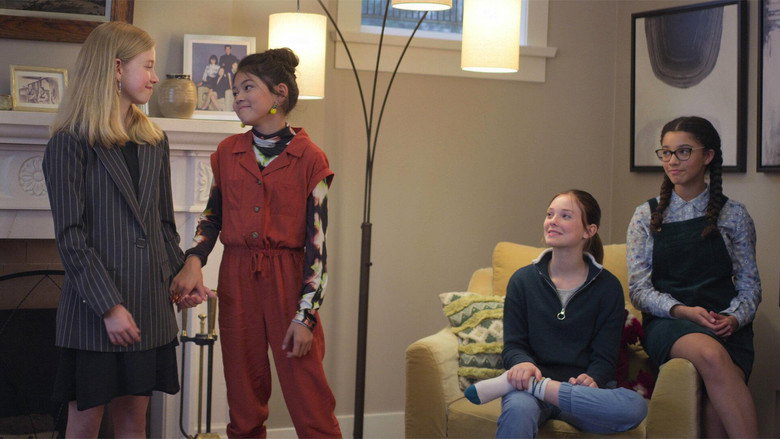
As competition heats up for the BSC, Stacey attempts to hide a personal secret and revisits a painful event from her past.
| Runtime (min) | 26 |
|---|---|
| TMDB Rating | 9.0 (4 votes) |
| Air Date | 2020-07-03 |
| Genres | Kids, Drama |
| TV Rating | TV-G |
| Network(s) | Netflix |
Storyline
Stacey McGill faces mounting pressure when a rival babysitting service begins competing for clients in Stoneybrook. As the Baby-Sitters Club works to retain their reputation and customer base, Stacey struggles to keep her diabetes diagnosis private from her friends and the families they work for. She fears that revealing her condition will cost the club business and lead to judgment from others.
The episode weaves between present-day challenges and flashbacks to a painful period in Stacey's life in New York City, when her undiagnosed illness led her parents to take her to multiple doctors and even a questionable clinic that treated her diabetes as a psychosomatic condition. Through these memories, viewers see how the experience of being misunderstood and doubted by adults has shaped Stacey's reluctance to be open about her health. When the truth finally comes out, Stacey must confront her fears about acceptance and learn whether her friends and clients will stand by her.
What parents say
Parents have praised this episode for its sensitive and age-appropriate handling of chronic illness, particularly Type 1 diabetes. Many appreciate that the show depicts the daily realities of managing diabetes—including blood sugar monitoring and insulin injections—without sensationalizing or making the condition seem frightening to young viewers. Parents on Common Sense Media and parenting forums have noted that the episode provides an excellent conversation starter for families discussing invisible disabilities and medical conditions.
Some parents have specifically highlighted the flashback sequences showing medical gaslighting as important but potentially upsetting. Parents note that the scenes depicting doctors and Stacey's parents dismissing her physical symptoms as psychological may resonate painfully with children who have experienced similar situations or may require context for younger viewers. Several parents recommend watching alongside children to discuss how Stacey's experience reflects real problems some patients face in healthcare settings.
Parents consistently commend the episode for showing that kids with chronic conditions can lead full, active lives and that true friends accept each other's differences. The positive representation of diabetes management has been particularly valued by parents of children with Type 1 diabetes.
What kids learn
Children learn important lessons about empathy and acceptance when someone reveals a personal health condition. The episode demonstrates that chronic illnesses like diabetes are manageable parts of a person's life, not defining characteristics, and that friends should offer support rather than pity or judgment. Young viewers see that keeping significant secrets—even when motivated by fear—can create unnecessary stress and prevent others from providing help when needed.
The flashback sequences teach children that being believed when something is wrong with your body matters deeply. Stacey's experience with doctors who dismissed her physical symptoms as emotional problems illustrates that patients deserve to be heard and taken seriously. This validates children's own experiences with illness and empowers them to advocate for themselves when adults aren't listening.
The episode also addresses the courage required to be vulnerable with friends. Stacey's journey shows that sharing difficult truths often strengthens relationships rather than damaging them, and that real friends will stand by you through challenges. Children learn that differences—whether medical conditions, family situations, or personal struggles—don't make someone less capable or valuable, and that hiding parts of yourself prevents authentic connection with others.
Parents' top 5 questions
| Question | Answer |
|---|---|
| How does the episode depict Stacey's diabetes management, and is it accurate? | The episode shows Stacey checking her blood sugar and administering insulin injections in a matter-of-fact way that normalizes diabetes management. The portrayal is generally accurate and avoids making the condition seem either trivial or overly dramatic. Medical details are age-appropriate, and the show emphasizes that diabetes is a manageable condition that doesn't prevent Stacey from participating fully in activities. The depiction has been praised by diabetes advocacy organizations and parents of children with Type 1 diabetes for its realistic and positive representation. |
| Are the flashback scenes about medical gaslighting too intense for younger children? | The flashbacks show doctors and Stacey's parents initially treating her diabetes symptoms as psychological rather than physical, which some younger or sensitive children may find upsetting, particularly if they've had similar experiences. The scenes aren't graphic but do convey Stacey's frustration and fear at not being believed. Parents may want to watch first or be prepared to pause and discuss these moments, reassuring children that good doctors listen to patients and that Stacey eventually received proper care and diagnosis. |
| What does the episode teach about keeping health information private versus sharing it? | The episode explores Stacey's reasons for keeping her diabetes secret—fear of judgment and losing babysitting clients—while ultimately showing that hiding her condition created more problems than it solved. The narrative demonstrates that while medical privacy is a personal choice, sharing information with trusted friends and relevant adults often leads to better support and understanding. It's a nuanced portrayal that respects both privacy concerns and the benefits of openness, giving parents an opportunity to discuss when and with whom health information should be shared. |
| How do Stacey's friends react when they learn about her diabetes? | Stacey's friends in the Baby-Sitters Club respond with support and acceptance when they learn about her diabetes. Rather than treating her differently or with pity, they simply want to understand how to help if she ever needs it. This positive reaction reinforces the episode's message about true friendship and provides a model for how children should respond when peers share personal health information. The supportive response also validates Stacey's decision to trust her friends with the truth. |
| Does the episode address how diabetes affects Stacey's babysitting responsibilities? | The episode acknowledges Stacey's concern that families might not trust her to babysit if they know about her diabetes, reflecting real discrimination that people with chronic conditions sometimes face. However, it ultimately shows that responsible diabetes management doesn't impair her ability to care for children safely. The narrative emphasizes that Stacey's competence as a babysitter is separate from her medical condition, teaching children that chronic illness doesn't diminish someone's capabilities or reliability when properly managed. |
Writing
Directing
| Season # | Episode # | Episode Name |
|---|---|---|
| 1 | 1 | A creative concept comes to life as Kristy starts a club with her best friends — and a new classmate. But is she ready to be a team leader? |
| 1 | 2 | The spooky spirit of Halloween sweeps through Stoneybrook. Meanwhile, Claudia explores budding romance and struggles to connect with her parents. |
| 1 | 3 | As competition heats up for the BSC, Stacey attempts to hide a personal secret and revisits a painful event from her past. |
| 1 | 4 | After dealing with a major dad dilemma, Mary Anne makes a dynamic new friend. Later, a medical emergency puts her caretaking skills to the test. |
| 1 | 5 | To prove herself to the BSC, Dawn agrees to babysit for a family of rowdy kids. Can she keep up with their mischief and mayhem? |
| 1 | 6 | A family emergency triggers an emotional feud between Claudia and her older sister. Elsewhere, Mary Anne works to hide her feelings. |
| 1 | 7 | Mary Anne and Stacey team up for an out-of-town job: babysitting kids at the beach. But a cute new crush challenges business and friendship. |
| 1 | 8 | Stoneybrook delights in a day of glitz and glamour as Kristy's mom prepares for a big day. Later, Kristy hits a major milestone, much to her surprise. |
| 1 | 9 | The BSC braves the great outdoors at a summer sleepaway camp, where they explore archery, theater, activism ... and a dash of chilling mystery. |
| 1 | 10 | As Stacey deals with a new normal, Kristy leads a crucial search, Dawn and Claudia start a revolution, and Mary Anne finds her place in the spotlight. |
| Season # | Episode # | Episode Name |
|---|---|---|
| 2 | 1 | After moving in with Watson, Kristy navigates a not-so-warm neighborly welcome. The BSC helps Mary Anne define her post-camp relationship status. |
| 2 | 2 | A slumber party quiz sparks intrigue, uncertainty and an awkward beginning for Claudia and Mallory. Elsewhere, Kristy learns to let go of control. |
| 2 | 3 | The BSC prepares to rule the runway as Stacey's special guests for a gala fashion show. But a series of concerning symptoms challenge the glitz and glam. |
| 2 | 4 | Passion meets persistence as Jessi struggles with a rough patch in her ballet career, all while signing on to babysit a pint-sized vlogging superstar. |
| 2 | 5 | As Dawn and Mary Anne await big news from their mom and dad, Logan sweeps in with a Valentine's Day surprise. But is it too much too soon? |
| 2 | 6 | Worlds collide — and tension boils over — when Mary Anne and her dad move in with Dawn and her mom. The BSC plans a major party for Mallory's sister. |
| 2 | 7 | A heartbreaking turn of events redefines Claudia's life and — with loving support from her friends and family — pushes her out of her comfort zone. |
| 2 | 8 | The return of the Stoneybrook Baby Parade leads to a crafty (and chaotic) project for the BSC — and a bittersweet surprise for Kristy and her family. |
This product uses the TMDB API but is not endorsed or certified by TMDB.