

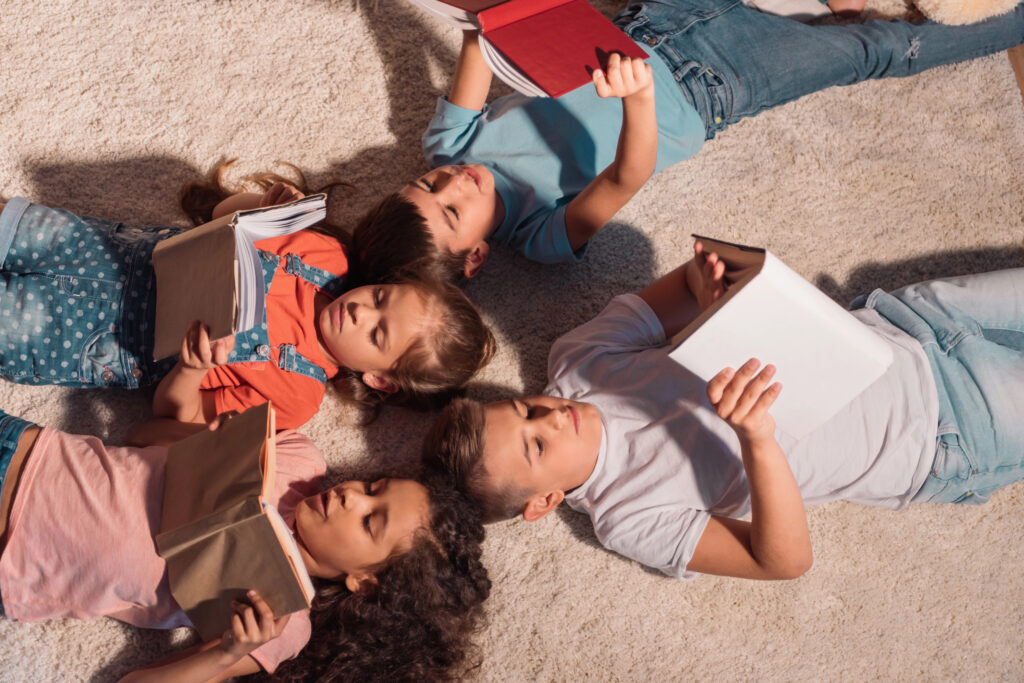
It sounds so simple. What a novel (no pun intended) idea. Give kids books to make them better readers.
Not all simple, seemingly-obvious tactics in education work as well in practice as in theory, but a new study proves that this one does. Just give kids free books, and the literacy scores improve.
Here’s what the study found, and what parents (and communities) should know about improving reading scores.
Free Books, No Stipulations, No Demands
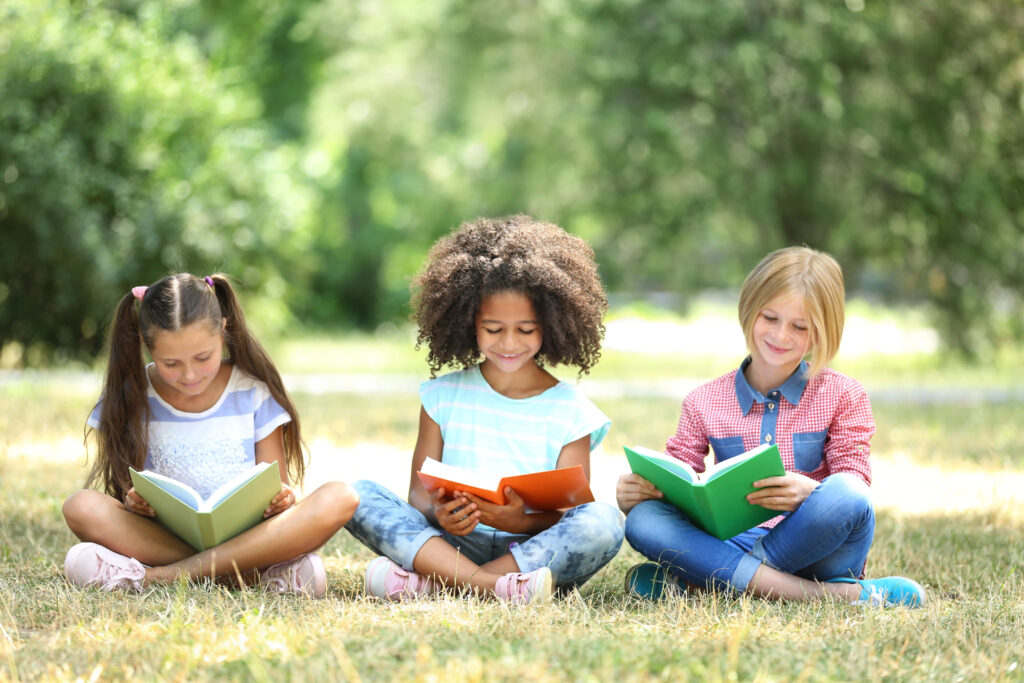
The study, published in Proceedings of the National Academy of Sciences (PNAS), started in Milwaukee in 2018 and lasted five years. Even though COVID interfered and disrupted some book distributions, the positive effects were still visible. In fact, thanks to school changes, the study was even able to track benefits for kids who participated in the program for only part of the period, as well as for those who were enrolled for the full period.
“Students with partial exposure realized impacts equal to approximately one-quarter to one-third of a year of learning, while those with sustained participation achieved gains of about half to two-thirds of a year.”
Kids didn’t have to earn their free books through academic tasks, grades, or work-study programs. They weren’t even obligated to read them or report back. The program just handed out free books.
Imagine your child, or a class full of children, or a school full of children, or all the children in your community, state, or nation, gaining the equivalent of an extra quarter to two-thirds of a year of learning over the course of 5 years, and the impact of that on their lives. Then, consider that this level of improvement occurred despite the study taking place during the period when kids’ normal educational paths were disrupted by COVID.
How Did The Program Work?
Thirty randomly selected schools were in the test group, and another thirty in the control group. Kids in the test group were given books in multiple distributions over the 5-year period, totaling up to 34 books per student. Kids in the control group were also given books, but only at the end of the five-year period. (The program is run through Bernie’s Book Bank, which has committed to continuing to supply books to all the schools involved in the study.)
The kids involved in the study were in grades 1 and 2 at the beginning of the study, and their literacy scores were tracked over time.
The books were chosen for being “high-interest and culturally-relevant,” and thanks to the Book Bank’s processes and collections of new and gently-used materials, they cost an average of about $2 per book, meaning that this program’s cost was only about $68 per student over five years.
Researchers say the improvement amounts to about 15 to 30% of the current gap in literacy scores between economically disadvantaged kids and their more financially stable peers.
Do Kids In Your Community Have Books?
Those of us who grew up in homes full of books and with parents or grandparents who took us to libraries and bookstores may not realize just how many kids have virtually no exposure to reading until it becomes a school assignment.
In fact, according to End Book Deserts, up to 61% of low-income families have no books in their homes, 45% of America’s kids are growing up in neighborhoods where they don’t have access to a library or bookstore, and around 32 million American children just don’t have any books to call their own. And yes, income levels are a factor.
“In high-income communities, there are about 13 books for every child; in high-poverty communities there is one book for every 300 children.”
There are so many initiatives and organizations working to get books in the hands of kids. Little Free Libraries are popping up in communities, Dolly Parton’s Imagination Library sends free books to children under age 5, and many schools, libraries, and clinics hand out free books. Last Halloween, we even saw a table of books at our town’s trick-or-treat event!
Still, all of these programs leave gaps. The Imagination Library program, for instance, works with local partners, so if your state or a community group isn’t participating, your child won’t be eligible.
The Bottom Line On Free Books
The evidence shows that putting books in children’s hands increases literacy scores.
Parents, we can use this information to help our kids. Books do not have to be expensive. Check your local thrift shops, post in local Facebook groups asking for books in your kids’ age range and interests, check out your library, and ask your kids’ school if they’re interested in organizing a book program.
Communities can use this information to improve school systems and give kids more opportunities. Further studies could show us the effect of free books on kids’ college options, scholarship eligibility, and future career prospects. The evidence we already have certainly hints that it could help.
Schools, especially, have the opportunity to use these stats to improve performance. Book drives, partnerships with local businesses, and grant filings could all help to send kids home with books they can call their own.
