Emotional intelligence is a person’s ability to understand and control their emotions. It’s not just what sets a person off emotionally, but why they’re triggered to feel that specific way. For children, emotional intelligence is one of those things that could be a lifelong lesson. Having self-awareness to regulate emotions takes a lot of inner work.
As an adult, it can be hard to teach your child emotional intelligence, especially if you struggle to manage or recognize your own emotions. Luckily, there are some fantastic books and shows that assist with understanding big emotions, including Bluey.
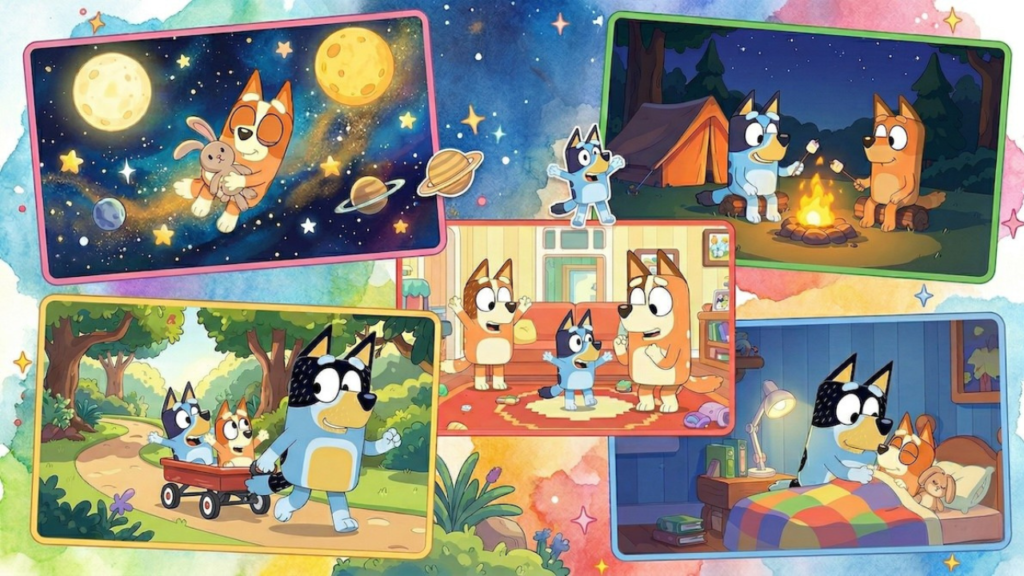
Bluey is one animated show that does a fantastic job at exploring different avenues of emotional intelligence. The adorable dog and her family learn and adapt through play. The Healer family builds (and teaches) emotional intelligence as they learn and grow through life’s hurdles together.
If there’s a specific area of emotional intelligence that you’re struggling to teach your child, there’s most likely a Bluey episode or scene for that!
Where To Watch Note For Episode Order: Some episodes are aired in a different order depending on the streaming service and region you’re viewing in. They are also listed in different orders across many TV show databases. If you don’t find the episode at the same episode number, search for the episode name, which remains unchanged.
A Resiliant Checklist To Get Out Of A Funk
Bluey has a few recurring themes throughout its three seasons, and one major one associated with emotional intelligence is resilience. Bluey and her sister draw resilience from deep within, which they learned from their parents.
Experts at Science Alert explained that resilience comes from strong support systems, effective coping mechanisms, and families incorporating a child’s strengths into their self-worth.
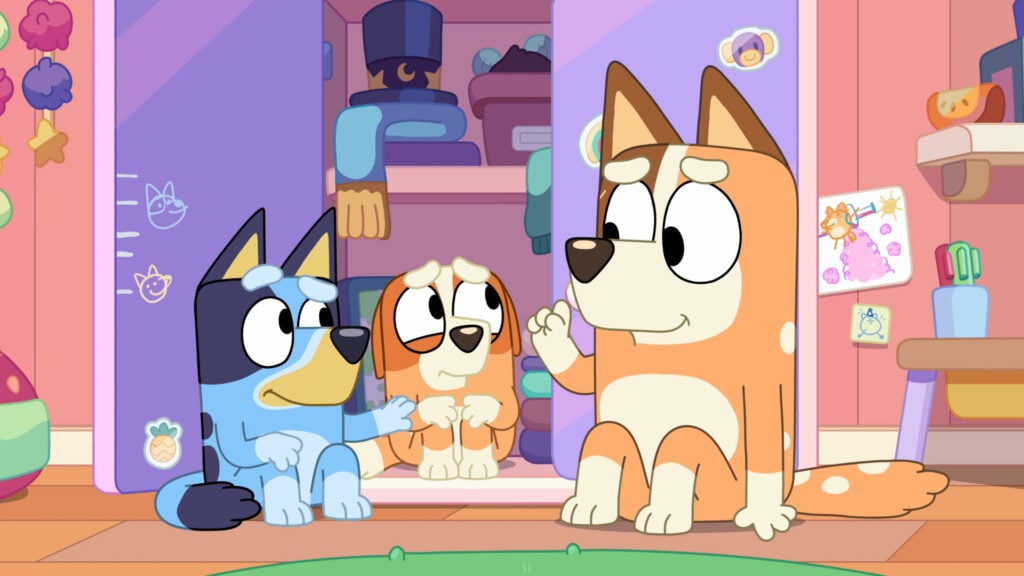
In “The Show,” Bingo cried when she dropped her dad’s breakfast tray. Embarassed, she ran away to cope. Bingo’s mum taught her coping skills by sharing something that she does when she’s overwhelmed. She creates a little checklist before going about her day.
“I have a little cry, I pick myself up, dust myself off, and keep going.”
Later, Bingo shows resilience when something else threatens to dampen her day, and she repeats the wise words her mum taught her. In a short time, she successfully regulated her emotions.
Where to Watch: “The Show” Season 2, Episode 19
The Power Of Play
Child psychologist David Elkind shared that children’s play isn’t just a way to have fun; it’s one of the most powerful ways to work on emotional intelligence. Playing “pretend” allows a child to practice handling scary, sad, funny, and angry moments.
Playing “sick patient” or “brave lion” is a loose example of how simple learning emotional intelligence is. Kids don’t even realize they’re prepping for life outside their home by playing pretend.
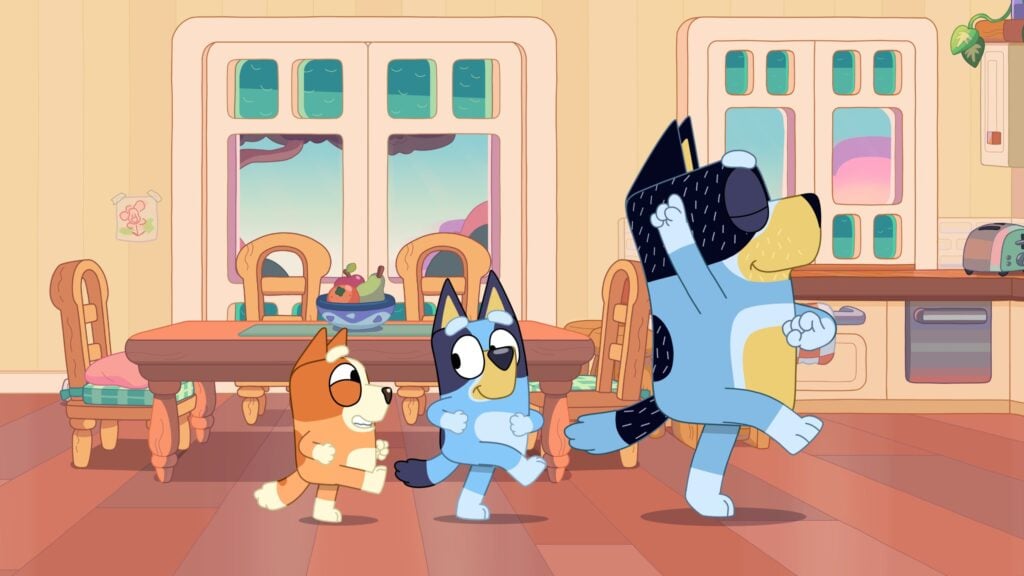
The power of play is showcased in every episode of Bluey. Through playing with each other and their classmates, Blue and Bingo are constantly working on their emotional intelligence; they just don’t realize it.
Some excellent episodes that show the girls learning through play are:
- “Octopus” (Season 2, episode 41): Chloe learns that she and her dad can have a close bond through different styles of play.
- “Daddy Putdown” (Season 1, episode 51): The girls deal with their dad putting them to sleep while mum is out with friends.
- “Army” (Season 2, episode 16): Jack works through his insecurities about self-worth while Rusty plays Army to cope emotionally with his dad’s enlistment.
- “Bad Moon” (Season, episode 40): Bingo turns her big emotions and bad mood into a game.
- “Featherwand” (Season 2, episode 3): Bingo works through her emotions through play when she misses Bluey while she’s at a birthday party.
Bluey Teaches How To Regulate Emotions
Being able to regulate your emotions means you can work through and manage them in a healthy, age-appropriate way. With Bluey and Bingo being young kids, they work on regulating their emotions in real-time through play or interactions at school.
For kids watching, they too learn to regulate their emotions by mirroring the show’s scenarios. Adults will even realize that cartoon dogs work through their emotions far better than they do.
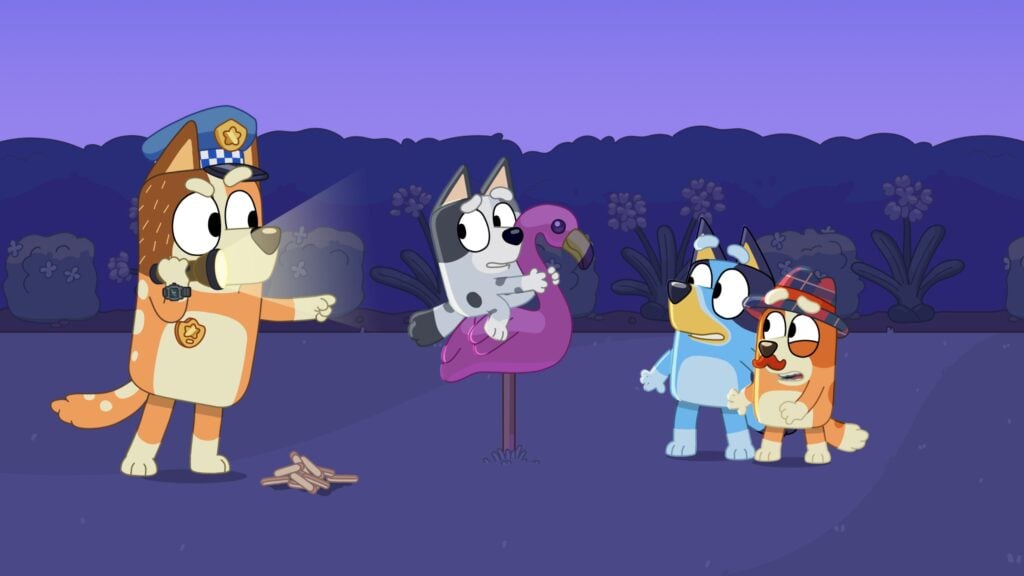
Blue and Bingo’s youngest cousin, Muffin, is one of the most beloved characters on Bluey because of her unhinged personality. At just 3 years old, Muffin watches and learns from her cousins. However, she often doesn’t understand how to self-regulate, creating humorous scenes.
“The Sleepover” and “Library” are great episodes for examples of how Muffin works to regulate her emotions.
Where to Watch: “The Sleepover” Season 1, Episode 39. “Library” Season 2, Episode 30.
Bingo Teaches Audiences About Boundary Setting
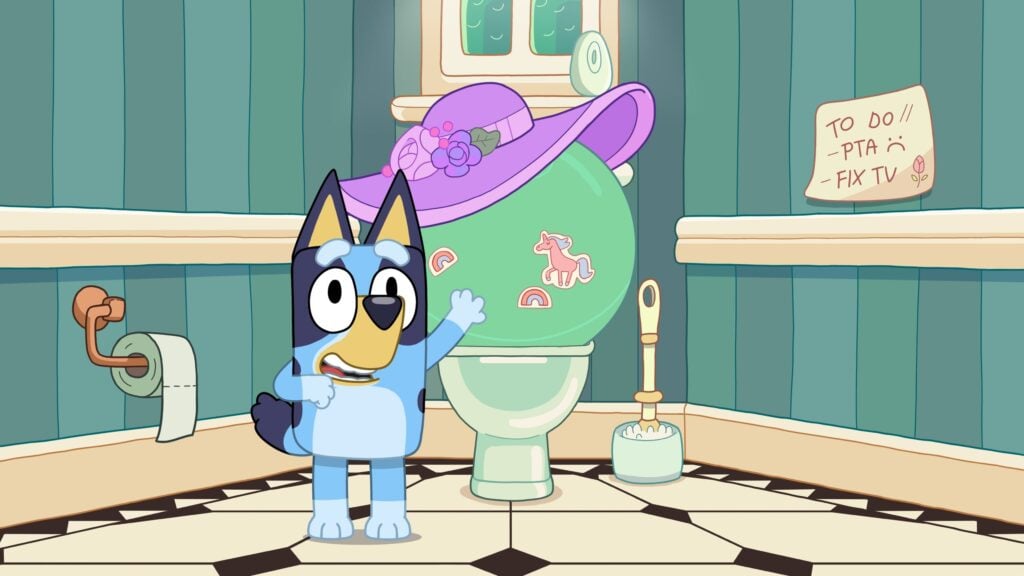
Learning about boundaries, understanding which ones matter most to you, and implementing them are key aspects of emotional intelligence. Feelings of uncertainty and personal safety are hard things to grasp as a kid, but Bingo and Bluey’s supportive home life makes it easier for them to set boundaries when they feel uncomfortable.
In “Yoga Ball,” Bingo grows upset when her dad plays too aggressively with her. Instead of setting a boundary or telling him it scares her, she got quiet and walked away. Luckily, her mom was nearby, and the two talked about how to handle uncomfortable situations.
Bingo learned to use her “Big girl bark” and told her dad how she was feeling. The episode was a perfect example of learning to speak up for yourself and to set boundaries when needed.
Where to Watch: “Yoga Ball” Season 1, Episode 16
No Overwhelming Stimuli Here

Regardless of the episode, one of the best things about Bluey is that it’s low-stimulating. In a world where most kids’ shows are fast-paced with multiple effects and sounds going on at once, Bluey is calm and centered. It allows kids to focus calmly on each scene rather than be distracted by special effects.
High-stimulus media can stress a child’s nervous system, leading to slow, regulated responses. Highly stimulating shows and movies can later affect a child’s learning, sleep, cognitive function, and emotional intelligence. Scenes that change every five seconds are done so to grab a viewer’s attention, making the child always look for the next source of entertainment.
Bluey, on the other hand, intentionally uses soft colors, simple scenes, and consistent jingles throughout.
- High stimuli show cut scenes between 4 and 11 seconds.
- Bluey’s scenes don’t break until, usually, around 12 seconds.
Non-stimulating shows support a child’s emotional intelligence because they allow kids to sit and think about what they’re experiencing.
The Time And Place For Competition

The episode “Baby Race” is an excellent example of emotional intelligence. In the episode, Chilli reminisces about her time as a new mom when Bluey was a puppy. The pressures of motherhood and the natural competitive urge made postpartum a hard time for Chilli. She compared Bluey’s milestones to those of another puppy in Bluey’s class. While she knew comparing kids was wrong, it was hard not to have a competitive edge in doing something right as a parent.
From an emotional intelligence standpoint:
- Chilli experiences self-awareness when she realizes she has anxiety and self-doubt as a mom.
- She regulates her emotions by reflecting on her parenting and trying to shift her train of thought.
- Chilli then learns empathy for herself and others in similar positions.
- Most importantly, she lets go of the natural urge to compete with others.
Young viewers see Chilli slowly experience each emotion. It’s a wonderful episode that slowly breaks down thought processes and viewpoints.
Where to Watch: “Baby Race” Season 2, Episode 49
Secure Attachment At Bedtime

Having a secure attachment at night lowers stress, calms the nervous system, and builds trust with family members — all of which foster emotional intelligence.
The episode “Sleepytime” is a beloved Bluey episode that follows Bingo’s journey to sleeping in the “big girl” bed without her parents. With her stuffed bunny in tow, Bingo drifted off to sleep and had a powerful dream about independence. During a sad moment in her dream, she felt the warmth of the sun and soon felt better before drifting off into a deeper sleep.
In reality, the warm sun was her mom hugging her while she slept. The powerful scenes teach kids that even when they’re alone (i.e., sleeping in bed by themselves), they are still loved and cared for by their parents or guardians.
The episode normalizes both wanting to be independent and wanting to be loved by their parents.
Secure attachment is formed when children feel validated, supported, and safe.
Where to Watch: “Sleepytime” Season 2, Episode 26
Learning Patience
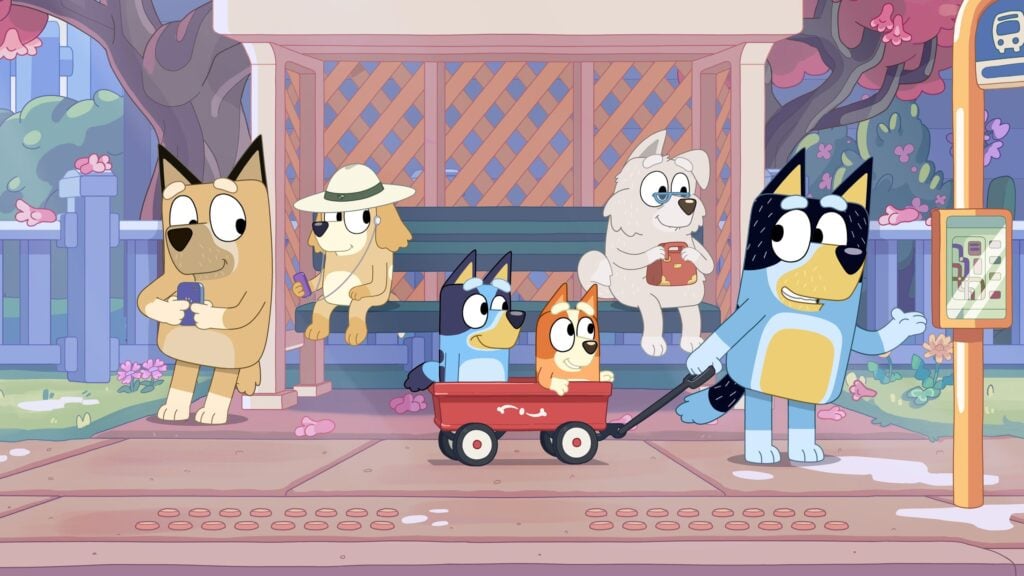
Patience is a form of emotional intelligence that can be hard for a child to learn. Understanding that some things or conversations take time can be frustrating, especially when they want something immediately. Luckily for parents, the theme of patience is explored sporadically throughout Bluey.
“Wagon Ride” is a great episode that teaches patience. Bandit takes Bluey and Bingo on a wagon ride to the playground, but their playtime gets interrupted when he stops to talk to multiple friends and neighbors on the way. It’s hard for the girls to wait while their dad talks, but patience becomes the theme of the wagon ride.
Kids can feel frustrated or bored when they’re being patient, but it also comes with self-awareness. Slowing down and recognizing what you’re feeling is a strong form of emotional intelligence and is linked to impulse control.
Where to Watch: “Wagon Ride” Season 1, Episode 24
Resolving Grief Through Roleplay
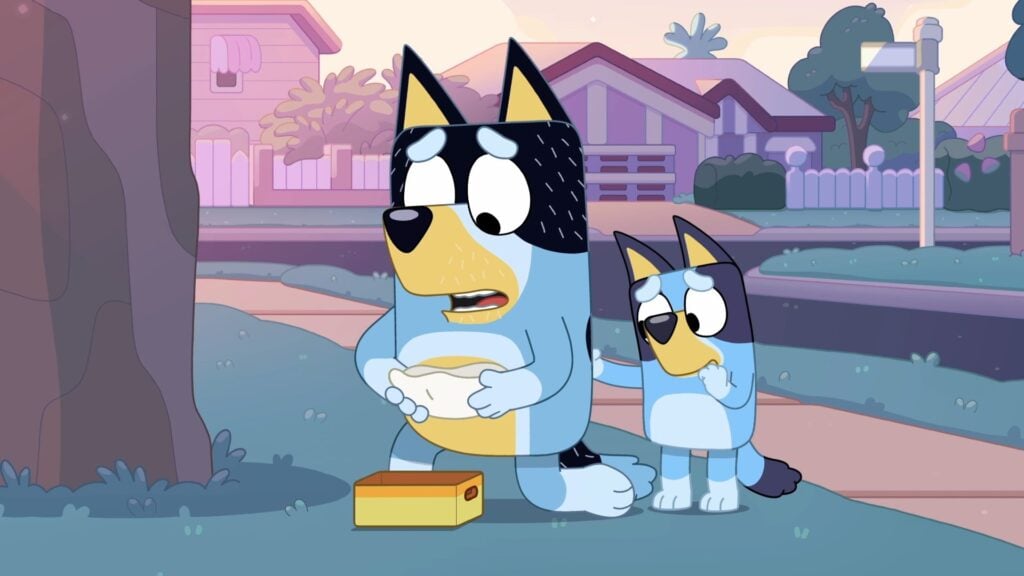
Safely working through and resolving grief is a hard form of emotional intelligence. Like patience, working through things that make a child sad or uncomfortable is incredibly hard at such a young age. However, Bluey’s strong focus on situational lessons can make things easier.
In the episode “Copycat,” Bluey is shocked when she comes across an injured bird. Bandit and Bluey take the bird to the vet, where she hopes for a quick recovery, but the bird dies instead. This is one of the first forms of dark grief that’s showcased in Bluey. Bandit did a great job of letting Bluey feel every emotion and answering all of her questions. He never shied away from the realities of life.
Bluey walks through grief by roleplaying with Bandit and Bingo. She acts out what happened when the bird dies and what that means for the future. It’s a brilliant way of teaching kids about loss without being too scary.
Where to Watch: “Copycat” Season 1, Episode 38
Letting Go Of Friendships
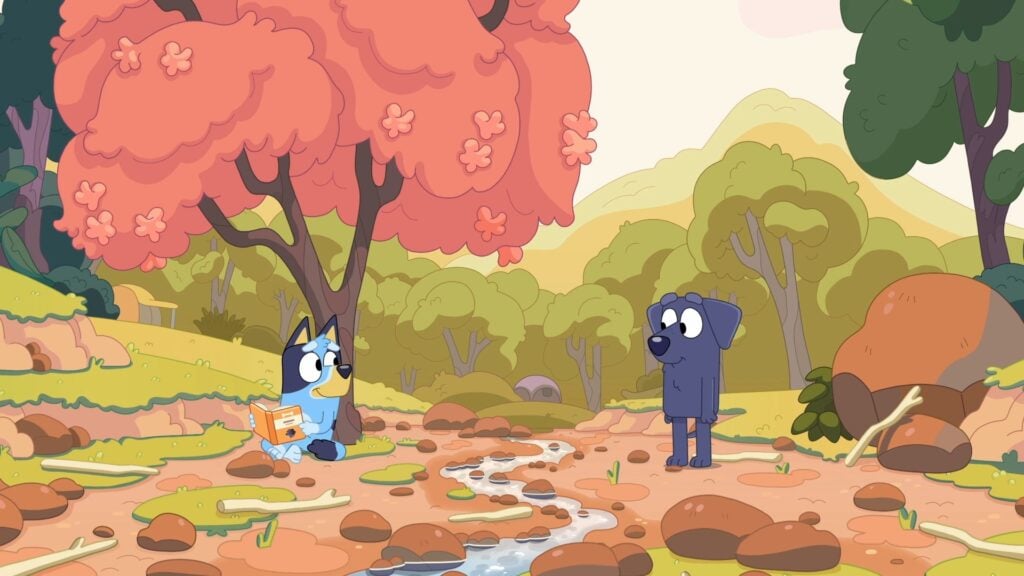
Learning that it’s possible to lose touch with a friend or loved one is a hard concept for kids. This is most obvious when kids graduate from one school year to the next. Friends are lost, and new friends are made. In Bluey, a great example of accepting loss and growth (at the same time) is in the episode “Camping.”
In the episode, Bluey and her family go camping, where she meets a fellow camper, Jean-Luc. They didn’t speak the same language but that didn’t stop them from playing and having fun all day. One morning, Bluey woke up, and Jean-Luc and his family had already left the campsite.
Bluey was sad that she never got to say goodbye and that she’d never see him again. However, meeting great people and leaving them is a sign of emotional growth.
She met someone she connected with, had fun with them, and then let go of their friendship when life took them in separate directions. It takes self-awareness and a deep understanding to grasp the possibility of loving and leaving.
Where to Watch: “Camping” Season 1, Episode 43
After you’ve checked out these Bluey episodes about emotional intelligence, be sure to check out our list of the 20 best Bluey Episodes and the lessons they teach kids.