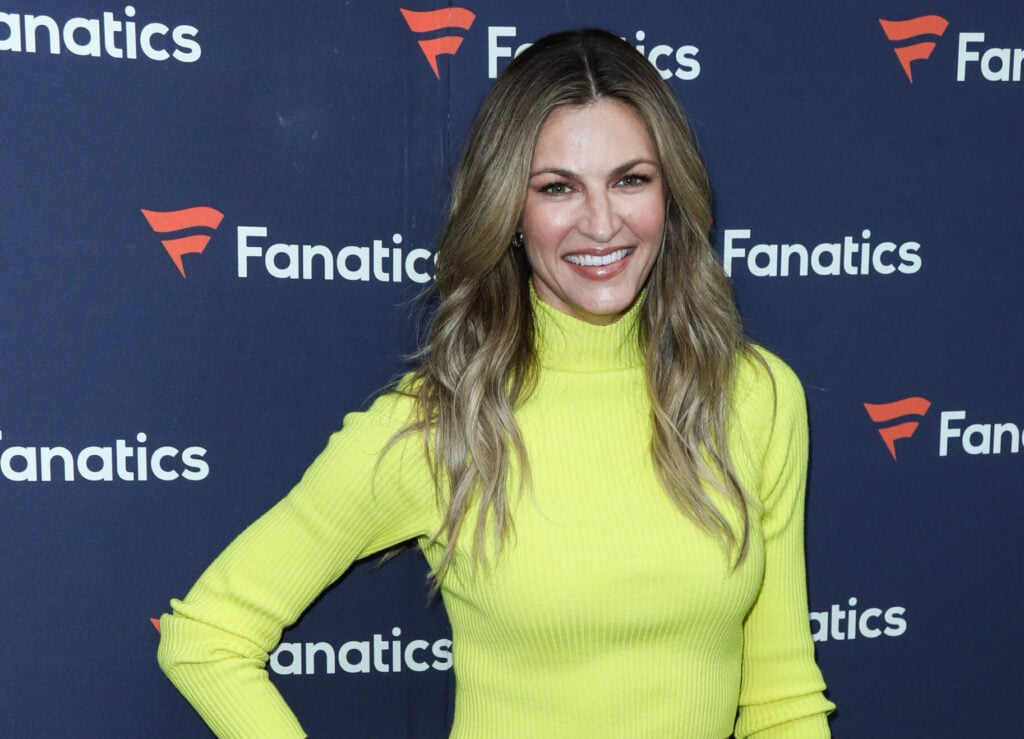
Erin Andrews is refusing to close the door on pregnancy at 47, telling listeners of her podcast that a failed IVF round has done nothing to shake her conviction that her body is still capable.
The NFL sportscaster’s candid update is drawing both admiration and a broader conversation about what fertility over 40 actually looks like for most women.
A Failed Round, an Unshaken Resolve
During the April 14 episode of Calm Down With Erin and Charissa, Andrews told cohost Charissa Thompson that her most recent IVF attempt had not succeeded. She had returned to her fertility doctor, tried a new protocol involving Human Growth Hormone, Gonal-f, and Clomid, and came away disappointed. Rather than stepping back, Andrews leaned into the fight. “I just feel like, I believe my body can do it,” she explained on the podcast, as first reported by Us Magazine. “Even though I know that my age — with what history says — is not great with producing eggs and the viability of your eggs.”
Andrews has also acknowledged the science while admitting she’s not letting it deter her: “There’s just some s*** in me that I’m like, ‘Watch me do it,'”. Her doctor, she noted, has told her he will be honest when the time truly comes to stop — and until that moment arrives, Andrews intends to keep going.
A Decade of Heartbreak and Hope
Andrews and her husband, former NHL player Jarret Stoll, welcomed their son Mack via surrogate in 2023, a milestone that followed years of setbacks rooted in a cervical cancer diagnosis Andrews received in 2016.
Treatment significantly complicated her fertility options, and the couple spent years navigating IVF before Mack’s arrival. Cohost Thompson, reflecting on that road, observed that Andrews had encountered obstacle after obstacle on the way to her son and had refused to be stopped by any of them.
Now, Andrews is describing the pull back toward fertility treatment as something almost compulsive. “It’s crazy, because once you get back on the phone with your fertility doctor and you start talking about the journey again, PTSD all comes back of how crappy you felt, how numb your body gets, just the fear of loss.” Andrews said on her podcast that she has also been open about the financial and emotional strain the process places on a marriage, telling listeners that IVF is “taxing on your financials” and that couples must extend each other patience and grace throughout.
Stoll, 43, has been a steady presence through the lows. Andrews credited him with helping her process the moments when she felt like a failure, saying his willingness to simply acknowledge that things were hard made an enormous difference.
The Waiting Room That Changed Everything

One of the most striking parts of Andrews’ ongoing public conversation about fertility is her explanation for why she started talking about it at all. She told E! News that sitting in a packed fertility clinic waiting room during her eighth attempt was what finally broke her silence.
“These waiting rooms are packed,” she recalled thinking. “Why am I being so embarrassed and quiet about this?” Once she began sharing, the response from other women going through the same thing was immediate and overwhelming. The support, she said, was “really awesome.”
That decision to speak openly has made Andrews a touchstone for women navigating infertility, particularly those doing so later in life. She has previously described the ritual of processing bad news from her fertility clinic, the early morning appointments, the difficult phone calls to her husband, and the small comforts that got her through the day.
The emotional texture of those stories resonates precisely because they are so specific and so human.
The Bigger Picture: What Celebrity Fertility Stories Often Leave Out
Andrews’ story is part of a growing wave of public figures announcing pregnancies or fertility journeys in their forties. Aubrey Plaza, Sienna Miller, Savannah Miller, Gisele Bündchen, and Hilary Swank are among the celebrities who have recently shared news of pregnancies or births at 41 or older.
The trend has prompted real questions about what these stories communicate to the millions of women who are quietly struggling.
A columnist writing in The Independent about the broader pattern of celebrity fertility announcements over 40 argued that the upbeat framing of these stories often glosses over brutal realities.
“That’s why these celebrity ‘miracle’ stories are selling a sometimes impossible dream of motherhood over 40,” the columnist wrote. “While they share about how it is ‘easier’ to have children in their forties, they rarely talk about the challenges of getting pregnant after 40.”
The columnist spent years and enormous sums on IVF before having children at 40 and 42, and described the experience as an “utter nightmare” that bore no resemblance to the breezy narratives celebrities often offer.
The statistics support that concern. According to data cited in The Independent, women aged 40 to 42 who pursue IVF have a birth rate of about 10 percent per embryo transferred, dropping to roughly 5 percent for women aged 43 to 44.
A large study published in the BMJ found that nearly 55 percent of intended pregnancies in women aged 42 resulted in fetal loss. Natural conception after 45 carries an estimated success rate of around 1 percent. The CDC has reported rising birth rates among women in their forties, but those numbers exist alongside these sobering clinical realities.
Why Erin Andrews Journey Feels Different
What separates Andrews from the broader celebrity fertility conversation is the degree to which she has refused to make it look easy. She has talked about feeling like a failure. She has described the physical numbness that comes with repeated hormone treatments.
She has acknowledged that her age is working against her and said it plainly, without softening it. Her defiance is not denial — it is a choice she is making with full awareness of the odds.
That combination of honesty and determination is rare in public fertility narratives, and it is why her updates land differently than a simple pregnancy announcement. Andrews is not selling a dream. She is showing the work.
What This Means For Families Navigating Fertility
Andrews’ willingness to share the unglamorous details of IVF, the failed rounds, the fear of returning to a place of loss, the strain on a marriage, gives other families permission to name those same experiences.
Fertility treatment at any age is physically demanding and emotionally destabilizing, and the silence that often surrounds it can make the isolation feel even heavier. When someone with a public platform describes sitting in a waiting room and deciding she is done being quiet about it, that moment has meaning far beyond her own story.
Whether Andrews ultimately achieves a second pregnancy or not, her doctor has promised to tell her when it is truly time to stop. Until then, she is pressing forward and making sure that no one going through the same thing feels alone in that waiting room.