
Forget the daily grind, parents operate on a WEEKLY grind. Wake up, get ready, school, work, pick up, activities, dinner, homework, bedtime – rinse and repeat for five solid days in a row. Not to mention the countless weekend activities that seem to build up out of nowhere!
We are over-scheduled and tired as parents, but what does that mean for our kids? Do the endless attempts at enrichment and entertainment, hoping to help our kids succeed, end up backfiring?
Today’s childhood is more structured than ever, but research suggests kids may actually need more unstructured time.
The Case For Less Structured Time
Before we start canceling art class and basketball practice, let’s review some of the most recent research. The “over-scheduling hypothesis” posits that excessive structured activities may negatively affect childhood development.
This hypothesis makes sense to many parents, and some studies have supported these observations (Caetano et al., 2024). We notice when our children refuse to get dressed for their soccer game or are reluctant to attend a birthday party. Their moods may shift quickly to anxiety or irritability, and tensions can rise between parents and children when they do not want to attend a scheduled event.
We may notice that our kids complain of boredom more frequently. Short periods of unstructured time may highlight their lack of independent play skills or their ability to tolerate less stimulation.
The Case For Structured Activities
Although we can see why the “over-scheduling hypothesis” may explain some of this behavior in our children, these claims have been largely dismissed. The majority of research has shown that structured activities themselves lead to positive outcomes for children (Mahoney, et. al, 2012).
Organized activities can increase social skills, problem-solving abilities, confidence, teamwork, and tolerance to frustration (Lee et al., 2020). Overall, kids grow and excel in structured activities by learning about different experiences, people, and themselves.
Bottom line: kids benefit from structured activities, but they also need time that is unscripted and self-directed. It is not the actual structured activities that lead to challenges, but the number of activities scheduled in one week that negatively impacts development.
It’s Not The Activities, It’s The Amount Of Them

Research has confirmed that the volume of activities is what increases feelings of overwhelm, stress, pressure, and anxiety for children. Just like adults, children need “downtime” too. The American Academy of Pediatrics (AAP) has stated that unstructured play time is essential for healthy development.
Play And Boredom Are Essential
Endless structured activities prevent kids from having time to explore their own ideas, devise their own solutions to problems, and learn to create something out of nothing.
Harvard’s Center on the Developing Child emphasizes that self-direction, goal-setting, cognitive flexibility, and learning about personal preferences are outcomes of play. These are essential life skills that only arise during the unstructured playtime we give our children.
Finding A Balance
So, how do parents balance enriching, structured activities for our kids’ lives while still allowing them to develop their own independent skills? Below is a list of ways to prioritize unstructured time along with structured fun.
Protect Unstructured Time
Set aside a few hours a week (weekends or weeknights are options) for “Nothing Time.” This might start as a shorter period of time as children get used to the idea (20-30 minutes).
As kids develop more tolerance of this time frame, the time block may expand to an hour or two. Make this time mandatory, not optional!
Allow Boredom Without Fixing It
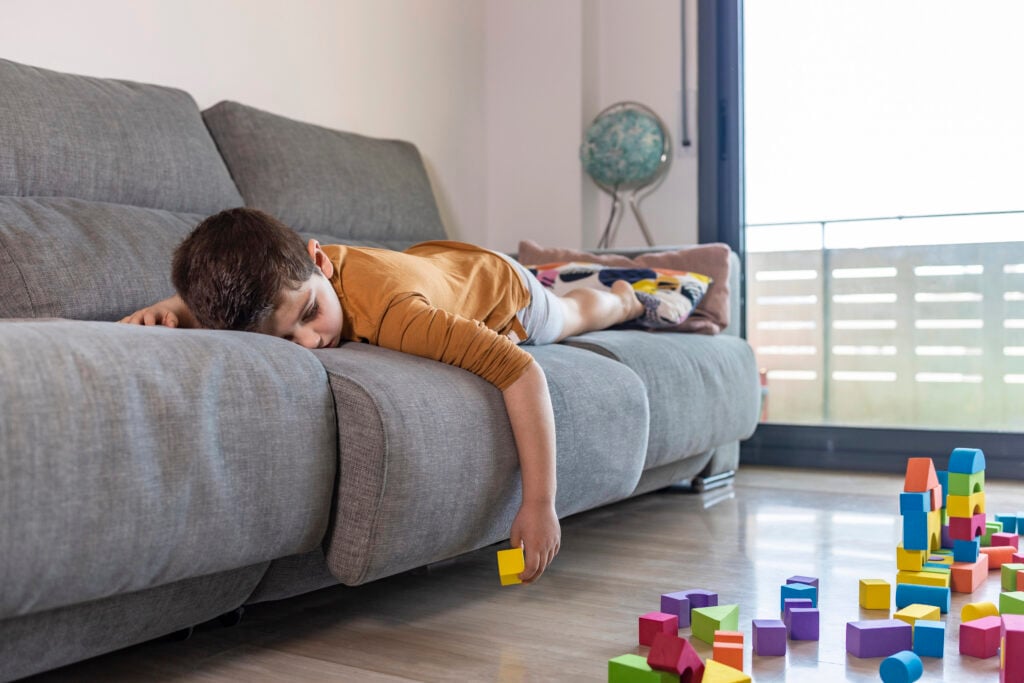
Repeat after me: “Boredom is a good thing.” Letting our kids be bored will shift the tense energy between kids and adults away from the need to supply an endless stream of entertainment or screens for our kids and toward improving their independent skills.
As explored by Begnaud et al. and the University of Maryland, boredom can lead to creativity, problem-solving, and increased executive functioning.
If your child comes to you bored, approach with curiosity instead of offering direction, “You have 30 minutes, which of these things do you want to try? Some show me when you are done!”
Prioritize Free Play (Outdoors If Possible!)
Research has demonstrated physical and mental health benefits of playing outdoors, including improved immune function, increased attention, and improved mood. UNICEF outlines the importance of even a 20-minute walk outside.
A walk outside can be a time to talk, or give your younger kids a semi-structured task that allows them to be creative: “When we are walking, let’s try to pick flowers that are every color of the rainbow.”
Limit Number Of Activities
The goal is balance! Applying a “one structured activity per day” rule is a helpful way to set expectations for both scheduled and unscheduled time. Tell your children about the unstructured time block, too, and put it on the calendar so they begin to understand that unstructured time is an activity in itself!
Follow Your Child’s Interests
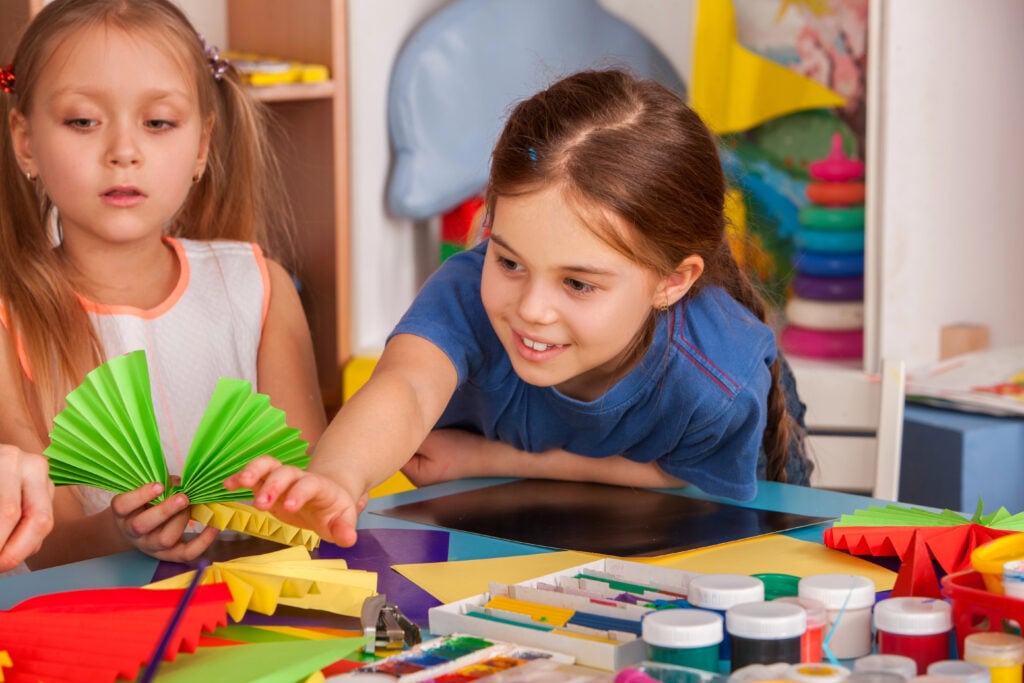
Ask yourself these important questions to maximize the positive impact of structured and unstructured time: Does my child enjoy this, or am I doing this out of pressure?
Committing to activities and seeing them through to the end is important. However, if your child is not truly enjoying and motivated by a structured activity, try something new!
Balance Is Key
Chronic burnout has become a norm with adults in recent years (Khammissa et al., 2022). As we know, constant activity, pressure, and stress do not guarantee success!
In a world that pushes constant productivity, giving children space to do nothing may be one of the most important things we can do for their development.