

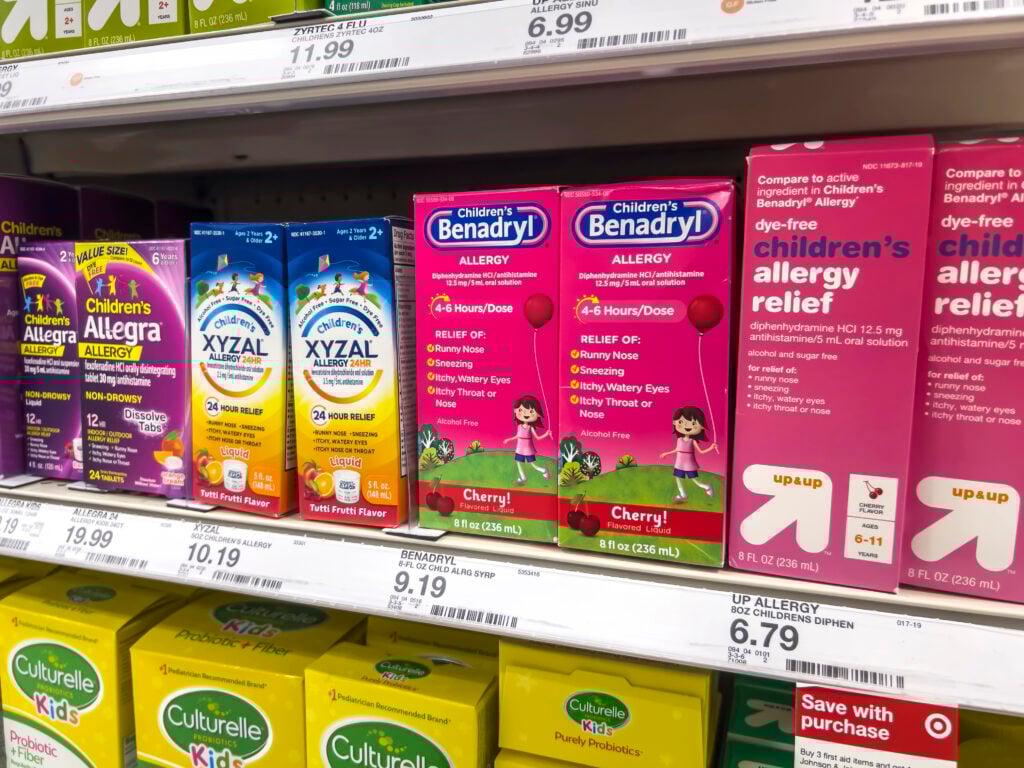
A TikTok trend that began in 2020 and claimed the life of at least one teenager has returned. The so-called Benadryl Challenge is circulating again on social media, and doctors are once again sounding alarms about a trend that has now claimed at least one more life and sent dozens of additional young people to hospitals.
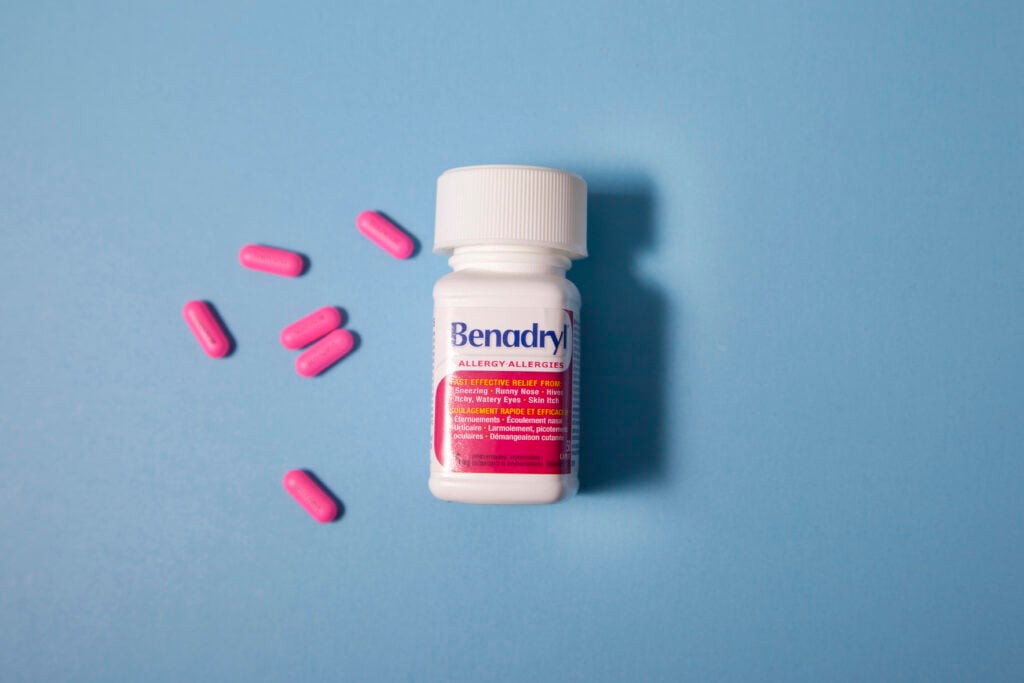
The drug involved, diphenhydramine, the active ingredient in the common over-the-counter allergy medication Benadryl, is almost certainly already sitting in your medicine cabinet.
What the Challenge Is And Why It Is So Dangerous
The premise of the challenge is straightforward: teenagers swallow massive quantities of diphenhydramine, pushing past its sedating effects in pursuit of hallucinations or a euphoric high. What they often get instead is a medical emergency.
At doses exceeding 300mg — far above any therapeutic amount — diphenhydramine can send the heart into dangerous irregular rhythms, trigger seizures, induce coma, and prove fatal.
The drug is a first-generation antihistamine with anticholinergic properties, meaning it affects the nervous system in ways that become profoundly toxic at high doses. Because it requires no prescription and costs just a few dollars at any pharmacy, it is uniquely accessible to curious or peer-pressured teenagers.
A Father’s Devastating Loss
The human cost of this trend is not abstract. Jacob Howard Stevens, a 13-year-old from Greenfield, Ohio, swallowed 12 to 14 Benadryl pills, and the resulting seizures proved unsurvivable, a story his father, Justin Stevens, shared with ABC 6 News. His father described the aftermath to ABC 6 News in terms no parent should ever have to speak: “No brain scan, there was nothing there. They said we could keep him on the vent, that he could lie there, but he will never open his eyes, he’ll never breathe, smile, walk, or talk.”
Jacob’s death is not an isolated tragedy. A 15-year-old girl from Oklahoma lost her life in August 2020 after consuming a fatal quantity of the medication following exposure to related TikTok videos, and that same year, Cook Children’s Hospital in Fort Worth, Texas, reported admitting three teenagers who had seen videos urging them to swallow dozens of the pills. The pattern, a teen watches a video, attempts the challenge, ends up in an emergency room or a morgue, has now repeated itself across multiple years and multiple states.
New Research Confirms The Trend Never Truly Went Away
What makes the current resurgence especially alarming to medical professionals is the data showing this was never fully contained. Research presented at the American Academy of Pediatrics 2025 National Conference examined diphenhydramine-related adverse event reports to the FDA from January 2013 through December 2024, covering individuals aged 10 to 25.
The study was authored by Noelia Swymeler, who completed her training as a resident physician in pediatrics at the University of Oklahoma Tulsa School of Community Medicine, and it analyzed 413 reports that met the study criteria. The year with the highest number of reports was 2023, with 73 cases, surpassing even the 62 reports recorded in 2020 when the challenge first went viral.
Spikes in reporting also appeared in July 2020, December 2020, July 2021, February 2023, May 2023, January 2024, and June 2024, suggesting the challenge resurfaces in waves rather than fading permanently.
“The fact that we continue to see spikes in harmful diphenhydramine use years after the challenge first went viral shows just how powerful and dangerous social media trends can be,” Swymeler said, according to an AAP press release. She added that “this research highlights the need for better education, stronger safeguards, and continued awareness to prevent teens from being harmed by medications they can easily find in their own homes.”
Her research calls on not just parents and healthcare providers but also social media companies themselves to take more aggressive action, with the AAP noting that dangerous content stays within reach of new audiences long after the original viral moment has passed.
TikTok has stated publicly that it strictly prohibits content promoting dangerous behavior and has blocked searches related to the challenge for years to discourage copycat activity.
The FDA previously issued a formal warning that taking higher than recommended doses of diphenhydramine can lead to serious heart problems, seizures, coma, or death, and the agency urged TikTok to remove related videos from its platform. Despite these efforts, the research data make clear that the content continues to reach teenagers.
How To Talk To Your Teen About Social Media ‘Challenges’
The Benadryl Challenge exists within a broader ecosystem of dangerous social media trends — from challenges involving physical violence against teachers to ones encouraging teens to steal school property or consume toxic household substances. What all of these trends share is an audience of young people whose brains are still developing.
The prefrontal cortex, the region responsible for reasoning and impulse control, does not fully mature until a person reaches their 20s, which means teenagers are neurologically less equipped to weigh long-term consequences against short-term social rewards like likes and shares.
Child development experts and psychologists advise parents to resist the instinct to immediately confiscate devices or lead with punishment. A more effective approach involves listening first, asking your child what they think about these challenges without interrupting or judging, so you can understand whether the motivation is peer pressure, curiosity, a desire to fit in, or something else entirely.
From there, parents can walk through real consequences using actual news cases, encourage teens to pause before acting by asking whether something could hurt them or someone else, and work on building the kind of emotional intelligence that makes a teenager less susceptible to viral pressure in the first place.
On the practical side, the FDA and pediatric researchers both recommend that families treat over-the-counter medications with the same security mindset as prescription drugs. Locking up or storing medications out of easy reach is a concrete step that could prevent a tragedy. If you suspect your child has taken too much medication and is hallucinating, cannot be awakened, is having a seizure, or is showing any signs of distress, call 911 immediately or contact your local Poison Control.
Why This Moment Demands Your Attention
It would be easy to assume that a trend from 2020 has run its course. The data says otherwise. Social media platforms preserve dangerous content in ways that allow it to resurface years later, reaching a new generation of teenagers who were in elementary school when the challenge first appeared.
The medicine cabinet in your home is not a neutral object; for a teenager who has just watched a compelling video, it is an invitation. The conversation you have with your child today, however uncomfortable, may be the one that matters most.

