

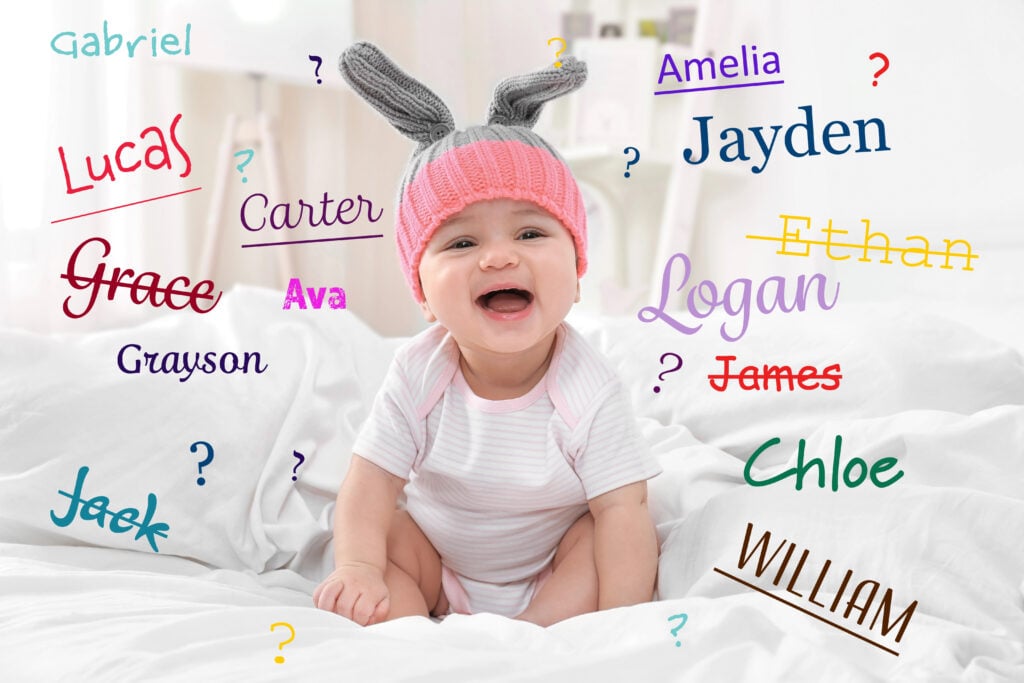
Nostalgia for the Y2K era has moved well beyond fashion and music, and it has now reached the nursery. Baby names that topped the charts during the early 2000s are emerging as candidates for a vintage revival, giving today’s expecting parents a fresh reason to revisit a decade’s worth of once-familiar favorites.
The timing makes sense. Parents who were children or teenagers during the 2000s are now in their prime child-bearing years, and the names they grew up hearing carry a warm familiarity without feeling dated in the way that, say, a name from the 1950s might.
That sweet spot between “recognizable” and not yet overused is exactly what many parents are searching for when they open a baby name app at midnight.
Why Vintage Names Keep Coming Back
Naming trends have always moved in cycles. A name falls out of fashion, a generation passes, and suddenly it sounds fresh again to ears that never grew tired of it.
The 2000s names now circling back follow the same pattern that brought mid-century names like Eleanor, Arthur, and Hazel back into rotation a decade ago.
What makes the Y2K wave distinctive is the cultural moment driving it: a broad, cross-platform nostalgia for early-internet aesthetics, low-rise jeans, and the particular optimism of that pre-smartphone era.
For expecting parents, that nostalgia can be a genuine starting point, but naming experts and experienced parents consistently caution that a trend alone is a shaky foundation for a decision your child will live with for life.
The Problem With Chasing Uniqueness
One of the most persistent traps in modern baby naming is the pursuit of a name so distinctive that it stands apart from every other child on the class roster. The irony, as parent.com points out, is that chasing uniqueness has itself become a trend, making invented spellings and made-up constructions feel less original than their creators intended.
When every parent on the block is trying to be different, the results tend to cluster in predictable ways: names that are hard to spell, hard to pronounce, and surprisingly common among children born in the same two-year window.
The deeper issue is that a name built solely on the desire to stand out rarely carries the staying power parents hope for. Unusual spellings create confusion at school registration desks and doctors’ offices without delivering lasting distinctiveness.
A name rooted in something more substantial, whether that’s family history, cultural heritage, religious tradition, or a place with genuine personal significance, tends to age far better than one chosen purely for its novelty.
That doesn’t mean a 2000s revival name can’t be the right choice. It means the nostalgia should be a door, not the whole house. If a name from that era also connects to your family’s story or carries a meaning that resonates with you, the trend becomes a bonus rather than the entire rationale.
Five Things Worth Considering Beyond The Trend
Whether you’re drawn to a Y2K-era name or something else entirely, the most useful framework looks past the moment and toward the long term. Here are the considerations that come up most consistently among parents who have navigated the decision:
- Family history. Most family trees, if you dig a few generations back, contain names that are genuinely unusual and genuinely meaningful. A great-grandmother’s maiden name or a passed-down first name carries a story that no invented spelling can replicate.
- Cultural and ethnic heritage. A name that acknowledges where your family comes from gives a child a built-in connection to something larger than themselves, regardless of whether the name is currently trending.
- Religious or literary tradition. Sacred texts and classic literature are deep wells of names with centuries of resonance behind them. The caveat: read the story that goes with the name before committing, since some beloved-sounding names belong to characters with complicated histories.
- A meaningful place. A city where you met your partner, a town where your family has roots, or a landscape that shaped you can translate into a name with a story worth telling.
- The name’s actual meaning. Looking up what a name means before choosing it sounds obvious, but many parents skip this step. A name that aligns with a value or quality you genuinely want to pass on adds a layer of intention that outlasts any trend cycle.
The Practical Side: Sound, Flow, And The Nickname Problem
Beyond meaning and motivation, the mechanics of a name matter more than most parents anticipate before they’re in the thick of the decision.
How a name sounds alongside your last name, whether it has a natural rhythm, and what nicknames it invites are all worth thinking through carefully, according to baby–naming guidance from What To Expect.
Nicknames, in particular, have a way of taking on a life of their own. A What to Expect community member named mergirl2325 put it plainly: “You can’t always control how other people will give a nickname, but you can always use his full name and introduce him that way in hopes that people will follow suit,” she told whattoexpect.com.
The takeaway is that you can influence but not fully dictate what your child ends up being called, so it’s worth making sure you’re comfortable with both the formal version and the most likely shortened forms.
Initials deserve a look, too. It’s easy to overlook how a first name, middle name, and last name combine until someone points out the result. One What to Expect community member, kirstynwoah, shared with What To Expect that her daughter’s initials spell out something she hadn’t fully considered: “My daughter’s initials are EMW… but middle names aren’t really used much so really it’s EW. We thought about it and figured we liked the name too much.”
She added that determined kids will find ways to tease regardless, but it’s still a detail worth catching before the birth certificate is signed.
Cadence is the factor that often gets overlooked entirely. A name that sounds beautiful on its own can feel awkward when paired with a particular last name, and the reverse is also true: a simple, even plain-sounding name can become elegant when it flows naturally with the family name. Say the full name out loud, repeatedly, in different contexts, before you commit.
Balancing Nostalgia With Intention
The Y2K naming revival is a genuine cultural moment, and there’s nothing wrong with letting it spark ideas. Some of the names that peaked in the early 2000s are genuinely lovely, and their current rarity gives them exactly the freshness that parents are looking for.
The strongest choices, though, will be the ones where the nostalgic appeal and a deeper personal connection happen to land on the same name.
If you’re drawn to a name because it reminds you of a childhood friend, a favorite song from that era, or simply a time that felt simpler, that emotional resonance is real and worth honoring.
Just take the extra step of asking whether the name also holds up on the practical checklist: sound, flow, nicknames, initials, meaning, and the story you’ll tell your child about why you chose it.
This Trend Matters For Today’s Parents

The Y2K baby name revival is a useful reminder that naming trends are less about predicting the future and more about understanding the present.
Parents today are navigating a naming landscape that rewards both authenticity and intentionality. A name pulled from a trend list can absolutely be the right name, but only when it’s chosen for reasons that will still feel meaningful a decade from now, when your child is old enough to ask why you picked it.
The parents who seem happiest with their choices are the ones who used the trend as a starting point and then did the deeper work of making the name their own.

