


When a mother posted on Reddit asking whether her 14.5-year-old was too young to babysit, she touched a nerve that millions of parents recognize immediately.
The question, highlighted by the Reddit community’s response to the post, quickly grew into a broader debate about teen readiness, parental judgment, and what it actually takes to hand a young person responsibility for another child’s safety.
The short answer, according to child development experts and pediatric health sources, is that 14.5 is not too young, but age alone tells you very little. Maturity, temperament, and preparation matter far more than the number of candles on a birthday cake.
No Law Tells You The Answer
One of the first things parents discover when they start researching this question is that the legal landscape offers almost no guidance. There is no federal law in the United States setting a minimum babysitting age.
At the state level, most laws that do exist address when a child can be left home alone, typically placing that threshold around age 12, not when a child can supervise others. That gap leaves the decision squarely in parents’ hands, which is both liberating and a little daunting.
As WebMD’s guidance on tween readiness for solo caregiving notes, expert consensus generally holds that children around 10 or 11 can handle being alone for short daytime stretches, provided they are comfortable and mature enough, but that nighttime solo stays warrant waiting another year or two. T
Taking on responsibility for someone else’s child goes a step further, demanding a higher level of composure and sound judgment than simply being home alone.
What Maturity Actually Looks Like
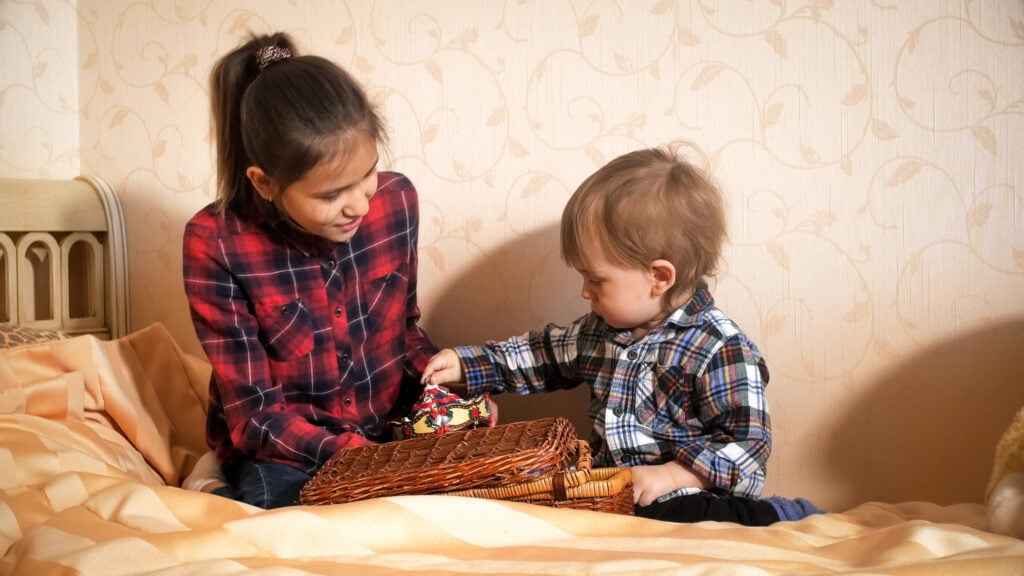
Experts consistently point to a checklist of behavioral markers rather than a birth certificate when evaluating whether a young person is ready to babysit. Does the teen finish homework without being reminded? Do they follow household rules consistently?
Have they demonstrated calm, sound judgment when something unexpected happened? Are they comfortable asserting authority without losing control of a situation?
WebMD’s framework for parents suggests applying the same hiring standards to your own child that you would apply to any outside babysitter you were considering.
That reframe is useful: if you would not hire a 12-year-old stranger to watch your toddler, you should think carefully before assuming your own 12-year-old is automatically ready.
Conversely, a genuinely responsible 13-year-old who has demonstrated reliability across multiple areas of life may be more prepared than a distracted 16-year-old who has never been tested.
The ability to handle emergencies calmly is particularly important. A babysitter who panics when a child chokes, falls, or has a severe allergic reaction can make a bad situation worse. That is why training, not just age, is part of the readiness equation.
Training Fills The Gap That Age Cannot
For teens who are eager but still building confidence, formal training programs offer a structured path forward.
The American Red Cross runs First Aid and Safety Training courses specifically designed for young people ages 11 to 15. Many local YMCAs offer babysitting courses that cover CPR and water safety, as well as practical childcare skills.
These programs give teens hands-on experience with scenarios they might otherwise encounter for the first time in a real emergency, which is exactly the wrong moment to be learning.
HuffPost’s look at how babysitting norms have shifted over generations points out that the cultural context around hiring young sitters has changed considerably since the Baby Boomer era, when parents routinely relied on neighborhood teens with little vetting beyond knowing the family.
Today’s parents tend to be more deliberate about safety, which has led to both greater scrutiny of young babysitters and more resources to help them prepare.
One intermediate step worth considering before a teen takes on solo babysitting is serving as a mother’s or father’s helper. In this arrangement, the teen cares for a child while a parent remains in the home, providing a supervised rehearsal that builds real skills without the full weight of independent responsibility.
It is a low-stakes way to discover whether a young person’s confidence matches their actual capability.
The Historical Shift In How We Think About Teen Responsibility

Babysitting has long served as a first job and a first taste of genuine accountability for American teenagers. Decades ago, the question of readiness was largely informal, settled by neighborhood reputation and parental intuition.
The conversation has grown more structured over time, partly because awareness of child safety risks has increased and partly because parents now have access to expert frameworks and community forums, like Reddit, where they can crowdsource the judgment calls that previous generations made in isolation.
HuffPost noted that the debate over teen employment and responsibility has affected families across all levels of society, with parents weighing the value of early work experience against the desire to preserve childhood as long as possible.
That tension is not new, but the tools available to navigate it, from formal training programs to online parent communities, are far more developed than they were a generation ago.
Many parents draw an informal line around age 13 as a general starting point for babysitting, though that number reflects community consensus more than any scientific standard, as HuffPost reported.
What the research and expert guidance consistently reinforce is that the range of readiness is wide: some 12-year-olds are genuinely prepared, and some 15-year-olds are not.
A Practical Framework For Parents
If you are trying to decide whether your own teen is ready, consider working through these questions honestly:
- Has your teen shown consistent responsibility at home, completing chores and schoolwork without constant reminders?
- Do they stay calm under pressure, or do they tend to escalate when things go wrong?
- Are they comfortable being in charge and enforcing rules with younger children?
- Have they completed any first aid or babysitting training?
- Do they know what to do in a basic emergency, including when and how to call for help?
- Are they genuinely comfortable with the idea, or are they feeling pressured into it?
A trial run is also a smart move regardless of age. Start with a short outing of 30 to 60 minutes, debrief afterward about what went well and what felt hard, and build from there. Gradual exposure to increasing responsibility is how confidence and competence develop together.
It is also worth remembering that babysitting is not a single skill but a cluster of them: childcare knowledge, emergency response, emotional regulation, and the ability to manage another person’s behavior.
Teens who are strong in some areas and weaker in others may benefit from targeted preparation before taking on a full babysitting job.
Ultimately, It’s Up To Parents
The Reddit mom’s question resonates because it sits at the intersection of two things parents care deeply about: keeping children safe and raising teenagers who are capable, confident, and ready for adult responsibility.
Those goals are not in conflict. A teen who earns the trust to babysit is also building the self-reliance and judgment that will serve them well long after the babysitting years are over. Ultimately, the most useful questions a parent can ask are not just whether their child is old enough, but whether that child has the maturity, training, and temperament to handle the responsibility.
If the answer to those deeper questions is yes, the question of age becomes much easier to answer. For parents navigating the broader challenge of what each stage of parenting demands, the teen years in particular call for this kind of intentional, graduated trust-building.

