

More Than Just Screen Time
For years, parents have often heard that video games are something to limit or avoid. But research and child-development experts suggest that gaming can offer genuine benefits, including opportunities for problem-solving, cooperation, creativity and social connection.
Games can also give children a way to challenge themselves and experience success after working through difficulty. As Good Housekeeping notes, the research increasingly challenges the idea that gaming is automatically harmful, while emphasizing that moderation and thoughtful parental involvement still matter.
That doesn’t mean unlimited gaming is healthy. The same research suggests that the amount and context of play matter, with excessive gaming potentially interfering with sleep, schoolwork, exercise and other activities.
A Workout for the Brain
One of the most interesting potential benefits is cognitive development. Research highlighted by the NIH found that children who played video games performed better on certain measures of memory and response inhibition than children who did not play, while brain imaging showed increased activity in areas associated with attention and memory.
The study analyzed data from more than 2,000 children, making it one of the larger investigations into the relationship between gaming and children’s cognitive abilities. Importantly, the researchers emphasized that the findings show an association rather than proving that video games themselves caused the differences.
Different games can exercise different skills, too. Strategy and building games can encourage planning and problem-solving, while fast-paced games may demand attention, quick decisions and visual-spatial processing.
Play Together, Stay Connected
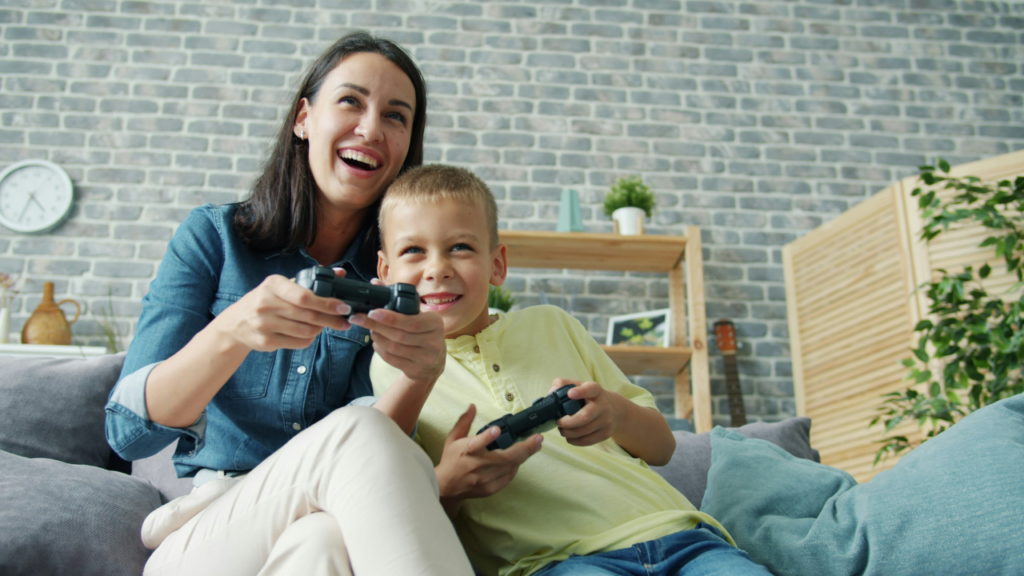
Perhaps one of the easiest ways parents can make gaming more positive is to join in. Playing together turns screen time into shared family time while giving parents a firsthand look at what their children are actually doing. From Psychology Today; “The best advice I can give to parents of gamers is: Play video games with your kids.”
Co-playing also creates natural opportunities for conversations about frustration, competition, teamwork, online behavior and decision-making. Parents can better understand why a particular game appeals to their child while simultaneously checking its content, chat features and overall suitability.
That involvement can make setting boundaries easier, too. Rather than simply ordering a child to turn off the console, parents who understand the game can establish more realistic stopping points and discuss why limits are important.
The goal isn’t to declare video games universally good or bad. Used thoughtfully, they can be another form of play—one that entertains kids while potentially exercising their brains and bringing families closer together.

