


Christmas shopping can get hectic as parents search for gifts that will make their children’s holiday special. But before buying that talking doll, remote-controlled car or colorful stuffed animal, it is worth checking whether the toy is safe for the child.
The American Academy of Pediatrics (AAP) and WebMD highlight several risks parents should consider when choosing children’s gifts. From loose magnets to noisy toys, some hazards may not be immediately obvious when shopping online or browsing store shelves.
Here are five safety checks to make before putting toys under the Christmas tree.
1. Read the Age Label and Check for Recalls

A toy’s recommended age range is not just a suggestion about how difficult it might be to use. It also helps parents understand whether the product is appropriate for a child’s developmental stage and whether it could present safety risks.
The AAP advised parents to read warning labels and follow the manufacturer’s age recommendations. A toy intended for an older child may contain small components that a toddler could swallow.
Check the product’s recall history, particularly when buying secondhand toys. Parents can search the U.S. Consumer Product Safety Commission (CPSC) database before purchasing a gift. If a toy has been recalled, it should not be given to a child.
2. Examine the Toy’s Construction and Materials

Stuffed toys may appear soft and safe. However, if eyes are not securely attached, seams are loose or stuffing is showing, the toy may be unsafe. The AAP recommended purchasing well-made stuffed toys. Ensure that parts are securely attached and that the material can be safely machine-washed.
Plastic toys may be unsafe if they are very thin. These can easily break and cause sharp edges. Additionally, loose ribbons or strings on stuffed toys may be a choking hazard.
Finally, ensure that toxic materials have not been used in the toy. The AAP recommended checking that the product is labeled as non-toxic. This is especially important in art materials, craft kits and other toys that children may be in frequent contact with.
3. Check Battery Compartments and Look for Loose Magnets

Light-up toys, musical gifts and remote-controlled cars are popular Christmas presents, but their batteries need careful attention.
Button batteries can cause severe internal injuries if swallowed. If you are buying an electronic toy, check that its battery compartment is secured and can only be opened with a tool, such as a screwdriver.
High-powered magnets deserve similar caution. The AAP and WebMD warned that swallowed magnets can attract each other inside the body, potentially causing intestinal blockages and other serious injuries.
Avoid toys with loose or easily accessible magnets, particularly when younger children could get hold of them.
4. Consider How Loud or Powerful the Toy Is
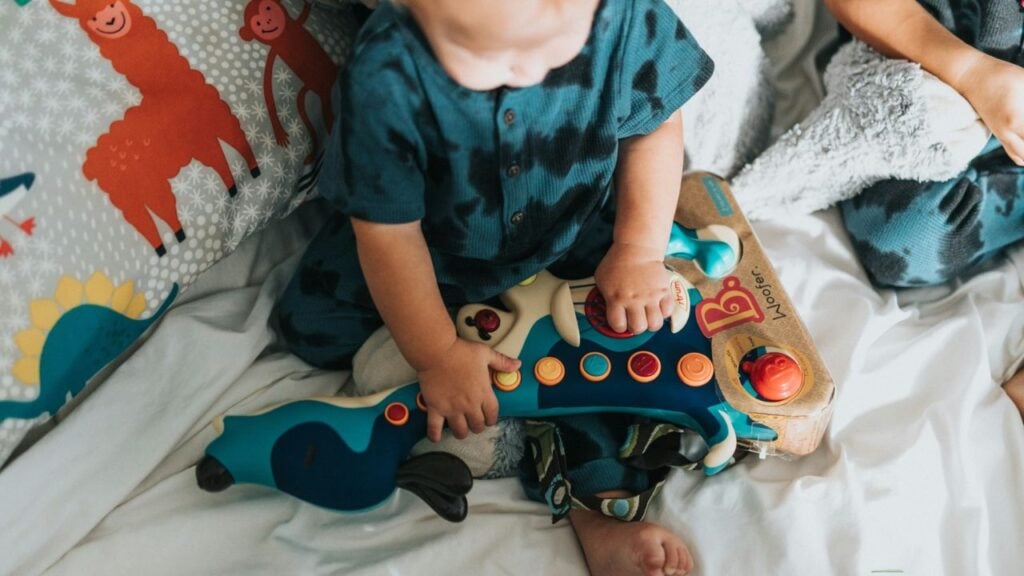
Loud toys can be very noisy for children to play with at Christmas. However, repeated exposure to loud noises can damage hearing.
Avoid very loud toys. If purchasing musical or electronic toys, test them to see how loud they are. If the volume controls cannot be adjusted, avoid purchasing them.
If purchasing toys that launch items into the air, take extra care. Projectiles in toys can cause serious eye damage or choking. Be cautious with toys such as gel blasters.
5. Buy Safety Gear Along With Riding Toys

Bicycles, scooters, skateboards and other riding toys may make great Christmas gifts. However, safety equipment should be purchased alongside them.
If children do not wear the correct safety equipment while using wheeled toys, they may be injured. Choose toys and safety equipment appropriate for the child’s age and ability.
Ensure that helmets are the correct size for a bicycle or scooter. Protective equipment should be worn every time children use riding toys. Before wrapping up any active toys, make sure that children have all the necessary safety equipment to use them safely.

