


When my kids were small, finding fun and educational toys for them to play with was fairly easy. There were a myriad of dolls, playsets, construction, and STEM toys for them to rip open on Christmas or at birthdays and play with, creating worlds and stories that made perfect sense in their imaginations.
As they got older, though, around 5 or 6, I started to notice that finding toys they were interested in was getting increasingly harder. It not only seemed that store shelves and inventories were getting smaller and things were getting more expensive, but also that the sheer amount of toys being made seemed to be rapidly shrinking. There were many times when I had to say, “I’m sorry, kiddo, those toys for that show just don’t exist,” or the property they were yearning for was old enough that they couldn’t be found anymore.
In a time when everyone’s biggest complaint about kids seems to be related to screen time, one has to wonder why toy companies seem to be making fewer and fewer toys for kids to play with. I chalked this up to production costs, or the amalgamation of Intellectual Properties under corporate banners, but then I saw something that I hadn’t considered. Toy companies were still making lots and lots of toys, but they weren’t for kids. They were for Adult Collectors.
The Rise Of Collectors And Fall Of Players
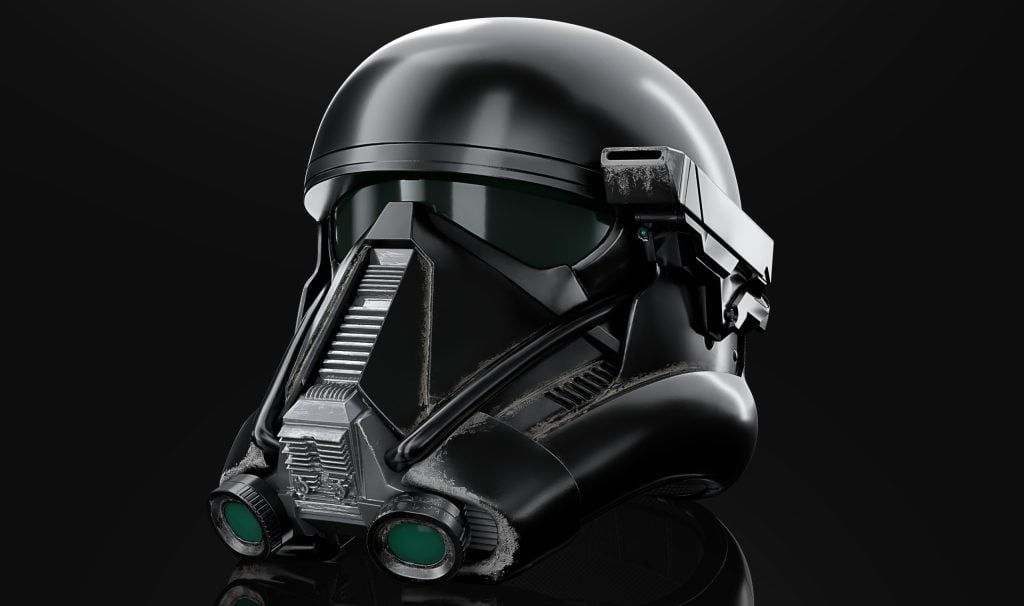
Now, I have nothing against toy collectors. I used to be one, in fact (more about that in a moment). So I’ve learned a great deal about the toy industry through that, as well as working in Animation. What seems to be driving the toy industry today isn’t creating something fun for kids to play with; it’s creating massive, expensive, and complicated toys and sets for adults.
In a way, it makes sense. Adults have the spending power and (sometimes) attention spans that kids don’t. Industry financial reports from 2023–2025 show a massive market shift. The Toy Aisle is “greying,” and the “Kidult” (adults 18+) and collector market is growing faster than the traditional children’s market.
Statistics from the Hong Kong Trade Development Council show that factors driving this shift include things like disposable income, longevity, and nostalgia. Brands like Transformers, G.I. Joe, and Masters of the Universe are now manufactured almost exclusively for 40-year-old men rather than 8-year-old boys. A child might play with a toy for six months, whereas a collector might keep a toy (and buy the rest of the set) for 40 years.
The “Adult-First” Production Model

Companies like Hasbro and Mattel have shifted their production and marketing strategies toward adults, knowing that they will pay closer attention to new toys. They have launched specific platforms (HasLab and Mattel Creations) that use a “crowdfunding” model to generate ideas for new products and often include premium exclusives. These items are manufactured only if enough adults pre-order them. This shows that for high-end items, the industry is moving toward a “made-for-adults” first strategy to avoid the risk of unsold inventory.
The other aspect is the price. A kid in the store might be able to buy a $10 Star Wars figure with their allowance, but Collectors often buy ultra-expensive “premium” items. For every one $700 LEGO Star Wars Millennium Falcon set manufactured for a collector, thousands of $5 action figures are made for children. However, since the profit margins on the $700 set are significantly higher, companies have shifted their manufacturing schedules toward these high-ticket items, resulting in fewer of the cheaper toys overall.
Children’s toys still lead in total units manufactured, but this is mainly due to “blind bags,” party favors, and low-cost impulse buys (like Hot Wheels cars or basic Play-Doh) that are produced by the millions. But, according to industry watchdog Circana, “Toys priced $30–$69.99 grew 18% year over year, the fastest of any segment… Lower-priced segments under $5 and the $15–$19.99 range posted the steepest declines.”
An Epiphany In The Toy Aisle

When I was in my 20’s, childless and with a bit of disposable income, I considered myself something of a Toy Collector (one of my many collections). It was nothing for my like minded friends and I to spend a Saturday visiting local Wal-Marts and other stores looking for the latest or rarest Transformers, GI Joes, Star Wars or other toys to add to our shelves.
One day, I was in a Toys ‘R Us, grabbing some Clone Troopers for my burgeoning shelf squadron. I found one I’d never seen before, a Trooper with a jet pack. This was exciting, and as I looked over the package and dug for more, a kid about 9 years old came into the Star Wars section. He spotted my Jet Pack trooper, and his eyes bugged out. “That’s so cool!” he exclaimed, “Are there any more?”
I stood there for a moment, holding the Trooper. My mind flashed to the shelf I had at home with dozens of toys that just stood there, never to be played with (and rarely dusted). I felt an immense wave of guilt as I looked at the kid, knowing that he wanted to play with the trooper, more than likely as part of an epic adventure that existed only in his imagination.
I realized that I didn’t need that toy. I didn’t need any toys. Sure, they were fun, and the thrill of the collection was exciting, but at the end of the day, the toys that adorned the shelves of my one-room apartment would eventually end up in a box somewhere along with my comics, trading cards, and other collections. Their enjoyment would be limited to me looking at them and thinking, “cool.”
I handed the Trooper to the kid and said, “nah, this is the last one. Have fun!” He thanked me and ran off to find his grown-up, and I walked out of the store. From that day, I made it a point to buy only what I would enjoy, not just to have it. There is a very thin line between “collecting” and “hoarding,” and I decided that I was more interested in “enjoying.”
I try to impart the joy of toys to my kids when we are in the Toy Aisle. Sure, they love brightly colored junk because that’s what kids like sometimes. But while we are there, I try to show them toys that will spark imagination, toys that will be played with (and that we can play with together!), and that they can enjoy, rather than encouraging the short-term thrill of a cheap, blind-box toy or an expensive collectible.
Sometimes, I win the battle. Other times, we come home with junk. The bottom line is that no matter what the toy, it should be beneficial to kids and make them happy, not just something that’s going to sit in a box until a movie or TV comes out that makes the item profitable enough to sell, almost exclusively to another adult.

