

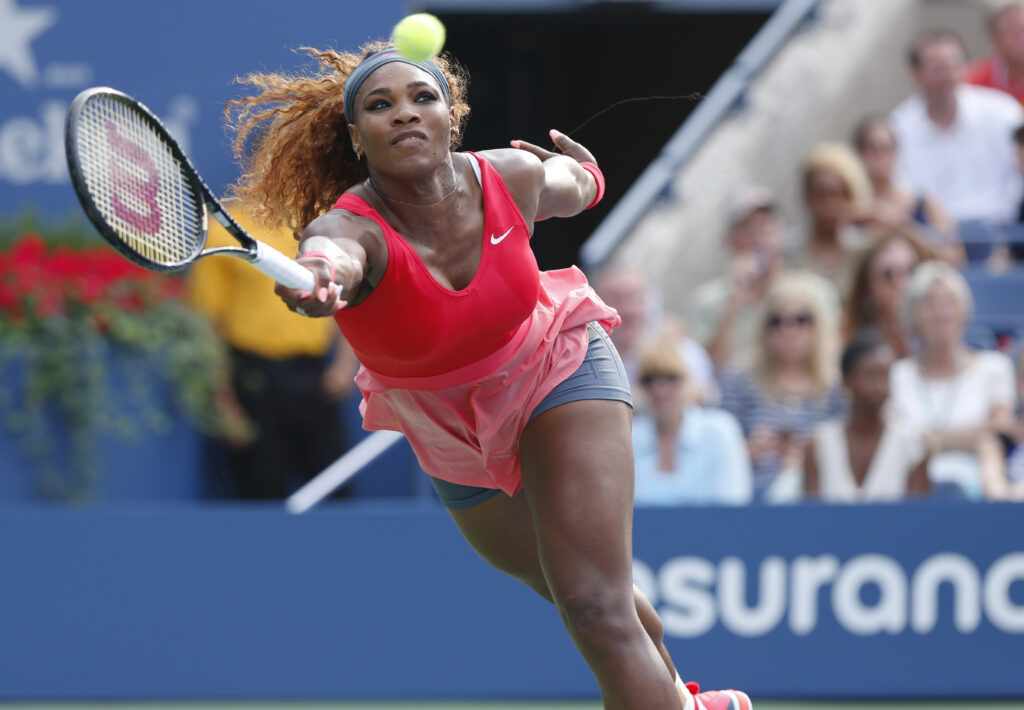
For nearly six years, Serena Williams made a quiet but firm rule for herself: no matter what was on her schedule, she would not be away from her daughter Olympia for more than a single day. The tennis legend shared that personal commitment during a live taping of the IMO podcast hosted by Michelle Obama and her brother Craig Robinson, giving fans a candid window into a parenting philosophy she describes as “a little extreme” but entirely her own.
Williams, who retired from professional tennis in 2022 after winning 23 Grand Slam titles, is now a full-time mother to two daughters: Alexis Olympia Ohanian, 8, and Adira, 2. The revelation that she structured her post-match life, travel, and commitments around a strict 24-hour separation limit speaks volumes about how completely motherhood reshaped her sense of purpose.
What Serena Williams Said On The IMO Podcast
The episode aired on Wednesday, May 13, and Williams wasted no time getting candid. “I really try to be a present parent,” she told Obama and Robinson on the IMO podcast episode. “And sometimes that’s hard, especially with the lives that we live.”
She went further when describing just how seriously she took that commitment in Olympia’s early years. “I didn’t leave Olympia until she was six for 24 hours,” Williams said on the IMO podcast, as reported by Hola. She acknowledged the choice might raise eyebrows, but framed it as a natural extension of her values rather than a rigid rule imposed from the outside.
Williams also pushed back on the idea that she operates from a carefully constructed parenting blueprint. Compared to her sister Venus, who Williams described as a planner who researches and maps everything out in advance, Serena says her own style is far more instinctive. “I don’t have a philosophy,” she explained to Hola. “My philosophy is just to be the best that I can be to show up.”
Presence As A Priority, Not A Performance
For Williams, showing up is not a talking point. It is a daily practice. She has spoken about drawing heavily from her own childhood, crediting her parents, Richard Williams and Oracene Price, with shaping the kind of mother she wants to be. She told the IMO audience she picks and chooses from the values her parents instilled, particularly the example set by her mother.
At the core of her approach is a desire to be the one doing the raising. “I show up as much as I can every single day for the girls,” she said, as reported by Hola. She has made clear that her daughters mean everything to her and that being present for them, doing the actual work of raising them herself, is her defining priority.
That level of intentionality, coming from someone who spent decades crisscrossing the globe for tournaments, is striking. For most of her professional career, extended travel was simply the job. Choosing to compress her absences to under 24 hours once Olympia arrived was a deliberate recalibration of what mattered most.
What Child Development Experts Say About Parental Separation
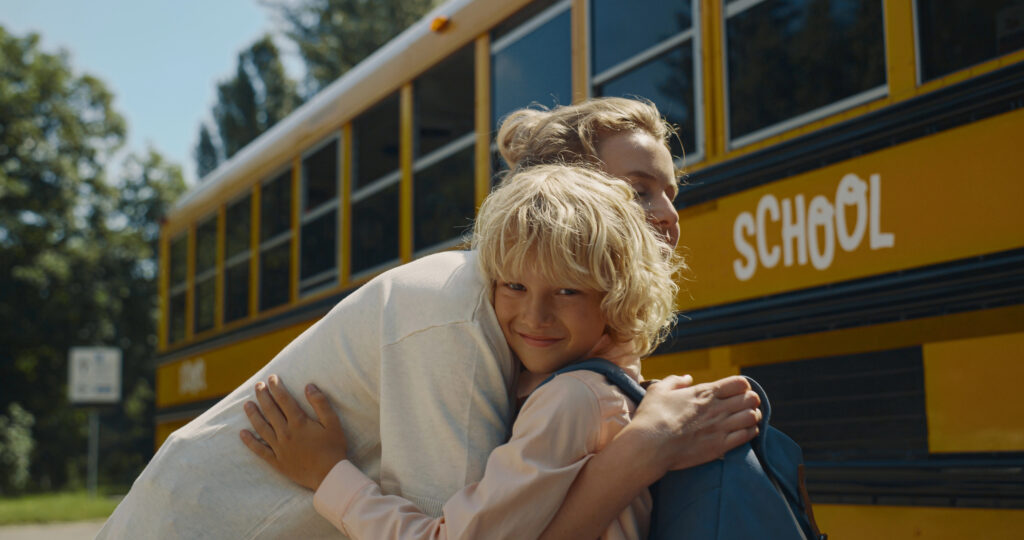
Williams is far from alone in wrestling with how much time away from young children is too much. Family therapist Susan Stiffelman, author of Parenting Without Power Struggles, addressed this question directly in an interview with The Mother Company, offering a framework that puts Williams’s instincts into a useful context.
Stiffelman’s guidance centers on the quality of a child’s attachments rather than a fixed number of hours or days. She argues that children are tribal creatures by nature, meant to be raised within close-knit communities where they form healthy bonds with multiple loving adults, and that when those bonds are strong, a parent’s absence for a short period becomes far less destabilizing.
For children ages 3 to 6, she suggests two to three days as a reasonable separation window, with a week as the outer limit.
Stiffelman also noted that a child’s temperament matters enormously. Roughly 15 to 20 percent of children are more sensitive and may find even shorter separations difficult, while heartier children may barely register a caregiver change.
The key variable, she emphasized, is whether the child has a genuine bond with whoever is stepping in, not simply whether a caregiver comes with good references.
Williams’s approach, while more restrictive than what most experts would prescribe as a minimum requirement, aligns with the underlying principle Stiffelman describes: a child’s security comes from consistent, loving presence, and Williams clearly prioritized building exactly that.
There’s No Right Or Wrong Answer
Serena Williams’s candor about her parenting choices is a reminder that there is no single correct way to balance a high-profile career with hands-on motherhood, and that the pressure parents feel to justify their choices runs in every direction.
Whether a parent chooses to travel for work or structures their entire schedule around school pickup, the emotional weight of those decisions is real.
Williams’s willingness to call her own approach “a little extreme” while standing firmly behind it is the kind of honest, non-judgmental parenting conversation that more public figures could stand to model. It also echoes a broader conversation about the scrutiny celebrity parents face whenever they share something personal about raising their kids.
As Olympia grows older and Adira enters her toddler years, Williams will no doubt continue navigating that balance in her own way. If her track record is any indication, she will do it loudly, honestly, and entirely on her own terms.

