
Centaurworld - The Last Lullaby (S2E8)
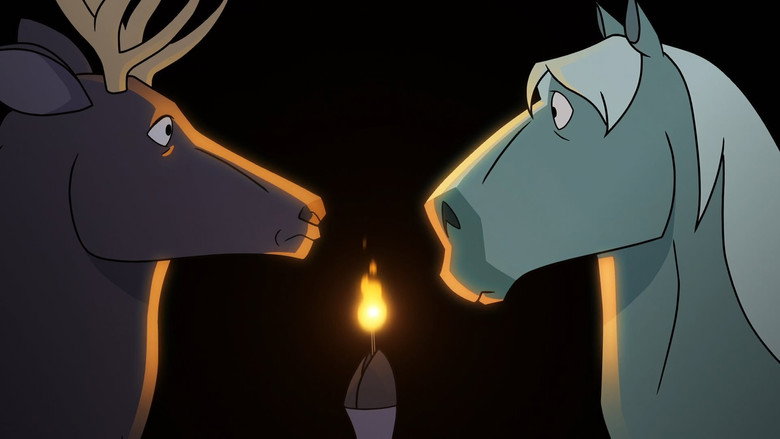
Horse leaps into the Nowhere King's mind and learns his haunting backstory. Meanwhile, Rider and the herd come up with a plan.
| Runtime (min) | 75 |
|---|---|
| Air Date | 2021-12-07 |
| Genres | Animation, Kids, Sci-Fi & Fantasy, Action & Adventure |
| TV Rating | TV-Y7 |
| Network(s) | Netflix |
Storyline
In this extended series finale, Horse makes the extraordinary decision to enter the Nowhere King's mind, where she discovers the tragic origin story behind the monster that has terrorized both worlds. Through a haunting musical sequence, she learns that the Nowhere King was once the Elktaur, a centaur who split himself in two—creating both the General and the monstrous entity—in a desperate attempt to win the love of a human woman who could never accept his centaur form. This act of self-division set in motion the war that has ravaged Centaurworld and the human realm.
While Horse confronts this painful truth inside the Nowhere King's consciousness, Rider and the herd work together on the outside to execute a plan that will stop the creature's rampage. The episode weaves between Horse's emotional journey of understanding and compassion within the mindscape and the herd's coordinated efforts to end the conflict. The revelations about identity, acceptance, and the consequences of rejecting one's true self form the emotional core of this climactic chapter, as Horse must decide how to respond to the broken being before her.
What parents say
Parents have praised "The Last Lullaby" and the series finale arc for its sophisticated handling of complex themes, noting that the Nowhere King's backstory provides surprising emotional depth and a tragic explanation for the show's central conflict. Many parents appreciate that the episode doesn't shy away from exploring themes of self-hatred, identity, and the destructive consequences of trying to change oneself for love, though some have noted these concepts may require discussion with younger viewers.
Parents have complimented the series for ultimately delivering a message about self-acceptance and compassion even for those who have caused harm. Several parents mention that the extended runtime and emotional weight of this finale make it feel more mature than earlier episodes, with the musical storytelling helping to soften some of the heavier themes. Some parents recommend watching this episode together with children to process the Nowhere King's tragic choices and discuss why his solution—literally dividing himself—was so destructive, turning it into a teaching moment about accepting all parts of oneself.
What kids learn
Children learn that trying to change or hide fundamental parts of yourself to gain someone's love leads to pain and destruction, not happiness. The Nowhere King's tragic backstory demonstrates that self-rejection and the refusal to accept your true identity can have devastating consequences, not just for yourself but for everyone around you. Kids see that the monster at the center of the conflict wasn't born evil but became destructive through an act of desperate self-hatred.
The episode teaches the importance of compassion and understanding, even toward those who have caused harm. Horse's willingness to enter the Nowhere King's mind and learn his story shows children that understanding someone's pain doesn't excuse their actions, but it can help us respond with wisdom rather than pure anger. Kids learn that sometimes the most frightening or destructive people are themselves suffering from deep wounds.
Children also see the power of teamwork and trust as Rider and the herd coordinate their efforts while Horse undertakes her solo journey. The episode reinforces that solving big problems often requires both individual courage and collective action, with different people contributing their unique strengths toward a common goal.
Parents' top 5 questions
| Question | Answer |
|---|---|
| Is the Nowhere King's origin story too dark for younger children? | The backstory involves themes of self-hatred, rejection, and literal self-division that may be emotionally complex for younger viewers. The episode presents these concepts through musical storytelling rather than graphic imagery, but the ideas—splitting oneself apart to be loved, creating a monster from self-rejection—are psychologically heavy. Children under eight may find the tragic elements confusing or upsetting, while older kids can grasp the metaphor about self-acceptance. Watching together allows you to gauge your child's reaction and discuss the themes afterward. |
| How should I explain why the Elktaur split himself in two? | You can explain that the Elktaur loved someone who couldn't accept him as a centaur, so he made a terrible choice to magically divide himself into the parts he thought she would love and the parts he thought she wouldn't. This decision came from not loving himself and believing he needed to change to be worthy of love. Emphasize that this was a tragic mistake—we can't cut away parts of ourselves to please others, and real love means being accepted for who we truly are, not who we pretend to be. |
| Does Horse defeat the Nowhere King through violence? | Horse's approach centers on understanding and compassion rather than pure combat. By entering the Nowhere King's mind and learning his story, she seeks to address the root of his pain rather than simply destroying him. The resolution involves both Horse's emotional journey inside his consciousness and the herd's coordinated plan outside. The episode emphasizes that understanding someone's suffering can be as important as stopping their harmful actions, teaching that compassion and strategy together can resolve conflicts that violence alone cannot. |
| What is the main message about identity and self-acceptance? | The episode powerfully illustrates that rejecting parts of yourself—whether to gain love, fit in, or meet others' expectations—causes deep harm. The Nowhere King exists because someone couldn't accept his whole self and tried to separate the "acceptable" parts from the "unacceptable" ones. This literally created a monster. Children learn that all parts of who we are deserve acceptance and that trying to hide or destroy aspects of our identity to please others leads to pain, not happiness. True peace comes from self-acceptance and finding people who love us as we are. |
| How does this finale wrap up the series' themes? | The finale brings together the show's ongoing exploration of identity, belonging, and acceptance. Horse's journey from a serious, mission-focused character to someone who embraces both strength and whimsy mirrors the Nowhere King's opposite trajectory—his rejection of his whole self. The episode shows that the herd's acceptance of each other's quirks and differences, which has been central throughout the series, stands in direct contrast to the self-division that created the villain. It reinforces that communities built on acceptance and love are stronger than those built on rejection and shame. |
Writing
Directing
| Season # | Episode # | Episode Name |
|---|---|---|
| 1 | 1 | Separated from her Rider during battle, Horse wakes up in a colorful world filled with strange beasts. But where is her trusty friend? |
| 1 | 2 | The herd sets out to find the way home. Wammawink encourages them to be careful and take it slow, but fearless Horse charges ahead. |
| 1 | 3 | Horse meets Waterbaby — one of Centaurworld's shamans — and learns about the key: a mysterious object that could reunite her with Rider. |
| 1 | 4 | Searching for the next piece of the key, Horse leads the herd into a mysterious forest to see the tree shamans. They grant wishes — but there's a catch. |
| 1 | 5 | The friends seek shelter in a cave during a storm... but they're not alone. While looking for an exit, they discover strange paintings on the walls. |
| 1 | 6 | The group follows the Rainbow Road into a deep, dark hole, where a Moletaur locks them in jail and informs them that they'll face the judge. |
| 1 | 7 | Zulius brings the herd to Cataur Valley, where the shaman is fuzzy but fierce. To earn a piece of the key, Horse goes glam for a silly competition. |
| 1 | 8 | Horse hopes to find the final shaman in Merfolk Town. But she's growing discouraged — and looking more and more like a centaur every day. |
| 1 | 9 | The herd makes it to the Rift and reminisces about their time together while waiting for Waterbaby to arrive with the final piece of the key. |
| 1 | 10 | Horse and Rider face a frightening enemy. Back in Centaurworld, the herd summons up the courage to enter the void and fight for their friend. |
| Season # | Episode # | Episode Name |
|---|---|---|
| 2 | 1 | Horse tries to recruit an army to defend Centaurworld, but no one wants to join. The herd visits the Horsetaurs' castle to see if they'll help. |
| 2 | 2 | Up in their cloud condo complex, the Birdtaurs have been obsessively watching the herd: Horse and friends are their favorite reality stars! |
| 2 | 3 | Horse tries to enlist the fierce Coldtaurs in her battle — but they capture Glendale! Back in the human world, Waterbaby sends a message to Rider. |
| 2 | 4 | On a trip to the Underground Kingdom, Horse learns that Rider has a magnificent new horse named Becky Apples. Would Rider really replace her? |
| 2 | 5 | Horse discovers a powerful ability: She can jump into backstories! And seeing the tough times her herd friends faced helps her feel less alone. |
| 2 | 6 | Rider defies the general's orders and goes to the Nowhere King's castle to get the artifact. But her new horse, Becky Apples, isn't exactly cooperative. |
| 2 | 7 | All of Centaurworld's residents gather for the hootenanny. But can Horse turn this colorful collection of creatures into a fearless army? |
| 2 | 8 | Horse leaps into the Nowhere King's mind and learns his haunting backstory. Meanwhile, Rider and the herd come up with a plan. |
This product uses the TMDB API but is not endorsed or certified by TMDB.