
Duck & Goose - Snowy Day / Flower Bud (S1E8)
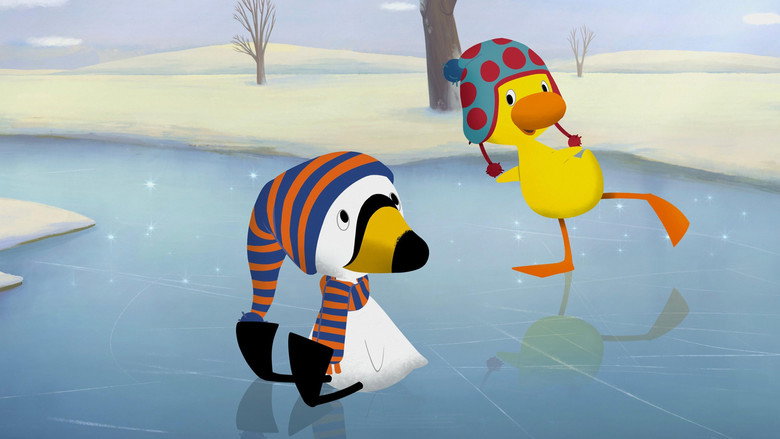
Duck and Goose plan for fun in a winter wonderland. The pals work hard to help a lonesome flower bloom in the meadow.
| Runtime (min) | 23 |
|---|---|
| Air Date | 2022-07-07 |
| Genres | Animation, Kids |
| TV Rating | TV-Y |
| Network(s) | Apple TV |
Storyline
In the first segment, Duck and Goose wake up to discover their meadow transformed by a fresh blanket of snow. Excited by the winter wonderland, the two friends eagerly plan a day filled with snowy activities. They build snowmen, make snow angels, and attempt to sled down gentle slopes, discovering both the joys and challenges of playing in the cold. Their enthusiasm is infectious as they navigate the unfamiliar terrain together, learning to adapt their usual games to the wintry conditions.
The second segment shifts to a warmer day when Duck and Goose notice a single flower bud struggling to bloom in their meadow. Concerned that the flower seems lonely and unable to open, the friends decide to help. They try various methods to encourage the bud to blossom, from talking to it encouragingly to ensuring it has enough sunlight and water. Through patience and gentle care, Duck and Goose learn about nurturing living things and the importance of giving plants what they need to thrive, ultimately celebrating when their efforts help the flower finally bloom.
What kids learn
Children learn about adapting to changing environments and finding joy in new experiences. When Duck and Goose encounter snow for what appears to be the first time, they demonstrate curiosity and flexibility, showing young viewers that unfamiliar situations can be exciting rather than frightening. The episode encourages children to embrace seasonal changes and discover how familiar activities can be reimagined in different conditions.
The flower segment teaches patience, empathy, and basic plant care. Duck and Goose's concern for the lonesome flower models compassion for living things, while their trial-and-error approach to helping it bloom demonstrates problem-solving and persistence. Children see that nurturing requires time and attention, and that growth cannot be rushed. The friends' gentle encouragement of the flower also illustrates how positive support can make a difference.
Throughout both stories, the episode reinforces the value of teamwork and friendship. Duck and Goose work together to solve problems, share their discoveries, and celebrate small victories as a team. Young viewers learn that collaboration makes challenges easier and successes sweeter, whether building a snowman or coaxing a flower to open.
Parents' top 5 questions
| Question | Answer |
|---|---|
| What age group is this episode most appropriate for? | This episode is ideal for preschoolers aged two to five. The gentle pacing, simple storylines, and clear emotional beats match the developmental stage of young children who are learning about nature, friendship, and cause-and-effect relationships. The dual-segment format keeps attention spans engaged by offering variety, while the straightforward problem-solving scenarios are easy for preschoolers to follow and understand without becoming overwhelmed or confused. |
| Can we use the flower segment to start gardening activities at home? | Absolutely. The flower care depicted in the episode provides a perfect springboard for hands-on gardening projects. Children can plant seeds, water seedlings, and observe growth over time, mirroring Duck and Goose's nurturing approach. Parents can explain basic plant needs like sunlight, water, and soil, reinforcing the episode's lessons through direct experience. Starting with fast-growing plants like beans or sunflowers helps maintain young children's interest and provides quicker results that mirror the episode's satisfying bloom. |
| Does the snowy day segment teach any safety lessons about winter weather? | The episode focuses primarily on the fun aspects of snow play rather than explicit safety instruction. Duck and Goose enjoy winter activities without addressing topics like frostbite, appropriate clothing layers, or ice hazards. Parents may want to use the segment as a conversation starter about winter safety, discussing why we wear warm clothes outside and how to recognize when we're too cold, supplementing the episode's joyful tone with practical guidance appropriate to their climate and circumstances. |
| What specific friendship skills do Duck and Goose demonstrate in this episode? | Duck and Goose model collaborative play, shared decision-making, and mutual encouragement throughout both segments. They brainstorm together about how to help the flower, take turns trying different approaches, and celebrate each other's ideas without competition or conflict. In the snow, they coordinate their play and adapt activities to include both friends. These interactions demonstrate healthy friendship patterns where both parties contribute equally, listen to each other, and work toward common goals with patience and respect. |
| Are there any scary or upsetting moments for sensitive children? | This episode is exceptionally gentle with no frightening content. The flower's initial struggle to bloom might concern very empathetic children, but the friends' caring response and the flower's eventual success provide reassurance. The snowy setting is presented as magical rather than harsh or dangerous. There are no conflicts between characters, no raised voices, and no moments of peril. Even the most sensitive preschoolers should find both segments comforting and engaging rather than distressing or anxiety-inducing. |
Writing
Directing
| Season # | Episode # | Episode Name |
|---|---|---|
| 1 | 1 | A game of tag leads to a curious discovery. Duck and Goose meet up with Thistle and learn about what makes her unique. |
| 1 | 2 | Duck convinces Goose to take a trip to the beach. The duo find out how much they've grown and a disappointed Duck attempts to grow faster. |
| 1 | 3 | Duck and Goose learn the value of persistence while trying to build and fly a kite. After picking plums, they face a delivery dilemma. |
| 1 | 4 | On a trip to find the shiniest rock, Duck and Goose discover all of the fun within the forest. A happy accident inspires a special birthday gift for Thistle. |
| 1 | 5 | Duck and Goose get a catchy tune stuck in their heads. When a toy goes missing, they learn they have different approaches to tidying up. |
| 1 | 6 | Determined to see their first sunrise, the pals try to stay awake all night. Bluebird's talent for magic motivates Duck and Goose. |
| 1 | 7 | A quest for sweets turns spooky when Duck and Goose catch wind of a local “swamp monster.” A race between friends hits an unexpected snag. |
| 1 | 8 | Duck and Goose plan for fun in a winter wonderland. The pals work hard to help a lonesome flower bloom in the meadow. |
| 1 | 9 | When Thistle gets upset with her new neighbor, Bluebird recalls the bumpy days of Duck and Goose's early friendship. |
| Season # | Episode # | Episode Name |
|---|---|---|
| 2 | 1 | Duck encourages Goose to step out of his comfort zone. During a game of hide-and-seek, the friends lose sight of their shadows. |
| 2 | 2 | Hoping to cheer up Thistle, Duck and Goose plan a creative surprise. The duo helps a skunk manage her not-so-charming stink clouds. |
| 2 | 3 | The friends cross paths with a struggling giant. Duck and Goose attempt to save a teeny-tiny community. |
| 2 | 4 | Inspired by an elegant trio, Duck and Goose stage a dance performance. The pals try to uplift Bluebird with songs and treats. |
| 2 | 5 | Duck and Goose help Rabbit see a dragonfly up close. Kindness leads to chaos while making snacks. |
| 2 | 6 | Hoping to find her calling, Thistle practices new skills. Duck and Goose set out to return branches to a crafty beaver. |
| 2 | 7 | In the snow, Duck and Goose stumble upon a sleepy local. The friends help Mama Raccoon's twins embrace their differences. |
| 2 | 8 | A large rock rolls between Duck and Goose during nap time. The duo embarks on a journey to find a unique treasure. |
This product uses the TMDB API but is not endorsed or certified by TMDB.