

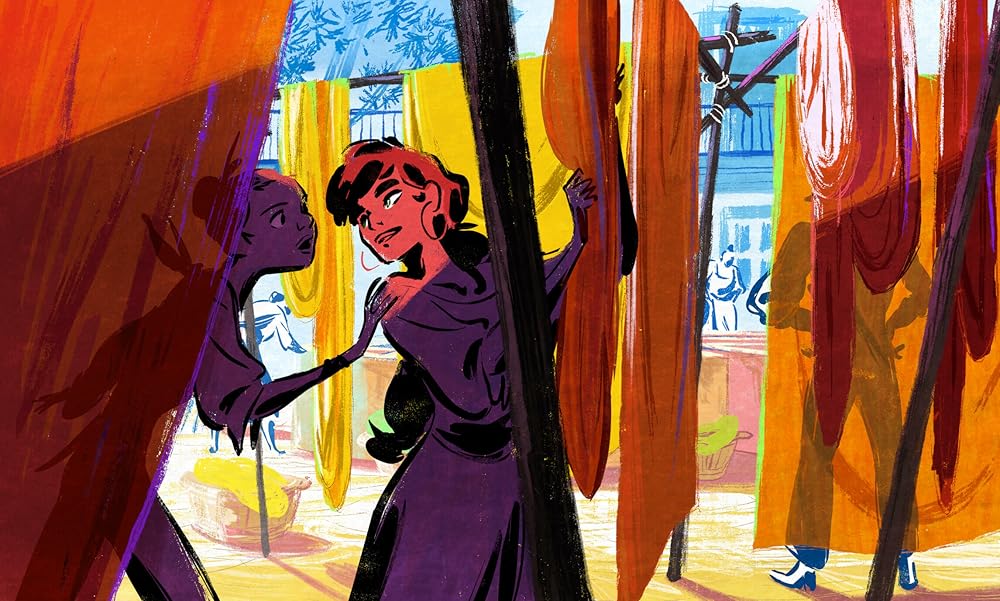
An animated retelling of one of opera’s most beloved stories is making its debut at Cannes this year, and its target audience is not the usual festival crowd.
Director Sébastien Laudenbach has crafted Viva Carmen, a reimagining of Bizet’s iconic opera built specifically for children, positioning the film as a genuine gateway into a centuries old art form that many families find intimidating.
Opera has long struggled to find younger audiences, and the gap between the grandeur of a live performance and a child’s everyday entertainment diet can feel enormous. Viva Carmen takes direct aim at that gap.
According to Hollywood Reporter’s Cannes coverage of the film, Laudenbach set out with a deliberately open ended creative philosophy, embracing the idea that incompleteness and imperfection are not obstacles but teachers, and that children, in particular, have much to gain from encountering stories that do not wrap up neatly.
It is a bold artistic stance for a children’s film, and one that sets Viva Carmen apart from the typical animated fare aimed at young viewers.
Bizet’s Carmen is a natural choice for this kind of adaptation. The opera features a fierce, independent female lead, sweeping melodies that lodge themselves in memory almost immediately, and a dramatic storyline full of passion and consequence.
The “Toreador Song” and the “Habanera” are among the most recognizable pieces in all of classical music, giving children an immediate foothold before the story even begins.
What Makes Opera Click for Children
The challenge of bringing opera to young audiences is not new, and educators and parents have been developing strategies for years. One of the most effective approaches treats opera not as a formal cultural obligation but as pure storytelling set to extraordinary music.
As one reviewer noted when examining Carolyn Sloan’s children’s opera guide, opera introduced as storytelling through song taps into two things children already love: being told stories and singing along. When those two instincts are engaged together, the art form stops feeling foreign and starts feeling natural.
That same principle applies to animated adaptations like Viva Carmen. Animation gives directors a visual language children already trust, and pairing it with operatic music removes the barrier of sitting still in a formal concert hall.
The result is an experience that can plant seeds of genuine appreciation long before a child ever sets foot in an opera house.
How Parents Can Build On The Film At Home
For families inspired by Viva Carmen, the momentum does not have to stop when the credits roll. Parents who have successfully introduced their children to opera emphasize that repeated, casual exposure matters far more than a single formal outing.
Playing opera recordings during everyday activities, encouraging children to move and dance to the music, and watching filmed productions together before attending a live performance all help build familiarity and enthusiasm.
One parent writing about practical strategies for taking children to live opera performances on Parent.com described taking her own children to several live opera performances and noted that a single operatic production contains so many diverse elements, high musical drama, grand sets, costumes, strong emotions, and excitement, that there is guaranteed to be something of interest for everyone in the family.
The key, she notes, is preparation, learning the storyline in advance, listening to recordings, and choosing the right production for a first experience. Mozart’s The Magic Flute, with its fairy tale plot and memorable characters, is widely recommended as an ideal starting point for young first timers.
Matinee performances tend to work better for children than evening shows, both because the atmosphere is less formal and because the timing does not conflict with bedtime routines.
Arriving early, bringing opera glasses, and giving children permission to react physically to the music all contribute to a positive first experience.
Books And Resources That Prepare Young Opera Fans

Beyond films and live performances, a growing library of children’s resources makes opera accessible at home. Carolyn Sloan’s Welcome to the Opera has earned particular praise for its interactive design, combining illustrated storytelling with audio samples and a layout organized so that children can follow along without getting lost.
The book is recommended for ages 9 and older but works well when read aloud to younger children by a parent or music teacher. Its approach, using relatable characters to guide young readers through an actual opera performance, mirrors exactly what Laudenbach appears to be attempting on screen with Viva Carmen.
What Viva Carmen represents is bigger than one animated film. It signals a growing recognition among artists and educators that children are not a lesser audience, they are a different one, with their own needs and their own remarkable capacity for emotional and artistic engagement.
When a director of Laudenbach’s caliber brings that conviction to a Cannes premiere, it sends a message to the broader entertainment industry: stories built for children can carry genuine artistic weight. For parents looking to raise culturally curious kids, that is genuinely good news.
As Viva Carmen moves from Cannes into wider distribution, it may well become the entry point that a generation of young opera fans looks back on as the moment the art form first made sense to them.

