

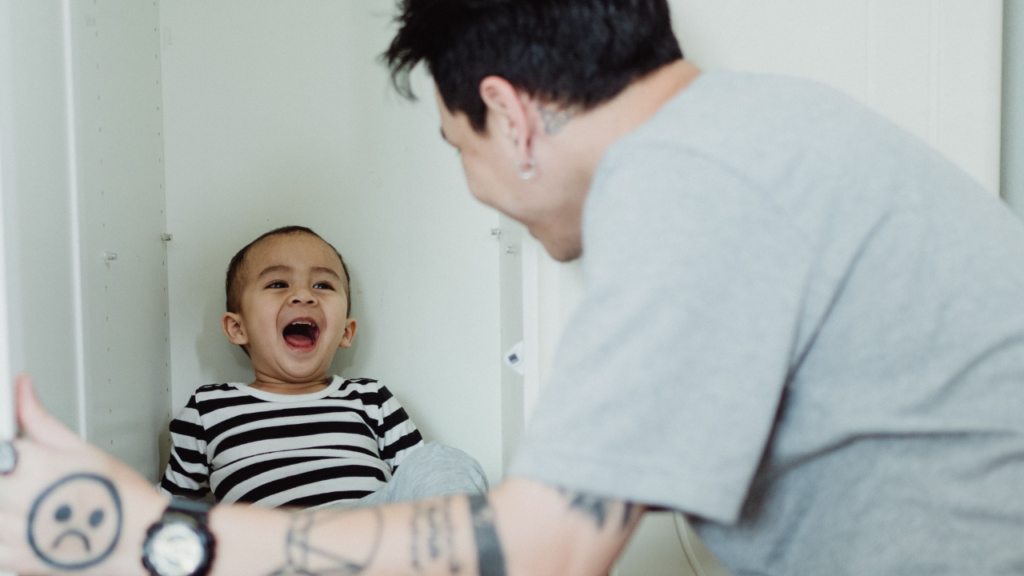
For an adult, shaving a beard can seem like a minor grooming decision. For a young child who has known Dad with the same face for years, however, suddenly losing that familiar facial feature can feel like meeting a stranger.
Young children can have surprisingly strong reactions when a bearded parent suddenly becomes clean-shaven. Research involving 470 children from toddlers through teenagers found that younger children generally preferred clean-shaven male faces, but that doesn’t mean they will recognize their own father after his beard disappears.
A beard can dramatically change the shape and appearance of a person’s face. For a baby or toddler who relies heavily on familiar facial features, the sudden change can create enough confusion that Dad may temporarily seem unfamiliar.
That explains why some children cry, hide or even run away when a father shaves. The reaction isn’t necessarily about disliking the new look; it can be a child’s response to seeing a familiar person suddenly look very different.
Big Appearance Changes Can Teach Kids About Change
Psychologist Laura Louise Love experienced this firsthand when her husband shaved off his distinctive beard. Because her children had already experienced a major move, she wanted to make the transformation gradual rather than introduce another unexpected change.
Her strategy was to involve the children before and during the shave. She recommends explaining why the change is happening, letting children watch the beard disappear in stages and even allowing them to participate when appropriate.
Love also kept the beard as a physical reminder and encouraged her children to touch Dad’s newly shaved face. She describes saying “all gone” and “still Daddy” to help her youngest child connect the new appearance with the familiar parent.
The broader lesson is that change becomes easier to process when children have some warning and context. A haircut, new glasses, shaved beard or major style change can become an opportunity to teach kids that appearances can change while relationships remain constant.
How Parents Should Handle a Major Appearance Change
Parents don’t need to avoid changing their appearance because their child might object. Instead, give younger children advance notice and explain what is going to happen in simple, reassuring language.
Keeping familiar routines can also help. After a major appearance change, playing the same game, reading a favorite book or singing a familiar song can reinforce the message that although Dad or Mom looks different, everything important hasn’t changed.
Parents should also be mindful of how they talk about their own appearance. The Renfrew Center notes that children absorb parents’ attitudes and comments about bodies, including the way parents talk about themselves and other people.
That means the goal isn’t simply helping kids accept a new beard—or no beard. It’s showing them that appearances can change without determining someone’s value, identity or place in the family.

