

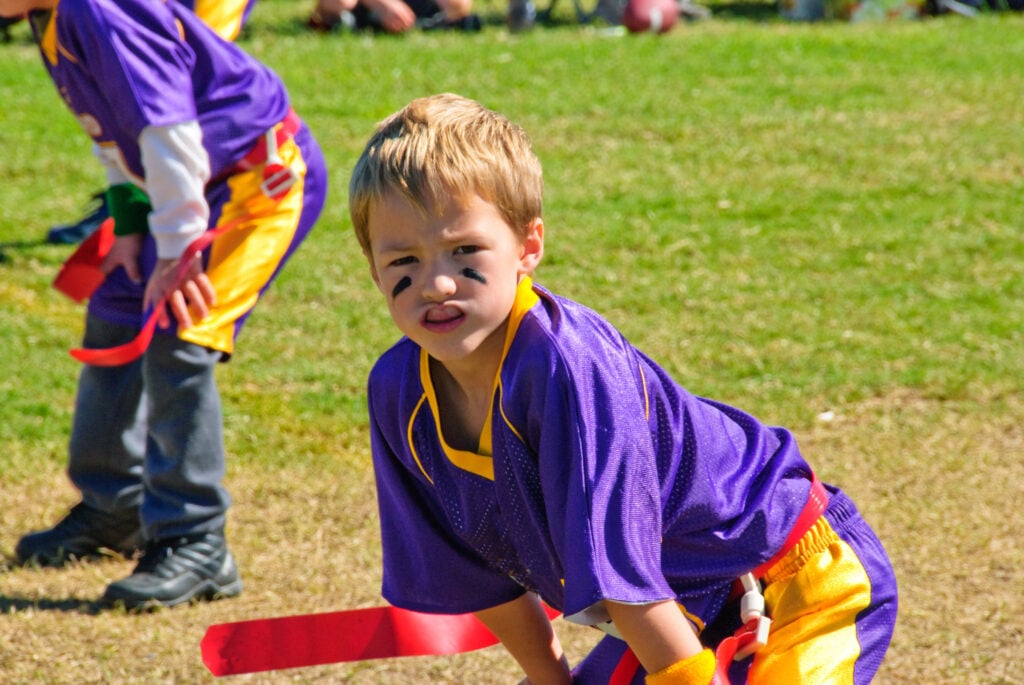
Most parents reach for a mouthguard when their child suits up for football, and then stop there. But dental and pediatric health experts say that habit leaves kids’ permanent teeth exposed during a much wider range of sports and activities than most families ever consider.
According to Nationwide Children’s Hospital, children face elevated sports injury risk compared to adults precisely because their bodies are still growing and developing, and that vulnerability is compounded in any contact sport.
The numbers behind that risk are striking: hospital emergency departments nationwide treat millions of young patients annually for injuries tied to recreational and athletic activity, with those 19 and under making up a substantial portion of those cases.
Why Permanent Teeth Are Especially Vulnerable
Children typically begin losing baby teeth around age six and continue gaining permanent teeth well into their early teens. That transition window is exactly when many kids are also ramping up their athletic involvement, joining travel teams, school leagues, and recreational programs. A single collision, an errant elbow, or a fall on a hard court surface can chip, crack, or knock out a permanent tooth that will never grow back. Unlike a broken arm that heals, a lost adult tooth is a lifelong consequence.
Dental experts, as highlighted by guidance on when kids should wear mouthguards, emphasize that the football-only mindset is one of the most common and costly assumptions parents make. The recommendation from dental professionals extends to any sport where a child’s face could make contact with another player, a ball, a stick, or the ground.
Which Sports Warrant A Mouthguard
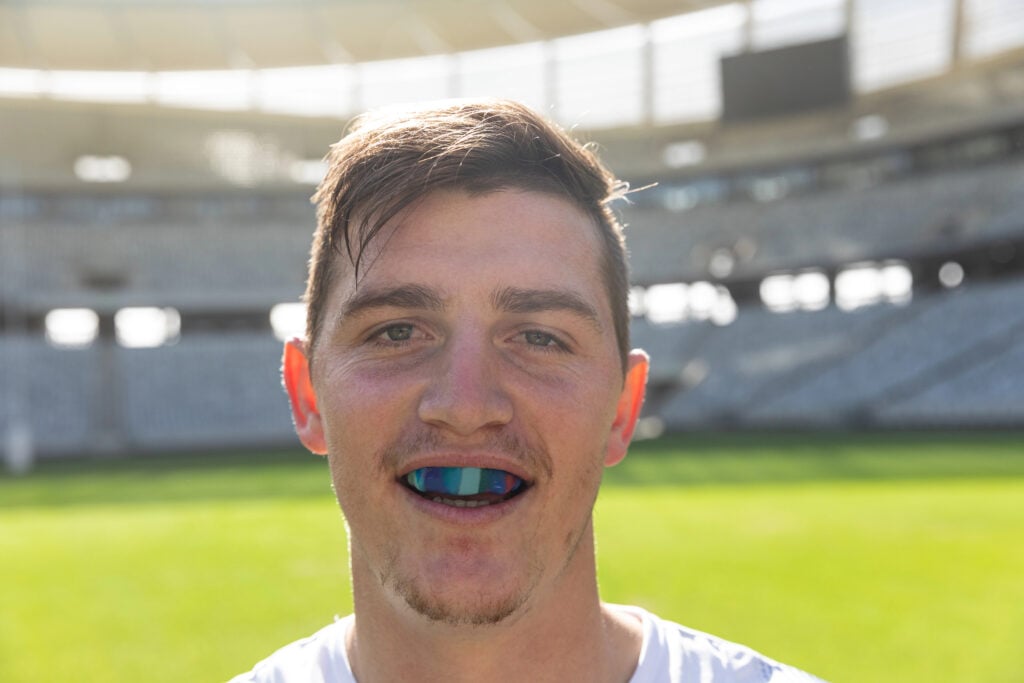
The list is longer than most parents expect. Basketball is one of the most frequently overlooked culprits: elbows fly, players collide under the basket, and hard floors offer no forgiveness on a fall. Soccer, despite being perceived as lower-contact than football, involves headers, collisions, and falls that regularly result in dental injuries.
Ice hockey, field hockey, and lacrosse all combine sticks, hard projectiles, and physical contact in ways that put teeth at serious risk.
Baseball and softball deserve attention too. A batted ball, a wild pitch, or a collision at a base can cause significant facial trauma. Even racquet sports carry enough risk of ball-to-face contact that protective gear conversations are warranted. KidsHealth recommends that parents consult their child’s coach about sport-specific gear, including mouthguards, appropriate footwear, padding, and for certain sports, protective eyewear made from shatterproof materials.
The key principle is straightforward: if a sport involves any realistic chance of impact to the face or mouth, a mouthguard belongs in the equipment bag.
Certification Standards Matter As Much As Wearing The Gear
Owning a mouthguard is only part of the equation. Experts stress that all protective equipment should meet the certification standards set by the organizations that govern each sport.
For hockey facial protection, governing bodies such as the Hockey Equipment Certification Council (HECC) and the Canadian Standards Association (CSA) provide the relevant approval benchmarks parents should look for. For bicycle helmets, the appropriate marking to verify is a safety certification from the Consumer Product Safety Commission (CPSC).
The same principle applies to mouthguards: a poorly fitted or uncertified guard may offer a false sense of security without delivering meaningful protection.
Parents should also make sure equipment is properly maintained. Gear that has cracked, warped, or degraded over time may no longer perform as designed, even if it once met certification standards.
Health Conditions Parents Should Discuss Before Contact Sports
For some children, the conversation about protective gear needs to happen alongside a broader medical discussion. Nationwide Children’s Hospital notes that contact sports may not be appropriate for children with certain underlying health conditions, including irregular heart rhythms and bleeding disorders.
A preseason physical with a pediatrician or family doctor who knows the child’s full medical history is the recommended starting point, giving families a chance to identify any conditions that could affect safe participation before the season begins.
Beyond individual health factors, the playing environment itself matters. Fields and courts should be inspected for holes, ruts, and debris before play begins. High-impact sports like basketball are better suited to forgiving surfaces such as wooden courts or rubberized tracks rather than concrete.
Adequate lighting for evening games and grouping players by size and skill level, rather than age alone, also reduce injury risk significantly.
The Role Of Coaches And Qualified Supervision
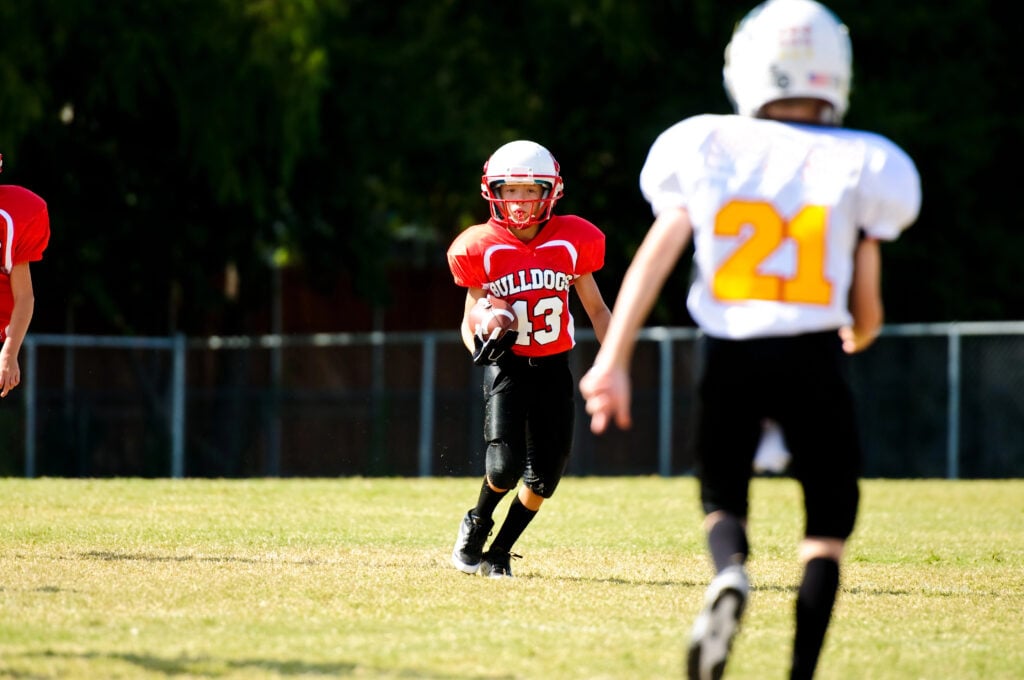
Parents cannot do this alone. The adults running practices and games carry real responsibility for enforcing safety standards consistently. A coach’s philosophy shapes the culture around injury prevention: one who prioritizes winning above all else may pressure young athletes to push through pain or skip protective gear when it feels inconvenient.
Experts recommend that parents choose leagues and teams whose commitment to safety matches their own, and verify that coaches hold current first aid and CPR training.
Warm-ups and stretching before every practice and game are also non-negotiable. Flexible muscles and tendons are less likely to tear, and young athletes who arrive hydrated and properly warmed up are better prepared to handle the physical demands of competition.
The American Academy of Pediatrics also recommends that children take at least a one-month break from any single sport each year to reduce the risk of overuse injuries.
The mouthguard conversation is a small ask with potentially enormous payoff. Replacing or restoring a permanent tooth is expensive, time-consuming, and emotionally difficult for a child.
The discomfort of wearing a properly fitted mouthguard for a two-hour practice is trivial by comparison. As more families enroll kids in year-round athletic programs across multiple sports, the window of exposure to dental injury grows wider every season.
Treating mouthguards as standard equipment, not optional accessories, is one of the simplest shifts parents can make to protect their children’s long-term oral health.
If your child is heading into a new sport this season, start the conversation with their dentist and their coach before the first practice, not after the first injury.

