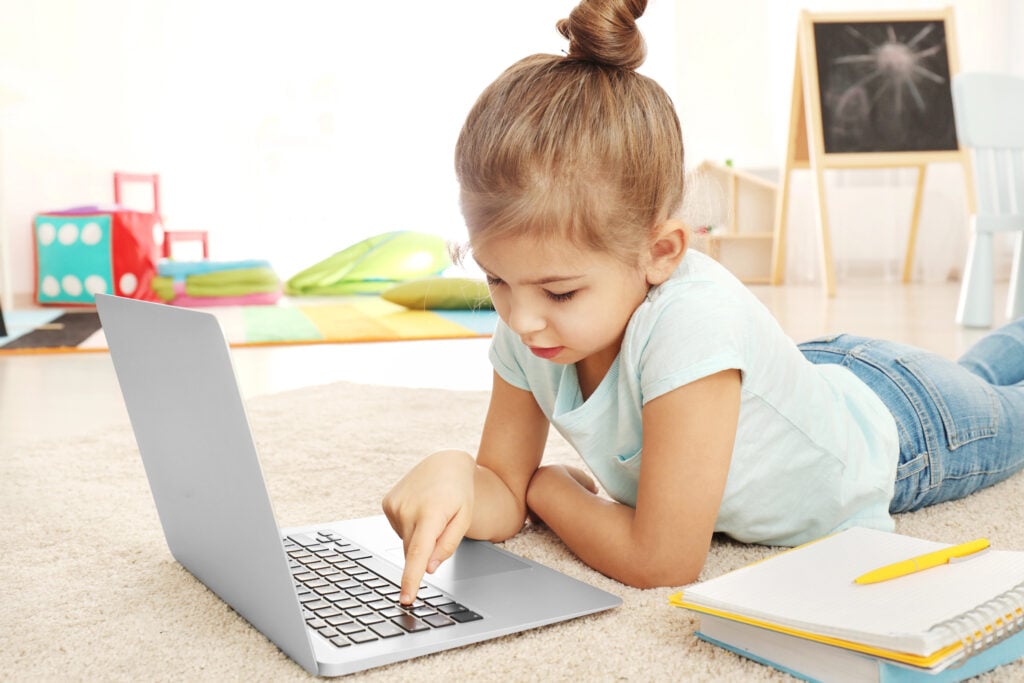
Digital devices of all kinds are almost ubiquitous in education today, even in early elementary classrooms. Children often have access to laptops or tablets for at least some portion of the day.
This shift to digital learning has caused many parents to wonder about the impact of these technologies on children’s education. In the rush to get technology into children’s hands, some potential downsides seem to have been overlooked.
Technology And Early Literacy
Many of us who grew up before the widespread introduction of technology into classrooms learned to read and write the old-fashioned way with pencil, paper, and books. Today, many elementary-age children are learning these same skills using digital devices for at least part of that process.
But is learning to read and write using technology, such as typing, the same as learning those skills with a pen and paper?
This question has become a topic of research interest in recent years as concerns over children’s literacy and handwriting skills have emerged. One recent study has helped illuminate some of the questions about this topic.
Researchers studied kindergarten-age children who were learning to read and write. They compared children who learned letters and words using technology with those learning the traditional way. To ensure the results were accurate, they used artificial letters and words that none of the children had seen before the study.
What they found was very revealing. The children who used paper and pencil for literacy tended to learn and retain those skills much better. This was particularly evident in skills that involved memory.
Learning With The Brain And The Body

When you think about how children learn letter shapes, letter sounds, and read words, there is a lot of memorization involved. They have to look closely at the shape of each letter and memorize the sound associated with each letter. This study showed that the physical act of writing letters by hand was linked to better memory and greater retention of letters and words.
This reinforces a long-held line of research showing the connection between the body and the brain. We know from related research that children, in particular, do not learn in a vacuum; they learn through their bodies. The physical motions and activities they do help their brains make sense of the world and what they’re trying to learn. This new research is just one more piece of evidence showing this mind-brain connection.
What This Means For Your Child’s Learning
It’s important to consider the implications of this for long-term use of technology in early elementary classrooms. Literacy skills are among the most fundamental that all children need to master before other learning can take place, especially at higher grade levels.
As a parent, you don’t always have full control over the teaching methods used in your child’s school. However, being aware of the research on the impact of technology on literacy learning can help you be proactive. If your child is learning to read and write, consider these ideas:
- Prioritize handwriting at home if they’re not practicing it at school. Even short sessions can help.
- Avoid relying solely on typing as a way of helping your child learn letters and words.
- Ask your child’s teacher how writing and reading are being taught. Consider asking if you can sit in on a lesson to see it first-hand.
- Balance screen time use (even educational games) with hands-on learning.
- Incorporate play activities that encourage fine motor skill development (for handwriting):
- using clay or playdough,
- cutting with child-safe scissors,
- placing beads on a string,
- using small building blocks like Lego,
- printing out your child’s favorite character or animal on coloring pages (to practice pencil grip)
Technology isn’t all bad, even for literacy learning. Balance is key. Digital tools and tablets can offer a fun way for children to practice letter sounds and identification. However, hands-on learning is also essential to help their brains and bodies make the connections needed for deep literacy learning.