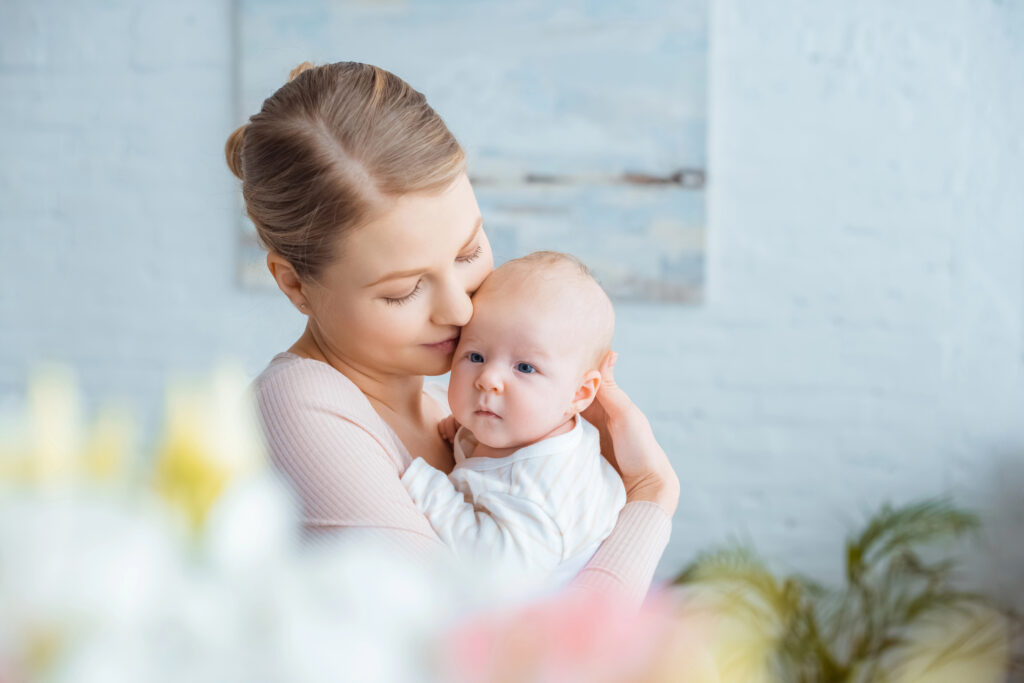
When I first became a parent, some well-meaning people minimized the experience. Others had a hard time coping with the more challenging moments of being with a newborn. But there were some people who understood the depth of hardship of becoming a mother.
What they understood is that the transition into motherhood is a physical, mental, and emotional transformation. Whether or not one is carrying a child, motherhood permanently changes someone.
Here’s the thing: society prepared me for childbirth and raising a child. It did not prepare me for the complete and utter transformation of myself.
I now know there is a word for this experience: matrescence.
What Is Matrescence?
Matrescence is the developmental transition into motherhood. It’s a profound biological, psychological, emotional, social, and identity transformation that can significantly affect the mental health and well-being of a new mother.
Think about how adolescence felt. Now you may have an idea of the complexity and intensity that is matrescence. Not only does the role in your partnership, family and the world change. Your physical mind, body, and ways you think and understand the world are now different.
Carrying a child to term and giving birth changes someone’s biology permanently (Orchard et al., 2024). A mother who did not carry their child also experiences similar impacts of the physical and mental load that is permanently altering the structures of the brain (Pawluski, 2024).
A new mother feels unlike themselves, and a massive identity shift begins. There is an emotional intensity and weight, and along with the joy, a profound grief also encompasses the experience of having a child.
Stages Of Matrescence

Just like other life milestones, matrescence is a specific developmental stage with various impacts on a mother’s body. The first impact to explore is maternal brain restructuring.
Brain And Cognitive Changes
Ever wonder how you knew in your gut that your baby was hungry? Or you woke up at the exact same time your baby stirred? This is a new mother’s brain adapting to respond to the baby’s subtle signals.
During pregnancy and childbirth, the brain’s grey matter and its wiring fundamentally change (Chechko & Nehls, 2024). A mother develops neuroplasticity and begins cognitive and emotional adaptations to increase sensitivity to caregiving cues.
A mother’s brain is permanently rewired to attune to the baby’s needs. With brain changes come behavioral changes: increased awareness of the baby means that a mother’s decision-making and actions are prioritized to protect and care for an infant.
Identity Changes
My identity change was the major shift that surprised me in early motherhood (Orchard, 2024). It came as a profound sadness and grief in saying goodbye to the former version of myself. It was more than just, “I can’t go out late anymore”, and more like “I’m not that person anymore, and can’t go back”.
This identity shift rocks a mother to the core, and involves significant questioning of who they are, how they want to and are able to be in the world, and conflicting emotions that vacillate from intense joy to heavy sadness.
Emotional Changes
Hormones can cause vacillating emotions after pregnancy, but research on the postpartum brain has shed light on the intensity and severity of these mood swings (Cureus, 2023). A new mother may not only feel happiness and sadness, but also struggle with anxiety, depression, overwhelm, and intense loneliness, even if surrounded by people.
It’s important to highlight that these emotional shifts are considered normal during matrescence. It’s a natural part of this developmental stage. It’s important to contact a healthcare professional for additional support or guidance if a new mother’s emotions increase in severity to the point that a mother may not be functioning day to day, or is not taking care of herself or her infant.
Social And Relationship Changes
Relationships change in motherhood, which is adaptive to an infant’s survival. However, it can impact the mother’s overall well-being. Significant others, close friends, and even family members can feel far away when a mother’s primary focus is on an infant. There is less emotional capacity and ability to be present for others, which may impact primary relationships (Doss et al., 2009).
Along with social and intimate relationships, a mother’s relationship with her career may change drastically after having a baby. There can be a shift in desire and motivation to continue in a career, or intense feelings of wanting to change careers to better suit a lifestyle with children.
Impact Of Cultural Pressures
Mothers struggle with isolation and lack of social support in modern motherhood, particularly in Western cultures. There are cultural pressures to “do it all” effortlessly. Combined with the expectation to instantly bond and be completely fulfilled by motherhood, this can lead a mother to experience high levels of anxiety, depression, and feelings of shame and guilt for struggling in any way.
How We Can Help Moms
There are a few important ways we can support mothers through matrescence. We can learn what best supports mothers.
Normalize The Transition
I know the adjustment can feel difficult, but it is normal to feel forever changed after having a baby. You will not return to the person you were, and research on brain restructuring has proven that! So supporting a mother during the experience of getting to know themselves after a baby is crucial.
Remind a new mother that identity shifts are expected, and intense mood shifts are common. It is not a signal that they are unable to mother “the right way” or are failing. It’s the very opposite! These shifts reveal that a person is making a full transition into being a mother!
Reduce Isolation
Socializing after having children is easier said than done. However, research supports the idea that mothers navigate matrescence more effectively with social support.
Connection with others may involve family members, friends, or neighbors. However, some new mothers lack that support. Know that mothers can also connect through postpartum groups.
It may be hard for someone who has never wanted to receive help to suddenly become the person asking for it. Offer low-stakes interactions or brief check-ins to provide social contact while reducing social overwhelm in new mothers.
Support The Mother, Not Just The Baby
One of the best pieces of advice my partner and I received was “take care of the mother”. Make, bring, or provide meals, help with chores, and ask how she is doing. Mothers can sometimes vanish behind the adorable new baby, so make it a priority to care for the mother as well.
Encourage Rest And Recovery
No one told me that caring for a newborn is incredibly physical work. Carrying a baby, nursing, preparing bottles, cleaning, and diaper changing are on rotation every two hours in the early months. These physical demands, combined with the need for rest, are a recipe for chronic sleep deprivation and mental health challenges.
The irony is that mothers need rest, but we also can’t stop!
This is where social support is imperative. Encouraging a mother to slow down and step in to manage more physical tasks can help a mother heal.
Also, mothers rarely “sleep when the baby sleeps”. Sometimes that may be the only time they have to complete chores. By stepping in to provide support for general household tasks for themselves and the baby, a mother may actually get to rest more.
Preserve Identity
Although motherhood shifts our identity, we still have many of the former interests we had before the baby. Supporting mothers in preserving these parts of their identity is an important protective factor during matrescence. Help a mother make time to maintain friendships, pursue creative interests, engage in hobbies, and take moments of autonomy.
Promote Compassion
It may be hard for a new mother to find compassionate flexibility for herself. New mothers may feel the need to live up to the same expectations and standards they had of themselves before the baby.
Realistic expectations, flexible standards, and rejecting perfectionism are what a mother needs to truly take care of herself and the baby. Modeling this type of compassion toward a mother may help her do it for herself.
Seeking Additional Support

There may be times when the normal mood swings of motherhood may impact a mother’s ability to function. Keep an eye out for the following symptoms:
- persistent sadness
- severe anxiety
- hopelessness
- intrusive thoughts
- emotional withdrawal
Luckily, there are many different modes of professional support that can assist a mother in these circumstances. Individual therapy, postpartum groups or mutual caretaking of children are all options to reduce the mental and emotional load.
Knowledge Is A Gift To Mothers
Understanding matrescence may be one of the most important gifts you can give a new mother. Many mothers are not taught about matrescence prior to having a baby. It can come as a painful and scary shock to suddenly feel this physical and emotional transformation take hold.
When we understand matrescence, we stop asking mothers to “bounce back” and start recognizing that becoming a mother changes a person deeply and completely. We can help them in that journey by providing support, compassion, and a sense of community.