


Sadie Robertson, the 28 year old former Duck Dynasty star, disclosed this week that her 8 month old daughter Kit has been diagnosed with an underlying health condition after experiencing not one but two choking emergencies, and she is channeling that fear into a direct call for parents everywhere to get trained in infant CPR before they ever face a similar crisis.
What Robertson initially hoped was an isolated incident turned into something far more serious. In a May 8 Instagram post, Robertson confirmed via Instagram, as reported by US Magazine, that Kit had choked again not long after the first emergency, writing, “A month since Kit choked, and what we thought was a one time event, [it] happened again shortly after.”
That recurrence led doctors to identify an underlying condition in the infant, elevating the family’s ordeal from a frightening but singular moment into an ongoing medical situation.
How The First Emergency Unfolded
The initial choking incident happened in April while Kit was seated in her high chair eating a snack. Within moments, Robertson recognized the severity of what was happening and began performing CPR while her mother dialed 911.
First responders arrived to find Kit breathing again, and the baby was transported to the hospital and kept overnight for observation. Robertson later described Kit as “perfectly healthy” following that stay, she wrote via Instagram, as reported by USA Today.
Here’s Robertsons full post regarding the scary incident:
That preparation almost certainly made the difference. The American Heart Association’s infant CPR protocol calls for 30 chest compressions pushed to a depth of 2 inches on the middle of the child’s chest, followed by rescue breaths — a sequence that requires practice to execute under pressure.
Why Choking Remains A Persistent Danger For Babies
Kit’s situation is not an anomaly. The data on pediatric choking is sobering. A study published in a 2021 Elsevier journal analyzing national choking data from 2001 to 2016 found that the under five age group was responsible for nearly three quarters of both nonfatal choking injuries and choking deaths among all pediatric patients examined.
Even more troubling, the researchers found that while the overall choking fatalities rate in children declined slightly after the American Academy of Pediatrics issued policy recommendations in 2010, there was no change in the fatalities rate for children under five — the highest risk group. The same research identified racial disparities, with Black children experiencing the highest rates of choking fatalities compared to all other groups studied.
Those numbers underscore why Robertson’s public advocacy matters. Awareness campaigns and policy changes have not yet moved the needle for the youngest and most vulnerable children.
Foods And Habits That Put Young Children At Risk
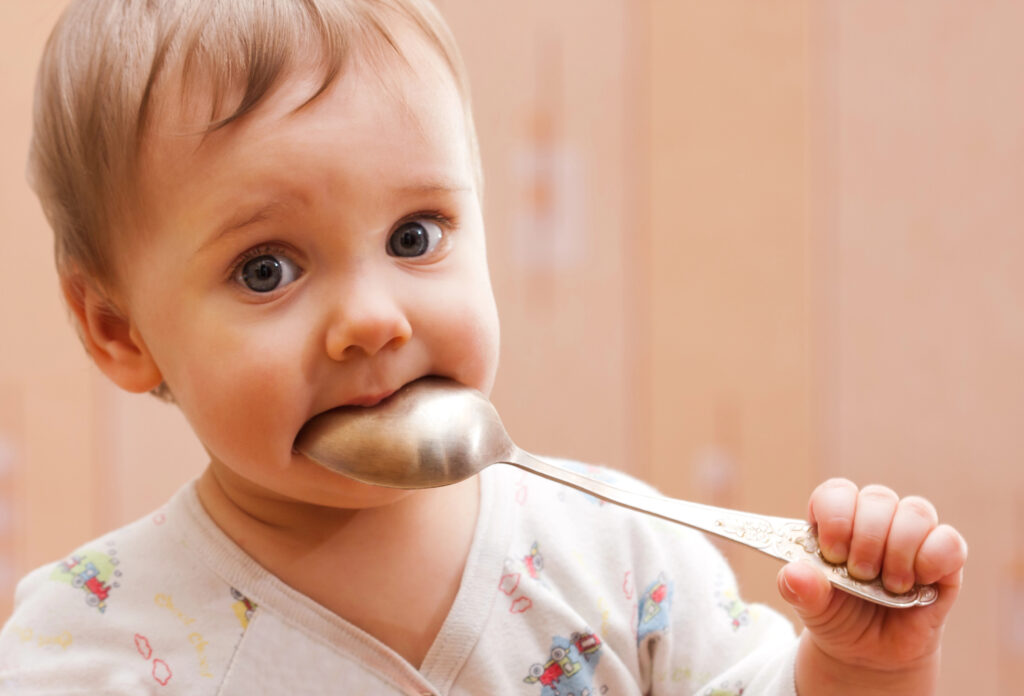
For parents of infants and toddlers, understanding which foods pose the greatest danger is a practical first line of defense. The CDC outlines a broad range of high risk foods for young children, including whole grapes, hot dogs, popcorn, hard raw vegetables, large chunks of meat, whole nuts and seeds, and sticky foods like spoonfuls of nut butter.
How food is prepared matters just as much as the food itself, slicing items into smaller portions and softening or mashing them can meaningfully reduce the likelihood of a dangerous episode.
Beyond food choices, the CDC also emphasizes behavioral habits at mealtimes: ensure young children remain upright throughout meals, skip feeding them while they are in a moving vehicle or stroller, keep the environment calm, and never leave a baby or toddler unsupervised during a meal.
These are simple adjustments that can dramatically lower the odds of a choking emergency.
Robertson’s Message To Other Parents

Throughout both ordeals, Robertson has been transparent about the emotional weight of what her family has endured while simultaneously redirecting that energy toward public awareness. Her April Instagram post made clear that sharing something so personal was not easy: “This feels hard to talk about in my real life, much less on social media, but I do feel it is worth sharing because I truly believe awareness of it will save lives,” she wrote. The second post in May reinforced that commitment, even as it revealed the more complicated medical picture now surrounding Kit.
For parents who want to be as prepared as Robertson was, Robertson has spoken directly about what she wants every parent to take away from her experience with infant CPR, namely, that learning the technique before an emergency is the only way to be ready when seconds count.
Robertson’s willingness to share an ongoing and unresolved medical situation, not just a resolved scare with a happy ending, is what makes this moment genuinely useful for other families.
Most celebrity health disclosures come after the crisis has passed. This one is unfolding in real time, with a diagnosis still being processed and a baby whose condition is not yet fully understood.
That kind of honesty from a public figure with a large platform has the potential to prompt real action: parents scheduling CPR classes, pediatricians fielding more questions about choking prevention, and caregivers rethinking what goes on a baby’s high chair tray.
Kit’s story is still being written. What Robertson has already made clear is that preparation, not luck, is what parents can actually control.

