
Inside Pixar - Portraits: Cynthia Lusk, Director of International Production (S1E6)
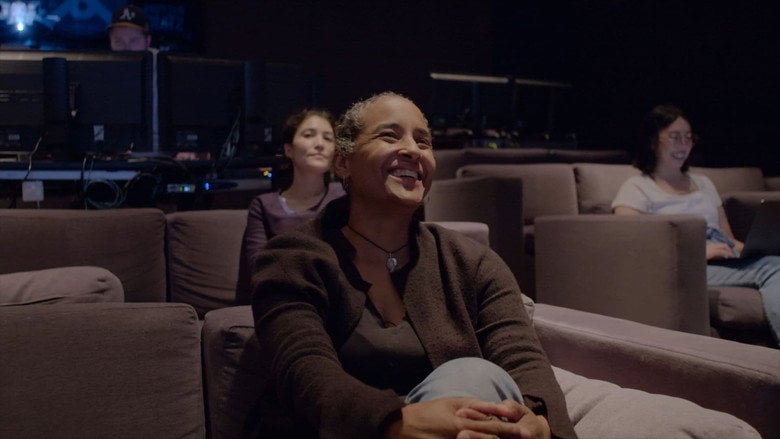
Director of International Production Cynthia Lusk takes us into the fascinating world of localization. From translations to graphics to even changes in animation, Cynthia and her team work to make sure that Pixar’s films can connect and resonate to fans and families throughout the world.
| Runtime (min) | 14 |
|---|---|
| Air Date | 2021-02-12 |
| Genres | Documentary |
| TV Rating | TV-G |
| Network(s) | Disney+ |
Storyline
This episode of Inside Pixar profiles Cynthia Lusk, Pixar's Director of International Production, and explores the intricate process of localization that ensures Pixar films resonate with audiences around the globe. Cynthia takes viewers behind the scenes to reveal how her team adapts films for international markets, going far beyond simple translation. The work involves careful attention to cultural nuances, visual elements, and even animation adjustments to ensure that stories maintain their emotional impact across different languages and cultures.
Throughout the fourteen-minute portrait, Cynthia demonstrates the scope of localization work at Pixar, from translating dialogue and adapting graphics to making subtle changes in animation when cultural context requires it. The episode highlights the dedication required to preserve the heart of each Pixar story while making it accessible and meaningful to families worldwide. Viewers gain insight into a crucial but often unseen aspect of filmmaking that allows Pixar's universal themes of family, friendship, and personal growth to connect authentically with diverse audiences across continents.
What kids learn
Children watching this episode learn about the importance of cultural awareness and the complexity of global communication. By seeing how Cynthia and her team carefully adapt films for different countries, kids discover that the same story can be told in many languages and cultural contexts while preserving its core meaning. This introduces the concept that effective communication requires understanding your audience and respecting cultural differences, not just translating words from one language to another.
The episode also teaches children about the collaborative nature of creative work and the many specialized roles that contribute to bringing a film to audiences. Kids see that making movies involves far more than animation and storytelling—it requires teams of people with unique expertise working together toward a common goal. Cynthia's role demonstrates how attention to detail and dedication to quality matter in professional work.
Additionally, young viewers gain appreciation for the global reach of storytelling and how art can bridge cultural divides. The episode shows that stories have the power to connect people across the world when care is taken to make them accessible and culturally relevant, fostering an understanding of our interconnected world.
Parents' top 5 questions
| Question | Answer |
|---|---|
| Is this episode appropriate for young children? | Yes, this episode is appropriate for all ages. It contains no concerning content and focuses entirely on Cynthia Lusk's professional work in film localization. The documentary format is straightforward and educational, showing the behind-the-scenes process of adapting Pixar films for international audiences. Young children may find some technical aspects less engaging, but there is nothing inappropriate or frightening in the content. |
| Will my child understand what localization means? | The episode presents localization in accessible terms, showing concrete examples of how Pixar films are adapted for different countries. While younger children may not grasp all the technical details, they can understand the basic concept that movies are changed to work better for people who speak different languages. Parents can enhance comprehension by pausing to discuss examples shown or relating them to their child's own experiences with different languages or cultures. |
| What age group will get the most out of this episode? | Children ages eight and up will likely gain the most from this episode, as they can better appreciate the complexity of Cynthia's work and understand the cultural considerations involved in localization. Older elementary and middle school students interested in filmmaking, languages, or international cultures will find the content particularly engaging. However, younger Pixar fans may still enjoy seeing how their favorite movies reach children in other countries. |
| Does this episode show actual Pixar movie clips? | The episode includes references to Pixar films and demonstrates how localization work applies to the studio's movies, showing examples of the adaptation process. The focus remains on Cynthia Lusk's role and the localization workflow rather than extended film clips. Parents should expect a documentary-style portrait that illustrates the process through Cynthia's explanations and behind-the-scenes glimpses of her team's work rather than a compilation of movie scenes. |
| Can this episode inspire career interests in my child? | Absolutely. This episode exposes children to a specialized career path they may never have considered. Cynthia's work combines language skills, cultural knowledge, project management, and creative problem-solving. Children interested in languages, international relations, film, or cross-cultural communication may find inspiration in seeing how these interests can combine into a meaningful career. The episode demonstrates that film production involves diverse roles beyond directing and animating. |
Writing
Directing
| Season # | Episode # | Episode Name |
|---|---|---|
| 1 | 1 | Authenticity is essential to creating a film that is believable and relatable. Co-Director Kemp Powers discusses the real-life experiences that led him to propose a simple, yet pivotal scene in Soul. |
| 1 | 2 | Inspiration isn't instant. Coming up with unique and creative characters takes time and effort. Character Designer Deanna Marsigliese takes us through the process of character creation and the artistic detours that often come with it. |
| 1 | 3 | Growing up in a small town in Canada, Steven Hunter never felt like he saw himself represented in cartoons and comic books. After getting the opportunity to direct a Pixar SparkShort, Steven was inspired by his own life to create 'Out,' a unique and vulnerable story he wished he saw in his youth. |
| 1 | 4 | Script Supervisor Jessica Heidt manages endless lines of dialogue. Through her script access, she detected a disparity in male to female roles, motivating her to create a program to improve gender balance throughout Pixar's films and the greater film industry. |
| 1 | 5 | Inspiration can be hard to come by. Sometimes it takes years to find, while other times it's been right under your nose. Director Dan Scanlon takes us on a personal journey of inspiration that led to his film, Onward. |
| 1 | 6 | Director of International Production Cynthia Lusk takes us into the fascinating world of localization. From translations to graphics to even changes in animation, Cynthia and her team work to make sure that Pixar’s films can connect and resonate to fans and families throughout the world. |
| 1 | 7 | Marylou Jaso has the sweetest job at Pixar - literally. As Pixar's Pastry Chef, she spends each day creating the confections and sweet treats that delight, inspire, and help feed the studio's creativity. |
| 1 | 8 | As Production Assistant on Pixar's Soul, Rachelle Federico hard work might not always be that glamorous, but she considers it an important and essential need in the creation of an animated film. |
| 1 | 9 | As a Music Editor, Barney Jones uses these talents to help shape the storytelling and emotion of a Pixar film. |
| 1 | 10 | No two days are the same for Patty Bonfilio. Join her on a VIP tour of the grounds and all of its hidden gems. |
| 1 | 11 | How exactly are animated films made using computer graphics? Pixar’s creative minds introduce and break down how a movie is made through understandable explanations using metaphors and examples. |
| 1 | 12 | From cars to fish to toys to superheroes, Pixar characters have unique personalities, designs, and traits. Join Pixar’s character artists and designers as they break down the process of developing a new character. |
| 1 | 13 | Camerawork is just as crucial in animation as it is in live action. Pixar’s layout artists explain the craft behind camera and staging, showcasing how camera positioning enhances emotion within a story. |
| 1 | 14 | Animation brings characters to life by making them move, feel, think, and talk. Pixar animators take us through the artistry of how they breathe life into characters authentically and explain the importance of acting (and eyebrows) in their craft. |
| 1 | 15 | Light and color are essential in conveying the time of day, creating unique worlds, and even evoking emotion. Pixar lighting directors and artists reveal how they illuminate a scene and how they utilize light and color for everything from terrifying twists to signature Pixar tearjerkers. |
| 1 | 16 | How can the passage of time be utilized as a tool for emotional storytelling? |
| 1 | 17 | From Ernesto de La Cruz to Lotso to Hopper, foes of all shapes and sizes are essential to many of our favorite Pixar movies. But what makes a good villain? |
| 1 | 18 | Pixar characters strive to strike a balance between realistic and caricatured. |
| 1 | 19 | Beyond the world of Cars, vehicles of all kinds have made their mark throughout Pixar’s films. |
| 1 | 20 | Take a deep dive into the art of crowds animation. Each of your favorite Pixar characters live in worlds populated by fellow fish, cars, toys, and humans, but creating thousands of these fully animated background characters is no easy feat. |
This product uses the TMDB API but is not endorsed or certified by TMDB.