
Snoopy in Space: The Search for Life - Venus (S2E6)
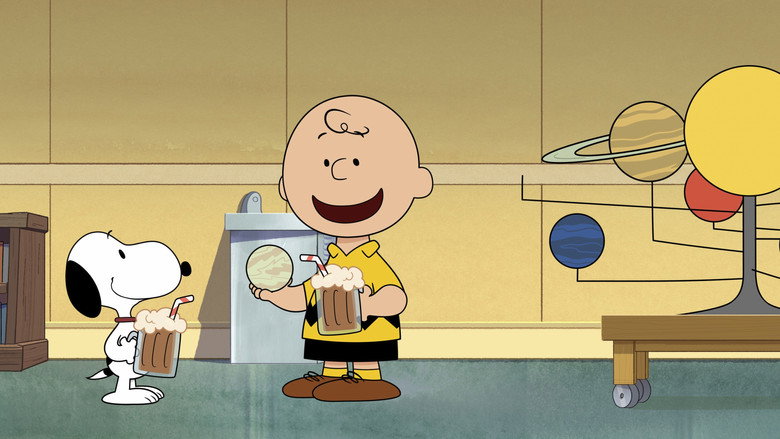
Thinking outside the box, the gang continues the search on Venus even though the planet seems too harsh to support life.
| Runtime (min) | 8 |
|---|---|
| Air Date | 2021-11-11 |
| Genres | Animation, Kids |
| Network(s) | Apple TV |
Storyline
In this episode, Snoopy and the Peanuts gang turn their attention to Venus, the second planet from the Sun, as they continue their mission to search for signs of life in the solar system. Despite Venus's reputation as one of the harshest environments in our planetary neighborhood—with surface temperatures hot enough to melt lead, crushing atmospheric pressure, and clouds of sulfuric acid—the team decides to think creatively about where and how life might exist. Rather than dismissing the planet outright, they explore the possibility that life could survive in unexpected places or forms.
The gang examines Venus's extreme conditions and considers whether certain layers of the atmosphere, far above the scorching surface, might offer more hospitable conditions. Through their investigation, they learn about the planet's thick atmosphere and the scientific curiosity that drives researchers to study even the most unlikely worlds. The episode balances the excitement of space exploration with the reality that not every destination will yield the answers they're hoping for, reinforcing the importance of persistence and open-minded thinking in scientific discovery.
What kids learn
Children learn the value of creative problem-solving and thinking outside the box when faced with seemingly impossible challenges. The episode demonstrates that just because something appears inhospitable or unlikely at first glance doesn't mean it should be dismissed entirely. By watching the gang consider Venus despite its harsh conditions, kids see how scientists approach problems from multiple angles and remain open to unexpected possibilities.
The episode also introduces young viewers to real planetary science, teaching them about Venus's extreme environment in an age-appropriate way. Kids learn factual information about atmospheric pressure, temperature extremes, and the composition of Venus's atmosphere, all while understanding why these conditions make the search for life particularly challenging. This grounds the adventure in actual science rather than pure fantasy.
Additionally, children observe the importance of persistence in scientific inquiry. The gang doesn't give up on their mission just because one planet proves difficult to explore. This models resilience and determination, showing kids that setbacks and difficult challenges are normal parts of any worthwhile endeavor, and that continuing to ask questions and explore is what drives discovery forward.
Parents' top 5 questions
| Question | Answer |
|---|---|
| Is the information about Venus scientifically accurate? | The episode presents Venus's harsh conditions accurately, including its extreme surface temperatures, crushing atmospheric pressure, and sulfuric acid clouds. These are real characteristics of Venus that scientists study. The show appropriately conveys why Venus is considered one of the most hostile environments in our solar system while keeping the presentation accessible for young children. The creative exploration of potential habitable zones in Venus's atmosphere reflects actual scientific hypotheses that researchers have proposed. |
| Will my child be frightened by descriptions of Venus's extreme environment? | The episode presents Venus's harsh conditions in an educational rather than scary context. The focus remains on scientific curiosity and problem-solving rather than danger or fear. The Peanuts gang approaches the planet's challenges with optimism and creativity, which helps frame the extreme conditions as interesting scientific facts rather than threatening scenarios. The gentle tone and short runtime keep the content appropriate for the target age group without dwelling on frightening aspects. |
| What age is this episode appropriate for? | This eight-minute episode works well for children ages four through nine, the core audience for the series. Younger children will enjoy Snoopy's space adventure and the basic concepts about planets, while older elementary-age kids can grasp more of the scientific details about Venus's atmosphere and conditions. The short runtime and straightforward presentation make it accessible without requiring extensive background knowledge, though parental co-viewing can enhance understanding for younger viewers. |
| Does the episode explain why they're searching for life on such a harsh planet? | The episode addresses this directly by emphasizing the importance of thinking outside the box and not dismissing possibilities too quickly. The gang acknowledges Venus's extreme surface conditions but explores whether life might exist in other forms or locations, such as higher in the atmosphere where conditions differ. This teaches children that scientific exploration involves considering all possibilities and that life might adapt to environments we initially think are impossible. |
| What can I discuss with my child after watching this episode? | You can talk about what makes a planet habitable and why scientists study even harsh environments like Venus. Discuss the concept of thinking creatively when solving problems and how the gang didn't give up despite challenges. You might also explore what your child found most interesting about Venus or ask them to imagine what kind of life could survive in extreme conditions. This opens conversations about adaptation, scientific curiosity, and the diversity of environments in our solar system. |
Writing
Directing
| Season # | Episode # | Episode Name |
|---|---|---|
| 1 | 1 | Inspired by the neighborhood kids, Snoopy sets out to become a NASA astronaut. |
| 1 | 2 | Snoopy meets C.A.R.A. (NASA's Computerized Astronaut Recruitment Advisor). |
| 1 | 3 | After his true identity is revealed, Snoopy must prove his worth to NASA. |
| 1 | 4 | Snoopy blasts off for the ISS and is surprised to see a familiar face on board. |
| 1 | 5 | Snoopy and Woodstock struggle to tend to the ISS garden. |
| 1 | 6 | A peaceful night on the ISS is interrupted when Snoopy realizes Woodstock's missing. |
| 1 | 7 | Snoopy returns to Earth and earns a chance for a bigger mission: a trip to the moon! |
| 1 | 8 | Snoopy and Woodstock's fun antics lead to peril while measuring moon craters. |
| 1 | 9 | After getting lost, Woodstock gets an idea while he and Snoopy collect rocks. |
| 1 | 10 | Snoopy and Woodstock blast off from the moon—and leave behind a surprise. |
| 1 | 11 | As Snoopy completes his mission report, he dreams about his next adventure. |
| 1 | 12 | Charlie Brown plots to help Snoopy with his dream of traveling to Mars. |
| Season # | Episode # | Episode Name |
|---|---|---|
| 2 | 1 | Snoopy and the Peanuts gang are back at NASA, where Franklin discovers an exciting opportunity. |
| 2 | 2 | The gang and Snoopy present a mission proposal to C.A.R.A., but new evidence makes them rethink their approach. |
| 2 | 3 | Snoopy tries to prove he has what it takes to join NASA's robots on a mission to search for life. |
| 2 | 4 | Something catches Sally's eye as the Mars rover scans the planet for signs of life. Snoopy imagines his own Martian adventure. |
| 2 | 5 | The Peanuts gang search for a hidden ocean on Europa, one of Jupiter's most mysterious moons. |
| 2 | 6 | Thinking outside the box, the gang continues the search on Venus even though the planet seems too harsh to support life. |
| 2 | 7 | Charlie Brown reminds everyone what's important after an unexpected challenge derails lunchtime plans. |
| 2 | 8 | Snoopy and the kids take their search for life beyond the limits of our solar system. |
| 2 | 9 | A disappointing setback leads to excitement when Charlie Brown makes a surprising observation. |
| 2 | 10 | Snoopy helps the gang think through all the ways NASA can take on a thrilling challenge: capturing an asteroid. |
| 2 | 11 | Franklin is disappointed the mission has to end, so Snoopy and the rest of the kids remind him of how much they've accomplished. |
| 2 | 12 | Back home, Snoopy and the Peanuts gang come up with a fun idea to commemorate the mission. |
This product uses the TMDB API but is not endorsed or certified by TMDB.