
Snoopy in Space: The Search for Life - The Discovery (S2E9)
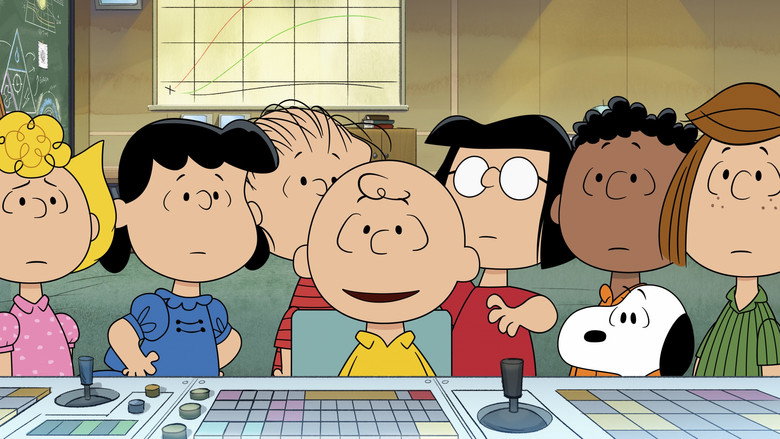
A disappointing setback leads to excitement when Charlie Brown makes a surprising observation.
| Runtime (min) | 8 |
|---|---|
| Air Date | 2021-11-11 |
| Genres | Animation, Kids |
| Network(s) | Apple TV |
Storyline
In this episode of Snoopy in Space: The Search for Life, the crew faces a disappointing setback in their ongoing mission to find evidence of life beyond Earth. The team's spirits are dampened as their latest experiment or observation fails to yield the results they hoped for, creating a moment of frustration and doubt about their scientific endeavors.
However, the mood shifts dramatically when Charlie Brown makes an unexpected observation that reignites the team's excitement. His surprising discovery suggests that their mission may not be as fruitless as it seemed, opening up new possibilities for their search. The episode demonstrates how scientific breakthroughs can emerge from careful attention and persistence, even in the face of initial disappointment, and highlights Charlie Brown's growing confidence as an observer and member of the space crew.
What kids learn
This episode teaches children about resilience in the face of disappointment and the importance of maintaining curiosity even when things don't go as planned. Young viewers see that setbacks are a normal part of any challenging endeavor, especially in scientific exploration, and that initial failures don't mean the end of a mission or dream. The crew's ability to process their disappointment and continue observing demonstrates emotional maturity and professional dedication.
Children also learn about the value of careful observation and attention to detail. Charlie Brown's surprising discovery shows that important findings can come from anyone on a team, not just the most experienced members, which can boost children's confidence in their own abilities to notice and contribute meaningful insights. The episode reinforces that staying engaged and observant, even during discouraging moments, can lead to unexpected breakthroughs.
The story also illustrates how scientific discovery often involves patience, persistence, and the willingness to look at problems from different angles. Children see that excitement and progress in science don't always follow a straight path, and that some of the most important discoveries happen when researchers remain open to surprises.
Parents' top 5 questions
| Question | Answer |
|---|---|
| How can I help my child handle disappointment like the crew does in this episode? | Use this episode as a springboard for conversations about setbacks being temporary and normal. Point out how the characters acknowledge their disappointment but don't give up, and discuss times when your child has experienced similar feelings. Emphasize that taking a moment to feel disappointed is okay, but staying curious and engaged can lead to new opportunities, just as Charlie Brown's continued observation leads to his exciting discovery. |
| What age group is this episode most appropriate for? | This eight-minute episode works well for children ages four through nine. The short runtime keeps younger viewers engaged, while the themes of scientific observation and handling setbacks resonate with early elementary-aged children who are developing problem-solving skills. The gentle Peanuts animation style and Charlie Brown's relatable character make the space setting accessible even for preschoolers interested in science topics. |
| Does this episode accurately represent how scientific research works? | The episode captures an important truth about scientific research: that disappointments and failed experiments are common, and breakthroughs often come from unexpected observations. While simplified for young audiences, the progression from setback to discovery through careful observation reflects genuine scientific practice. It's an age-appropriate introduction to the reality that science involves both patience and the willingness to notice surprising details that others might miss. |
| How can I encourage my child's observational skills after watching this episode? | Create simple observation activities inspired by Charlie Brown's discovery. Take nature walks and challenge your child to notice small details others might miss, or set up a window observation station where they can track changes in weather, wildlife, or neighborhood activity. Praise their observations without judgment, emphasizing that noticing details is a valuable skill. You might even create an observation journal together to record interesting findings. |
| What makes Charlie Brown's discovery significant in this episode? | Charlie Brown's discovery is meaningful because it demonstrates that valuable contributions can come from any team member, regardless of their perceived status or expertise. His surprising observation transforms the crew's disappointment into renewed excitement about their mission. This moment builds Charlie Brown's confidence and shows young viewers that their own observations and ideas have worth, encouraging them to speak up when they notice something interesting or unusual. |
Writing
Directing
| Season # | Episode # | Episode Name |
|---|---|---|
| 1 | 1 | Inspired by the neighborhood kids, Snoopy sets out to become a NASA astronaut. |
| 1 | 2 | Snoopy meets C.A.R.A. (NASA's Computerized Astronaut Recruitment Advisor). |
| 1 | 3 | After his true identity is revealed, Snoopy must prove his worth to NASA. |
| 1 | 4 | Snoopy blasts off for the ISS and is surprised to see a familiar face on board. |
| 1 | 5 | Snoopy and Woodstock struggle to tend to the ISS garden. |
| 1 | 6 | A peaceful night on the ISS is interrupted when Snoopy realizes Woodstock's missing. |
| 1 | 7 | Snoopy returns to Earth and earns a chance for a bigger mission: a trip to the moon! |
| 1 | 8 | Snoopy and Woodstock's fun antics lead to peril while measuring moon craters. |
| 1 | 9 | After getting lost, Woodstock gets an idea while he and Snoopy collect rocks. |
| 1 | 10 | Snoopy and Woodstock blast off from the moon—and leave behind a surprise. |
| 1 | 11 | As Snoopy completes his mission report, he dreams about his next adventure. |
| 1 | 12 | Charlie Brown plots to help Snoopy with his dream of traveling to Mars. |
| Season # | Episode # | Episode Name |
|---|---|---|
| 2 | 1 | Snoopy and the Peanuts gang are back at NASA, where Franklin discovers an exciting opportunity. |
| 2 | 2 | The gang and Snoopy present a mission proposal to C.A.R.A., but new evidence makes them rethink their approach. |
| 2 | 3 | Snoopy tries to prove he has what it takes to join NASA's robots on a mission to search for life. |
| 2 | 4 | Something catches Sally's eye as the Mars rover scans the planet for signs of life. Snoopy imagines his own Martian adventure. |
| 2 | 5 | The Peanuts gang search for a hidden ocean on Europa, one of Jupiter's most mysterious moons. |
| 2 | 6 | Thinking outside the box, the gang continues the search on Venus even though the planet seems too harsh to support life. |
| 2 | 7 | Charlie Brown reminds everyone what's important after an unexpected challenge derails lunchtime plans. |
| 2 | 8 | Snoopy and the kids take their search for life beyond the limits of our solar system. |
| 2 | 9 | A disappointing setback leads to excitement when Charlie Brown makes a surprising observation. |
| 2 | 10 | Snoopy helps the gang think through all the ways NASA can take on a thrilling challenge: capturing an asteroid. |
| 2 | 11 | Franklin is disappointed the mission has to end, so Snoopy and the rest of the kids remind him of how much they've accomplished. |
| 2 | 12 | Back home, Snoopy and the Peanuts gang come up with a fun idea to commemorate the mission. |
This product uses the TMDB API but is not endorsed or certified by TMDB.