
Snoopy in Space: The Search for Life - Exoplanets (S2E8)
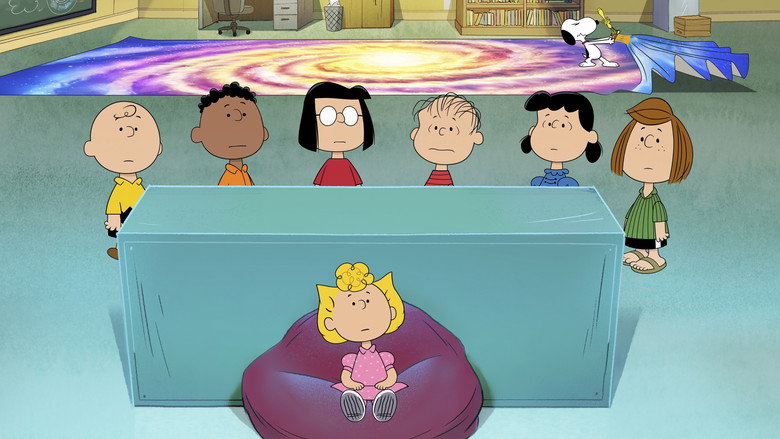
Snoopy and the kids take their search for life beyond the limits of our solar system.
| Runtime (min) | 8 |
|---|---|
| Air Date | 2021-11-11 |
| Genres | Animation, Kids |
| Network(s) | Apple TV |
Storyline
In this episode, Snoopy and the young astronauts expand their mission beyond the familiar boundaries of our solar system to investigate exoplanets—worlds orbiting distant stars. The team learns that scientists have discovered thousands of planets outside our solar system using specialized telescopes and detection methods. Snoopy and the kids explore the concept of the habitable zone, sometimes called the "Goldilocks zone," where conditions might be just right for liquid water and potentially life to exist.
The episode introduces viewers to different types of exoplanets, from gas giants larger than Jupiter to rocky worlds that might resemble Earth. The crew examines how astronomers detect these distant planets by observing the dimming of starlight as planets pass in front of their host stars, and by measuring the wobble in a star's position caused by orbiting planets. Through their journey, Snoopy and the team consider what forms life might take on worlds vastly different from Earth, encouraging young viewers to think about the incredible diversity of planetary systems in our galaxy.
What kids learn
Children learn about the exciting field of exoplanet research and the scientific methods astronomers use to discover worlds beyond our solar system. The episode introduces the concept of the habitable zone and helps kids understand that not all planets are alike—some are gas giants, others are rocky, and conditions vary dramatically depending on distance from a star. This builds critical thinking about what makes a planet potentially suitable for life.
The episode encourages curiosity about the universe's vastness and the possibility of life existing elsewhere. Kids discover that scientists use indirect observation methods like transit photometry and radial velocity measurements to detect planets they cannot see directly. This teaches patience and creativity in problem-solving, showing that scientists must often find clever ways to study things beyond their immediate reach.
Young viewers also develop an appreciation for the scale of space exploration and the ongoing nature of scientific discovery. The episode fosters wonder about cosmic diversity while grounding that wonder in real scientific concepts, helping children understand that asking "Are we alone?" is a legitimate scientific question that researchers actively investigate using observable evidence and rigorous methods.
Parents' top 5 questions
| Question | Answer |
|---|---|
| Is the science about exoplanets accurate for young children? | The episode presents real scientific concepts in an age-appropriate way. The methods described for detecting exoplanets—observing star dimming and stellar wobble—are actual techniques astronomers use. The habitable zone concept is simplified but accurate, helping children understand that distance from a star affects a planet's conditions. The show balances scientific accuracy with accessibility for its young audience. |
| Will my child understand what exoplanets are after watching? | The episode clearly defines exoplanets as planets orbiting stars other than our Sun. Through Snoopy's journey, children see that these worlds exist far beyond our solar system and come in many varieties. The visual storytelling and comparisons to familiar planets like Earth and Jupiter help make this abstract concept concrete for young viewers. |
| Does this episode discuss aliens or extraterrestrial life directly? | The episode approaches the search for life scientifically rather than sensationally. It focuses on the conditions that might support life and encourages children to think about possibility rather than making claims about alien existence. The treatment is thoughtful and grounded in the scientific question of whether life could exist elsewhere, without frightening imagery or definitive statements. |
| Is the eight-minute runtime enough to cover exoplanets meaningfully? | The short format works well for introducing the topic without overwhelming young viewers. The episode covers key concepts—what exoplanets are, how we find them, and why scientists study them—in a focused way. The brevity keeps children engaged while providing enough information to spark curiosity and further questions about space exploration. |
| What age range is this exoplanet episode best suited for? | The episode works well for children ages five to nine. Younger children will grasp the basic idea that planets exist around other stars and enjoy Snoopy's space adventure, while older elementary students can appreciate the detection methods and habitable zone concepts. The visual approach and friendly characters make complex astronomy accessible across this age range. |
Writing
Directing
| Season # | Episode # | Episode Name |
|---|---|---|
| 1 | 1 | Inspired by the neighborhood kids, Snoopy sets out to become a NASA astronaut. |
| 1 | 2 | Snoopy meets C.A.R.A. (NASA's Computerized Astronaut Recruitment Advisor). |
| 1 | 3 | After his true identity is revealed, Snoopy must prove his worth to NASA. |
| 1 | 4 | Snoopy blasts off for the ISS and is surprised to see a familiar face on board. |
| 1 | 5 | Snoopy and Woodstock struggle to tend to the ISS garden. |
| 1 | 6 | A peaceful night on the ISS is interrupted when Snoopy realizes Woodstock's missing. |
| 1 | 7 | Snoopy returns to Earth and earns a chance for a bigger mission: a trip to the moon! |
| 1 | 8 | Snoopy and Woodstock's fun antics lead to peril while measuring moon craters. |
| 1 | 9 | After getting lost, Woodstock gets an idea while he and Snoopy collect rocks. |
| 1 | 10 | Snoopy and Woodstock blast off from the moon—and leave behind a surprise. |
| 1 | 11 | As Snoopy completes his mission report, he dreams about his next adventure. |
| 1 | 12 | Charlie Brown plots to help Snoopy with his dream of traveling to Mars. |
| Season # | Episode # | Episode Name |
|---|---|---|
| 2 | 1 | Snoopy and the Peanuts gang are back at NASA, where Franklin discovers an exciting opportunity. |
| 2 | 2 | The gang and Snoopy present a mission proposal to C.A.R.A., but new evidence makes them rethink their approach. |
| 2 | 3 | Snoopy tries to prove he has what it takes to join NASA's robots on a mission to search for life. |
| 2 | 4 | Something catches Sally's eye as the Mars rover scans the planet for signs of life. Snoopy imagines his own Martian adventure. |
| 2 | 5 | The Peanuts gang search for a hidden ocean on Europa, one of Jupiter's most mysterious moons. |
| 2 | 6 | Thinking outside the box, the gang continues the search on Venus even though the planet seems too harsh to support life. |
| 2 | 7 | Charlie Brown reminds everyone what's important after an unexpected challenge derails lunchtime plans. |
| 2 | 8 | Snoopy and the kids take their search for life beyond the limits of our solar system. |
| 2 | 9 | A disappointing setback leads to excitement when Charlie Brown makes a surprising observation. |
| 2 | 10 | Snoopy helps the gang think through all the ways NASA can take on a thrilling challenge: capturing an asteroid. |
| 2 | 11 | Franklin is disappointed the mission has to end, so Snoopy and the rest of the kids remind him of how much they've accomplished. |
| 2 | 12 | Back home, Snoopy and the Peanuts gang come up with a fun idea to commemorate the mission. |
This product uses the TMDB API but is not endorsed or certified by TMDB.