
The Color of Paradise (1999)
Synopsis:
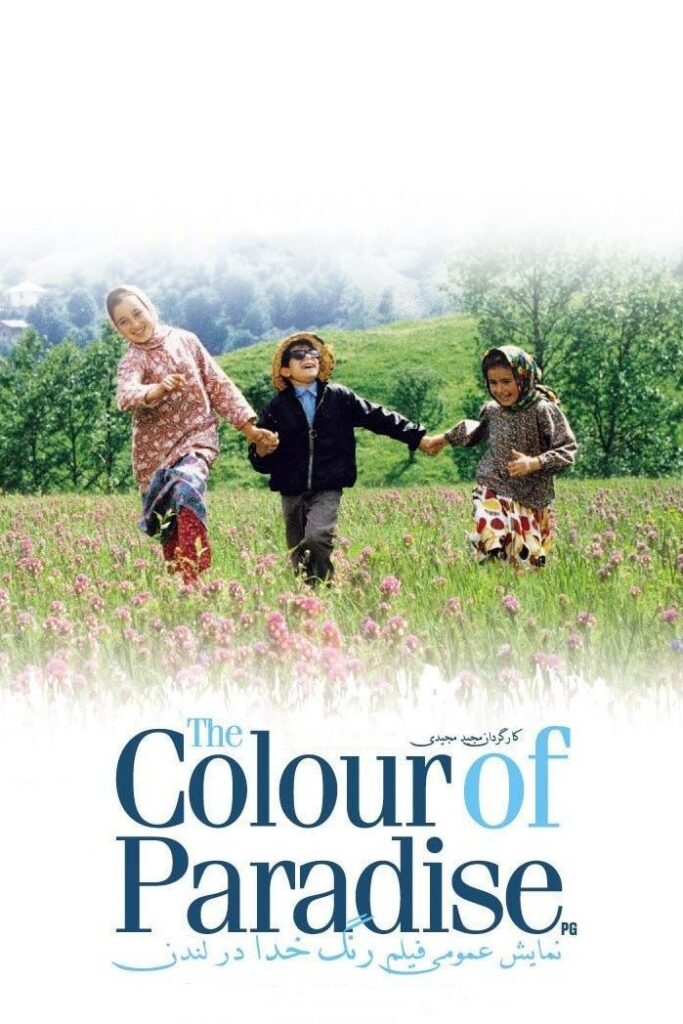
Mohammad, a blind boy, returns home from the Institute for the Blind for summer vacation, eager to reunite with his family in their small village. However, his widowed father Hashem harbors a troubling secret: he plans to abandon his son to pursue marriage with a local woman whose dowry he desires. As the wedding date approaches, Mohammad remains unaware of his precarious situation, finding joy and wonder in the world around him despite his blindness. His father wrestles with his conscience, unable to appreciate the beauty and love that Mohammad sees so clearly through his other senses. With Mohammad's grandmother and sisters Bahareh and Hanieh part of their household, the family faces a moral crossroads that will determine the young boy's fate and test the bonds between parent and child.
Where To Watch: The Color of Paradise
Parental Feedback
The Color of Paradise unfolds at a contemplative, gentle pace that invites families to slow down and absorb its emotional depth. The tone is deeply heartfelt and poignant, exploring themes of disability, family bonds, and the search for acceptance through a sensitive lens. Parents should be prepared for moments of genuine sadness and moral complexity as the story examines a father's struggle with shame and a child's unwavering spirit, making this an experience that rewards patience and emotional openness.
Why Kids Should Watch The Color of Paradise
This film offers young viewers a rare opportunity to see the world through the perspective of a blind child who finds beauty in everything around him.
Mohammad's character demonstrates remarkable resilience and joy despite his disability, teaching children that limitations don't define a person's capacity for wonder and happiness. His ability to connect with nature through touch and sound opens up new ways of understanding the world.
The story celebrates the power of empathy and compassion, showing how Mohammad's grandmother and sisters embrace him with unconditional love. These relationships model the importance of accepting and supporting family members regardless of their differences.
The film's visual storytelling and attention to the natural world encourage children to appreciate the small details in life that often go unnoticed. Mohammad's interactions with birds, water, and trees demonstrate a profound connection to his environment.
The narrative raises important questions about fairness, dignity, and what it means to truly "see" another person, providing valuable conversation starters for families about inclusion and understanding.
Why Kids Shouldn't Watch The Color of Paradise
Parents should consider several aspects that may challenge younger or more sensitive viewers.
The father's rejection of his blind son forms the emotional core of the story, and his attempts to disown Mohammad in pursuit of remarriage may be difficult for children to understand or process. This portrayal of parental abandonment could be particularly upsetting for younger viewers.
The film's slow, meditative pacing and lack of conventional action or humor may not hold the attention of children accustomed to faster-paced entertainment. The contemplative style requires patience and emotional maturity to fully appreciate.
Themes of poverty, loss, and social stigma surrounding disability are woven throughout the narrative, presenting mature subject matter that may require parental guidance and discussion to help children contextualize what they're seeing.
Verdict: Parent Approved
The Color of Paradise earns approval for families with older children ready to engage with thoughtful, emotionally complex storytelling that promotes empathy and challenges perceptions about disability.
What Parents Should Know About The Color of Paradise
| Question | Answer |
|---|---|
| Does this Movie model positive behavior that my child can understand and repeat? | Yes, Mohammad demonstrates kindness, curiosity, and appreciation for the world around him, while his grandmother and sisters model unconditional love and acceptance. |
| Does this Movie include emotional moments my child might find confusing or intense? | Yes, the father's rejection of his son and the underlying tension about Mohammad's future create emotionally heavy moments that may require parental context and discussion. |
| Does this Movie show consequences for unkind or unsafe behavior? | The father's struggle with shame and his treatment of Mohammad are portrayed as morally troubling, though consequences unfold gradually through emotional rather than explicit means. |
| Does this Movie reinforce helpful social skills like sharing, apologizing, or teamwork? | The film emphasizes compassion and family support through the grandmother's care and the siblings' interactions, though it focuses more on acceptance than specific social skills. |
| Will my child come away with any clear moral or message? | Yes, the story powerfully conveys that true vision comes from the heart, and that disability does not diminish a person's worth, wonder, or capacity to experience life fully. |
The Overall Sentiment From Parental Feedback
Parents generally appreciate the film's sensitive portrayal of disability and its ability to foster meaningful conversations about acceptance and empathy with their children. Many note that the story's emotional depth makes it most suitable for older children and teens who can grasp the complex family dynamics at play. While some parents caution that the slower pacing and serious themes may not appeal to all young viewers, most agree that the film's messages about seeing beyond physical limitations and recognizing inner beauty are valuable lessons. The performances, particularly by the young lead, are frequently praised for their authenticity and emotional resonance, helping children connect with Mohammad's experience in a genuine way.
Official The Color of Paradise Trailer
Why Kids Love The Color of Paradise
Mohammad explores his village with incredible curiosity, using his hands to discover everything around him—from the texture of tree bark to the feel of rushing water. His unique way of experiencing the world turns ordinary moments into exciting adventures, like when he rescues a tiny baby bird that's fallen from its nest and carefully returns it to safety.
The bond between Mohammad and his grandmother creates heartwarming scenes as they work together around the village. His sisters Bahareh and Hanieh join in the fun, and their playful interactions show how Mohammad's special abilities help him connect with his family in unexpected ways.
Mohammad's determination to help others shines through as he navigates his environment with confidence and skill. Whether he's learning from the Village Teacher or interacting with Mr. Rahmani and the Carpenter, he proves that being different makes him uniquely capable of solving problems in creative ways.
The natural setting becomes a playground for discovery, with Mohammad leading the way in showing how to experience the beauty of the countryside. His friendship with his grandmother and his role in the family demonstrate how standing up for yourself and helping those around you creates real connections.