

Teaching children to notice what is happening around them, whether spotting an exit in a crowded mall or sensing tension in a room, is one of the most practical life skills a parent can model, and child development advocates say it is never too early to start. Yet as Scary Mommy points out in a recent piece on raising socially aware kids, even adults struggle with this skill, which raises a fair question: how do you teach something you have not fully mastered yourself?
Most parents think of situational awareness in purely physical terms, knowing where the exits are, staying close in a crowd, not wandering off. But the skill runs much deeper than that. At its core, situational awareness means being consciously tuned in to your environment: the people in it, the mood of a space, the small details that signal whether something is off. That same ability to read a room applies just as much to social and emotional intelligence as it does to physical safety.
A child who can sense that a friend is upset before anyone says a word, or who notices that a classroom has gone quiet in an unusual way, is drawing on the exact same mental muscle as one who clocks the nearest exit when entering a building.
The good news for parents is that this is a trainable skill, not an innate talent. Research from military aviation and emergency medicine has long established that situational awareness can be developed through deliberate practice. A peer reviewed study found that shared situational awareness among pediatric medical teams directly correlated with faster achievement of treatment goals.
The study measured situation awareness overlap within teams and compared it to indicators of team effectiveness, including time to goal achievement, consensus on primary problem, diagnosis, and task prioritization. In other words, when team members are genuinely aligned on what is happening around them, outcomes improve. The same principle applies in families.
The Framework Behind The Skill
Security professionals and military trainers have used structured models to build situational awareness for decades, and some of those frameworks translate surprisingly well to parenting. The Ahead App blog describes a practical system for calibrating alertness levels during family outings, drawing on a color coded model used by security professionals. The idea is not to be on high alert at all times, that leads to anxiety, not awareness. Instead, the goal is a balanced middle ground of relaxed alertness: being aware of your surroundings while still enjoying your time together as a family.
That same source recommends a technique called baseline and anomaly detection: when you walk into any new environment, take about 30 seconds to register what normal looks like. What is the general energy of the space? How are people moving and behaving? Once you have established that baseline, anything that falls outside it becomes far more visible. Teaching children to do this same quick mental scan, even framing it as a game, builds the habit without making it feel like a chore or a threat.
For younger children, age appropriate games work especially well. Preschoolers as young as three can play a safety themed version of “I Spy” that directs their attention toward helpful people in their environment, like store employees or security guards. School age children respond well to “what if” scenario conversations during outings, which build decision making skills in a low stakes, imaginative context.
The Post Outing Quiz Game That Actually Works
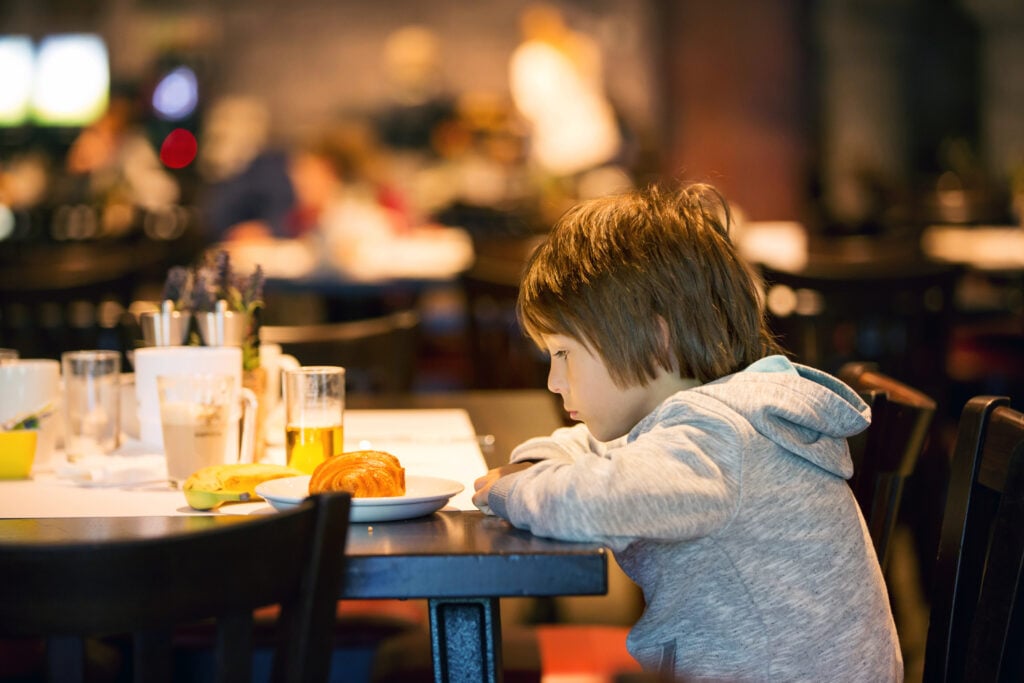
One of the most practical tools for building situational awareness in children comes from a military household perspective. PreparednessMama, a preparedness focused parenting resource, describes a leveled quiz game parents can play with children after leaving any store, restaurant, or public space. The concept is simple: after you walk out, ask your child questions about what they observed inside. Where were the exits? What was the cashier wearing? What was displayed near the entrance? The questions progress in difficulty over time, moving from basic place awareness to people awareness to noticing specific objects and events.
The critical design detail is variety. If children know exactly which questions are coming, they will focus only on those things and miss everything else. Rotating the questions forces genuine broad awareness rather than coached, narrow attention. As one soldier quoted in the PreparednessMama piece explained to a fellow service member who felt out of place in civilian settings due to his heightened alertness: “There’s nothing wrong with you, it’s them.” The point is not that civilians are careless, it is that most of us have simply never been taught to pay attention in a structured way. Parents who try this game for the first time often discover they cannot answer their own questions.
PreparednessMama structures the game across three levels. Level one focuses on the physical layout of a space — exits, bathrooms, entrances. Level two shifts to people, what employees looked like, whether someone was sitting alone, what the cashier’s name tag said. Level three adds objects and events, what was on a particular shelf, what food was near the milk, what car was parked next to yours. Each level builds on the last, and the goal is not to rush through them but to let each one become second nature before adding complexity.
Teaching Social Awareness Without Creating Fear
One of the biggest concerns parents raise about this kind of teaching is the risk of making children anxious or hypervigilant. That concern is valid, and the research and practitioner consensus is consistent: the framing matters enormously. Situational awareness taught as a game, a family habit, or a confidence building skill lands very differently than situational awareness taught as a response to danger. Children who learn to notice their surroundings in a positive, curious context tend to feel more empowered in public spaces, not more frightened.
This is also why the social and emotional dimension of the skill deserves equal attention alongside the physical safety angle. A child who can read the energy in a rook, who notices that a parent is stressed before being told, or who picks up on a friend’s discomfort at a party, is developing empathy and emotional intelligence alongside practical safety skills. These are not separate goals. They are the same underlying capacity: paying attention to the world beyond your own immediate experience. For parents looking to raise children who are both safe and socially attuned, that is a powerful combination.
It also helps to model the behavior yourself. Children learn far more from watching what adults do than from being told what to do. If you narrate your own awareness out loud, pointing out that you noticed two exits in a restaurant and suggesting you sit near one, or asking whether your child saw how someone’s face changed when you walked in — you are giving your child a window into a thought process they would otherwise never see.
Why This Matters Especially Right Now
We live in an era of constant distraction. Phones, notifications, mental to do lists, and the sheer cognitive load of managing a family in public all compete for the attention that situational awareness requires. The irony is that the more distracted adults become, the more important it is to deliberately build this skill in children, because they are watching us not notice things, and learning that not noticing is normal. Starting these conversations and games early, even imperfectly, sends a different message: that paying attention is something our family values and practices together.
If you are looking for ways to make these conversations feel natural rather than scripted, the same principles that apply to teaching responsibility without overwhelming children apply here, keep it age appropriate, keep it consistent, and keep it low pressure. And if your child is old enough to be navigating social media and peer dynamics, the skill of reading a room connects directly to teaching kids to think critically about what they see and hear, both online and off.
You do not need a curriculum or a formal plan. The next time you leave a grocery store or a restaurant with your child, try asking three questions about what they noticed inside. Keep it light and curious, not quizzy or pressured. If they cannot answer, that is fine, neither can most adults the first time. The point is to start the habit of looking, and to signal that noticing the world around you is something worth doing. Over time, that habit becomes instinct. And instinct, in the moments that matter most, is exactly what you want your child to have.

