
Slumberkins - Yak's Perfect Day / Imagine Myself to Sleep (S1E7)
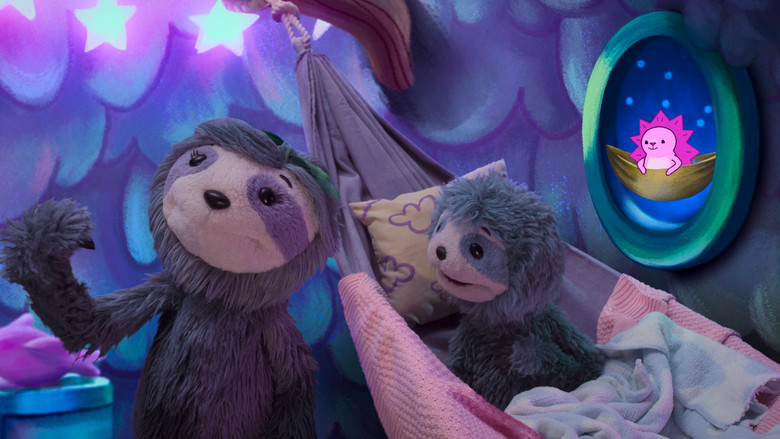
Yak tries to have the best day ever, but nothing seems to go her way. Sloth is afraid of the dark when he imagines shadows coming to life.
| Runtime (min) | 22 |
|---|---|
| Air Date | 2022-11-03 |
| Genres | Kids, Animation |
| TV Rating | TV-Y |
| Network(s) | Apple TV |
Storyline
In "Yak's Perfect Day," Yak wakes up determined to have the best day ever, but her plans quickly unravel when things don't go as expected. Each small setback—from a breakfast that doesn't turn out right to activities that don't match her vision—frustrates Yak and threatens to derail her entire day. Through the support of her friends and caregivers, Yak learns that perfection isn't necessary for a day to be meaningful and that flexibility and gratitude can transform disappointment into joy.
In "Imagine Myself to Sleep," Sloth faces his fear of the dark when bedtime arrives and the shadows in his room seem to take on frightening shapes. His imagination turns ordinary objects into scary creatures, making it difficult for him to settle down and feel safe. With gentle guidance, Sloth discovers strategies to reframe his thoughts and use his imagination in positive ways, transforming the shadows from sources of fear into comforting companions that help him relax and drift off to sleep.
What parents say
Parents have praised Slumberkins for its thoughtful approach to social-emotional learning, noting that the show tackles real childhood anxieties in age-appropriate ways. Many appreciate that the series doesn't shy away from difficult feelings like frustration and fear, instead modeling healthy coping strategies that children can practice in their own lives. Parents have specifically mentioned that the show's gentle pacing and calm tone make it suitable for bedtime viewing, which is particularly relevant for episodes addressing nighttime fears.
Some parents have highlighted the show's usefulness as a conversation starter, reporting that their children reference the characters and situations when working through their own emotional challenges. The combination of animation and real-world segments has been noted as effective in helping children connect the lessons to their everyday experiences. Parents of anxious or sensitive children have found the series especially valuable, commenting that it validates their children's feelings while offering concrete tools for managing big emotions.
What kids learn
In "Yak's Perfect Day," children learn that rigid expectations can set them up for disappointment and that flexibility is an essential life skill. The episode demonstrates that when things don't go according to plan, they have a choice in how to respond—they can let frustration take over or they can adapt and find new ways to enjoy themselves. Young viewers see that a "good day" doesn't require everything to be perfect and that gratitude for small moments can be more fulfilling than chasing an impossible ideal.
"Imagine Myself to Sleep" teaches children practical strategies for managing nighttime fears and anxiety. The episode shows that imagination is a powerful tool that can work for them or against them, depending on how they direct it. Children learn that the scary things they see in the dark are often ordinary objects transformed by their minds, and that they can intentionally use their imagination to create comforting, peaceful thoughts instead. The episode validates the reality of nighttime fears while empowering children with age-appropriate techniques for self-soothing.
Both segments reinforce the importance of self-compassion and the understanding that difficult feelings are temporary and manageable. Children see characters working through challenges with support from caring adults, modeling how to ask for help when needed while also building independent coping skills.
Parents' top 5 questions
| Question | Answer |
|---|---|
| How can I help my child who gets upset when things don't go perfectly like Yak does? | The episode models acknowledging your child's disappointment while gently redirecting their focus to what is going well. Help them practice flexible thinking by pointing out alternative ways to enjoy an activity when the original plan changes. Praise their efforts to adapt rather than emphasizing outcomes, and share your own examples of times when imperfect moments turned out to be enjoyable. Building this skill takes time and repeated practice in low-stakes situations. |
| Is it normal for my preschooler to be afraid of shadows and the dark like Sloth? | Yes, fear of the dark and shadows is extremely common in preschool and early elementary years as children's imaginations develop rapidly. Their growing cognitive abilities allow them to imagine scenarios vividly, but they haven't yet fully developed the ability to distinguish between imagined threats and real ones. This developmental stage typically peaks around ages three to six and gradually diminishes as children mature and gain more experience with nighttime routines that prove safe and predictable. |
| What are some practical strategies I can use if my child is scared at bedtime? | The episode demonstrates reframing techniques where children learn to transform scary shadows into friendly shapes. You can practice this together during the day, identifying what objects create which shadows. A consistent, calming bedtime routine helps, as does a small nightlight that reduces stark shadows. Validate your child's feelings rather than dismissing them, and consider leaving the door open or checking in at predictable intervals. Teaching deep breathing or visualization of peaceful scenes gives children tools they can use independently. |
| Should I let my child watch this episode right before bed, or will it make nighttime fears worse? | Most children benefit from watching this episode earlier in the evening rather than immediately before bed, giving you time to discuss the strategies together and practice them in a calm, well-lit setting. The episode's gentle tone and positive resolution typically help rather than harm, but you know your child best. If they tend to fixate on scary elements even when resolved positively, watch it during daytime and reference the coping strategies at bedtime without re-watching the fear-inducing scenes. |
| How do I balance validating my child's feelings about imperfection without encouraging inflexibility? | Validation and boundary-setting work together, not against each other. Acknowledge the feeling first with phrases like "You really wanted it to be a certain way," then gently introduce the reality with "and sometimes things turn out differently." The key is empathizing with the emotion while still moving forward with the adjusted plan. Model your own flexibility by narrating times when you adapt to changes, showing that disappointment and adjustment can coexist. This teaches emotional literacy alongside resilience. |
Writing
Directing
| Season # | Episode # | Episode Name |
|---|---|---|
| 1 | 1 | Yak discovers an exciting talent but feels overshadowed by her new siblings. Fox attempts to hide his tears after getting hurt. |
| 1 | 2 | Sloth and Yak enjoy fun in the kitchen until a mishap leads to conflicting emotions. Bigfoot's self-esteem is tested after he gets teased. |
| 1 | 3 | Bigfoot and Fox accidentally hurt Unicorn's feelings during a playdate. Bigfoot makes a mistake and learns about unconditional love. |
| 1 | 4 | Fox struggles when his friends play with a toy he doesn't have. Sloth loves to give Unicorn gifts but worries it's the only reason they are friends. |
| 1 | 5 | Bigfoot feels anxious over a bathroom emergency. Sloth and Fox have their first big fight and must repair their friendship. |
| 1 | 6 | Fox has a hard time with change when his family moves to a new home. Bigfoot has his first sleepover with Fox but misses his dad at bedtime. |
| 1 | 7 | Yak tries to have the best day ever, but nothing seems to go her way. Sloth is afraid of the dark when he imagines shadows coming to life. |
| 1 | 8 | Unicorn feels left out of her friendship with Yak and Fox. Yak compares her home to Bigfoot's and worries it's too noisy and messy. |
This product uses the TMDB API but is not endorsed or certified by TMDB.