
Slumberkins - When You Gotta Go / Let's Go Fix a Kite (S1E5)
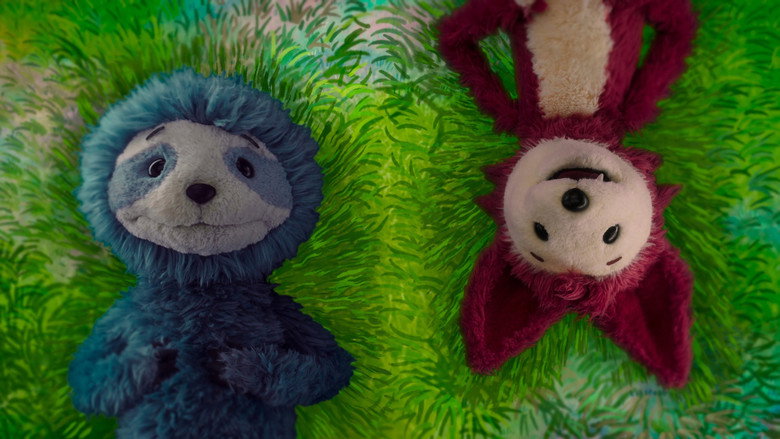
Bigfoot feels anxious over a bathroom emergency. Sloth and Fox have their first big fight and must repair their friendship.
| Runtime (min) | 22 |
|---|---|
| Air Date | 2022-11-03 |
| Genres | Kids, Animation |
| TV Rating | TV-Y |
| Network(s) | Apple TV |
Storyline
In the first segment, "When You Gotta Go," Bigfoot experiences anxiety when he needs to use the bathroom while away from home. The episode follows his journey as he navigates the uncomfortable feelings that arise from this common childhood situation, learning to recognize his body's signals and finding the courage to ask for help when he needs it.
The second segment, "Let's Go Fix a Kite," centers on Sloth and Fox as they encounter their first significant disagreement. When a conflict arises over a broken kite, the two friends must work through hurt feelings and misunderstandings. The story explores how friendships can withstand disagreements when both parties are willing to communicate openly, apologize sincerely, and work together to make things right.
What parents say
Parents have praised Slumberkins for its gentle, therapeutic approach to common childhood challenges. Many appreciate how the show tackles everyday anxieties like bathroom emergencies without shame or embarrassment, noting that it provides helpful language for discussing these situations with young children. The series has been recognized for its roots in child development principles, as it was created by a family therapist and early childhood educator.
Parents frequently mention that the show's pacing is slower and more deliberate than typical children's programming, which some families find calming while others note their children prefer more energetic content. The conflict resolution modeled in episodes like this one has been highlighted by parents as particularly useful, offering concrete examples of how to apologize and repair relationships that children can understand and imitate.
Some parents have noted that the Slumberkins characters and their associated plush toys have become important comfort objects for their children, helping them work through real-life situations similar to those depicted in the episodes.
What kids learn
Children learn that bathroom anxiety is a normal feeling that many kids experience, and that it's always okay to ask a trusted adult for help when they need to use the restroom. The episode validates the physical and emotional discomfort that can come with needing to go in an unfamiliar place, while demonstrating that speaking up about their needs is both brave and important. Young viewers see that their bodies give them signals, and listening to those signals is part of taking care of themselves.
The friendship conflict between Sloth and Fox teaches children that disagreements don't mean a friendship is over. Kids observe the steps involved in repairing a relationship: recognizing when you've hurt someone's feelings, offering a genuine apology, listening to your friend's perspective, and working together to solve the problem. The episode models that good friends can have different opinions or make mistakes and still care about each other.
Throughout both segments, children learn emotional vocabulary to express feelings like anxiety, hurt, and frustration, giving them tools to communicate their own experiences more effectively.
Parents' top 5 questions
| Question | Answer |
|---|---|
| How can I help my child who feels anxious about using bathrooms outside our home? | The episode demonstrates the importance of validating your child's feelings while encouraging them to communicate their needs. Practice identifying bathroom locations when you arrive at new places, role-play asking for help, and reassure your child that all bathrooms serve the same purpose. Praise them when they do speak up about needing to go, reinforcing that asking for help is brave and responsible, not something to feel embarrassed about. |
| Is it normal for young children to have their first real fight with a best friend? | Yes, conflicts are a natural and important part of developing social skills. The episode shows that disagreements help children learn boundaries, communication, and empathy. These early conflicts, when handled constructively, teach kids that relationships can withstand tension and that working through problems together actually strengthens friendships. The key is helping children develop the tools to repair relationships rather than avoiding conflict altogether. |
| What age is appropriate for teaching formal apologies like those shown in the episode? | Children as young as three can begin learning the components of an apology, though their understanding deepens over time. The episode models a meaningful apology that includes acknowledging the hurt caused, expressing genuine regret, and taking action to make things right. At younger ages, parents may need to help children identify what happened and guide them through the steps, gradually allowing more independence as comprehension grows. |
| Should I be concerned if my child refuses to use public restrooms? | Some bathroom reluctance is developmentally normal, especially in new or busy environments. However, if anxiety prevents your child from using facilities during outings or causes physical discomfort from holding it too long, it's worth addressing. Start with low-pressure practice in familiar public places, maintain a calm and supportive attitude, and consider whether sensory issues like loud hand dryers or automatic flushes might be contributing factors that can be accommodated. |
| How do I help my child understand the difference between a disagreement and the end of a friendship? | The episode illustrates that conflict is separate from caring. Help your child understand that friends can be upset with each other temporarily while still being friends overall. Use concrete language like "Fox is frustrated about the kite, but she still loves Sloth." After your child experiences conflicts, reflect together on how the friendship continued or was repaired, building their confidence that relationships are resilient and worth the effort of working through problems. |
Writing
Directing
| Season # | Episode # | Episode Name |
|---|---|---|
| 1 | 1 | Yak discovers an exciting talent but feels overshadowed by her new siblings. Fox attempts to hide his tears after getting hurt. |
| 1 | 2 | Sloth and Yak enjoy fun in the kitchen until a mishap leads to conflicting emotions. Bigfoot's self-esteem is tested after he gets teased. |
| 1 | 3 | Bigfoot and Fox accidentally hurt Unicorn's feelings during a playdate. Bigfoot makes a mistake and learns about unconditional love. |
| 1 | 4 | Fox struggles when his friends play with a toy he doesn't have. Sloth loves to give Unicorn gifts but worries it's the only reason they are friends. |
| 1 | 5 | Bigfoot feels anxious over a bathroom emergency. Sloth and Fox have their first big fight and must repair their friendship. |
| 1 | 6 | Fox has a hard time with change when his family moves to a new home. Bigfoot has his first sleepover with Fox but misses his dad at bedtime. |
| 1 | 7 | Yak tries to have the best day ever, but nothing seems to go her way. Sloth is afraid of the dark when he imagines shadows coming to life. |
| 1 | 8 | Unicorn feels left out of her friendship with Yak and Fox. Yak compares her home to Bigfoot's and worries it's too noisy and messy. |
This product uses the TMDB API but is not endorsed or certified by TMDB.