
Slumberkins - Yak the Amazing Juggler / Keep on Running (S1E1)
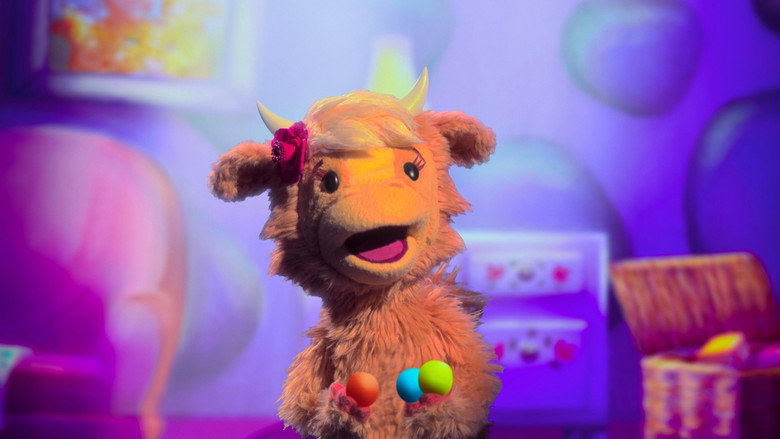
Yak discovers an exciting talent but feels overshadowed by her new siblings. Fox attempts to hide his tears after getting hurt.
| Runtime (min) | 21 |
|---|---|
| Air Date | 2022-11-03 |
| Genres | Kids, Animation |
| TV Rating | TV-Y |
| Network(s) | Apple TV |
Storyline
In the first segment, Yak discovers she has a natural talent for juggling and is thrilled by her newfound skill. However, her excitement is dampened when her family welcomes new siblings into the home, and Yak begins to feel overlooked and less special. She struggles with the fear that her juggling ability won't be enough to help her stand out or maintain her place in the family now that she has to share attention and space with others.
In the second segment, Fox is playing outside when he gets hurt and begins to cry. Embarrassed by his tears and worried about what others might think, Fox tries to hide his emotions and pretend he's fine. Through gentle guidance and reassurance from his caregivers and friends, Fox learns that it's okay to express his feelings when he's hurt or upset, and that crying doesn't make him weak or less capable.
What parents say
Parents have praised Slumberkins for its thoughtful approach to social-emotional learning and its ability to address complex feelings in age-appropriate ways. Many appreciate that the show tackles real childhood challenges like sibling rivalry, jealousy, and emotional expression without being preachy or overly simplistic. The series is based on the popular Slumberkins plush toys and books, which have built a loyal following among parents seeking tools to help children navigate big emotions.
Parents note that the show's gentle pacing and calm tone make it suitable for younger preschoolers, and several have commented that the episodes provide natural conversation starters about feelings and family dynamics. Some parents have mentioned using the episodes alongside the corresponding Slumberkins books and affirmation cards to reinforce the lessons at home. The show's focus on validating children's emotions rather than dismissing them has resonated strongly with parents who practice responsive parenting approaches.
What kids learn
Children learn that feeling jealous or worried about their place in the family when new siblings arrive is a normal and understandable emotion. Yak's story shows young viewers that discovering a special talent or skill is exciting, but that their worth isn't dependent on being the best at something or always being the center of attention. The episode gently introduces the idea that families have enough love for everyone, even when that love has to be shared in new ways.
In Fox's segment, children learn that all feelings are valid and that crying is a healthy, natural response to pain or distress. The episode directly challenges the harmful idea that showing emotion is a sign of weakness, teaching kids that expressing feelings honestly is actually a form of strength and self-care. Fox's journey demonstrates that hiding tears or pretending to be fine when you're hurt doesn't make the pain go away.
Both stories reinforce the importance of self-compassion and emotional honesty, helping children understand that they don't have to be perfect or always put on a brave face to be loved and accepted by the people around them.
Parents' top 5 questions
| Question | Answer |
|---|---|
| How can I help my child cope with jealousy when a new sibling joins the family? | Acknowledge your child's feelings directly and validate that it's normal to feel worried about sharing attention. Like Yak, children need reassurance that their special place in the family remains secure even as it changes shape. Carve out one-on-one time with your older child, celebrate their unique talents and interests, and involve them in age-appropriate ways with the new sibling so they feel included rather than replaced. |
| Is it healthy for my child to cry when they get hurt, or should I encourage them to be tough? | Crying when hurt is a healthy emotional response that helps children process pain and signal their needs to caregivers. Fox's story reinforces that suppressing tears can lead to shame and emotional disconnection. Encourage your child to express their feelings honestly, whether through tears, words, or both. This builds emotional intelligence and helps them develop healthy coping mechanisms that will serve them throughout life. |
| What age group is this episode most appropriate for? | This episode is designed for preschool-aged children, roughly ages two to five, who are developing their emotional vocabulary and learning to navigate family relationships. The themes of sibling rivalry and emotional expression are particularly relevant for children experiencing family changes or who are learning to identify and communicate their feelings. The gentle pacing and clear messaging make it accessible even for younger viewers in this range. |
| How can I use this episode to start conversations about feelings with my child? | After watching, ask open-ended questions like "How do you think Yak felt when her siblings arrived?" or "What did Fox learn about crying?" Share times when you've felt similar emotions, normalizing the experience. You might ask if your child has ever felt overlooked or been embarrassed by their tears. These conversations help children connect the episode's lessons to their own lives and practice naming emotions. |
| Does the episode offer concrete strategies for managing these emotions, or just validate them? | The episode primarily focuses on validating emotions as a crucial first step in emotional development. While it doesn't provide detailed coping strategies, it models seeking support from trusted adults and being honest about feelings. Parents can build on this foundation by introducing specific techniques like deep breathing, using words to express needs, or finding quiet spaces to process big emotions when children are ready for those tools. |
Writing
Directing
| Season # | Episode # | Episode Name |
|---|---|---|
| 1 | 1 | Yak discovers an exciting talent but feels overshadowed by her new siblings. Fox attempts to hide his tears after getting hurt. |
| 1 | 2 | Sloth and Yak enjoy fun in the kitchen until a mishap leads to conflicting emotions. Bigfoot's self-esteem is tested after he gets teased. |
| 1 | 3 | Bigfoot and Fox accidentally hurt Unicorn's feelings during a playdate. Bigfoot makes a mistake and learns about unconditional love. |
| 1 | 4 | Fox struggles when his friends play with a toy he doesn't have. Sloth loves to give Unicorn gifts but worries it's the only reason they are friends. |
| 1 | 5 | Bigfoot feels anxious over a bathroom emergency. Sloth and Fox have their first big fight and must repair their friendship. |
| 1 | 6 | Fox has a hard time with change when his family moves to a new home. Bigfoot has his first sleepover with Fox but misses his dad at bedtime. |
| 1 | 7 | Yak tries to have the best day ever, but nothing seems to go her way. Sloth is afraid of the dark when he imagines shadows coming to life. |
| 1 | 8 | Unicorn feels left out of her friendship with Yak and Fox. Yak compares her home to Bigfoot's and worries it's too noisy and messy. |
This product uses the TMDB API but is not endorsed or certified by TMDB.