
Slumberkins - Super Speedy Spin Cone / Special Collection (S1E4)
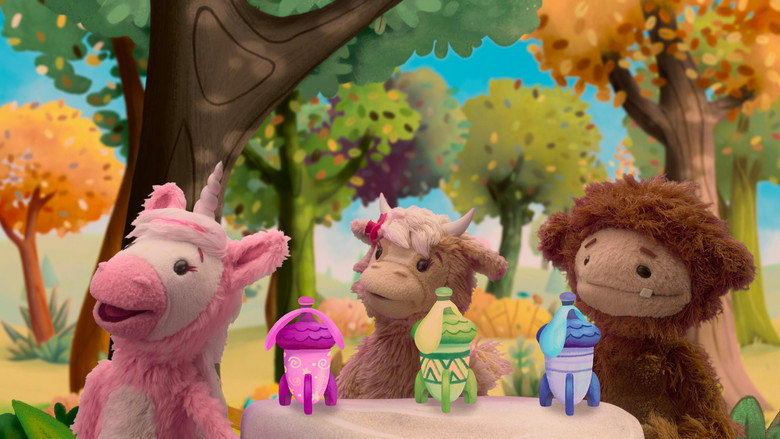
Fox struggles when his friends play with a toy he doesn't have. Sloth loves to give Unicorn gifts but worries it's the only reason they are friends.
| Runtime (min) | 21 |
|---|---|
| Air Date | 2022-11-03 |
| Genres | Kids, Animation |
| TV Rating | TV-Y |
| Network(s) | Apple TV |
Storyline
This episode presents two separate stories exploring friendship and self-worth. In the first segment, Fox becomes upset when his friends are playing with a popular new toy called the Super Speedy Spin Cone that he doesn't own. He feels left out and struggles with feelings of envy as he watches everyone else enjoy the toy together. Through gentle guidance and reflection, Fox learns that he can still participate in play and that friendships aren't dependent on having the same possessions as everyone else.
The second story follows Sloth, who loves showering Unicorn with thoughtful gifts and special items from his collection. However, Sloth begins to worry that Unicorn only values their friendship because of the presents he gives. This concern weighs heavily on him until he discovers that true friendship is built on caring and connection, not material things. Both stories reinforce the show's core themes of emotional literacy and healthy relationships.
What kids learn
Children learn important lessons about envy and material possessions through Fox's experience. The episode demonstrates that not having the same toys as friends doesn't diminish a child's value or ability to join in play. Young viewers see that feelings of being left out are normal but that friendships are based on enjoying time together, not on what toys each person owns.
Through Sloth's story, children explore the concept of conditional versus unconditional friendship. The episode helps kids understand that real friends care about who you are as a person, not what you can give them. This segment also validates the joy of gift-giving while teaching that generosity should come from the heart, not from a need to earn affection.
Both segments model emotional awareness by showing characters identifying their uncomfortable feelings, talking about them, and working through them with support. Children learn that it's okay to feel jealous or insecure, and that sharing these feelings with trusted friends can lead to reassurance and stronger connections.
Parents' top 5 questions
| Question | Answer |
|---|---|
| How should I respond when my child feels left out because they don't have a toy their friends have? | Fox's story provides a helpful framework for these conversations. Acknowledge your child's feelings of disappointment or envy as valid, then help them see that friendships aren't about matching possessions. You can brainstorm ways they might still join the play or suggest alternative activities. This episode reinforces that being a good friend and having fun together matters more than having identical toys. |
| Is this episode appropriate for preschoolers who struggle with sharing? | Yes, the episode addresses sharing and inclusion in age-appropriate ways. While Fox doesn't own the popular toy, the story focuses on his emotional response rather than demanding others share with him. The gentle pacing and clear emotional messaging make it suitable for three- to five-year-olds who are still developing social skills and learning to navigate complex feelings about possessions and fairness. |
| What does Sloth's story teach about why we give gifts? | Sloth's segment explores the motivation behind generosity, showing that gift-giving should stem from genuine care rather than a need to secure friendship. Children learn that while giving presents can be a lovely expression of affection, true friends value the relationship itself. This helps kids understand that they are worthy of friendship simply for who they are, not for what they provide. |
| How can I use this episode to talk about jealousy with my child? | The episode normalizes jealousy as a feeling everyone experiences, making it easier to discuss openly. After watching, you might ask your child if they've ever felt like Fox when friends had something they wanted. Talk about how Fox worked through his feelings and discovered what really mattered. This creates space for your child to share similar experiences without shame or judgment. |
| Does the episode offer solutions for both problems, or just identify the feelings? | Both stories move beyond simply naming emotions to showing characters finding resolution and understanding. Fox discovers he can still be part of the group and that his friends value him regardless of his toys. Sloth learns that Unicorn treasures their friendship for reasons beyond gifts. The episode models emotional processing that leads to reassurance and growth, not just problem identification. |
Writing
Directing
| Season # | Episode # | Episode Name |
|---|---|---|
| 1 | 1 | Yak discovers an exciting talent but feels overshadowed by her new siblings. Fox attempts to hide his tears after getting hurt. |
| 1 | 2 | Sloth and Yak enjoy fun in the kitchen until a mishap leads to conflicting emotions. Bigfoot's self-esteem is tested after he gets teased. |
| 1 | 3 | Bigfoot and Fox accidentally hurt Unicorn's feelings during a playdate. Bigfoot makes a mistake and learns about unconditional love. |
| 1 | 4 | Fox struggles when his friends play with a toy he doesn't have. Sloth loves to give Unicorn gifts but worries it's the only reason they are friends. |
| 1 | 5 | Bigfoot feels anxious over a bathroom emergency. Sloth and Fox have their first big fight and must repair their friendship. |
| 1 | 6 | Fox has a hard time with change when his family moves to a new home. Bigfoot has his first sleepover with Fox but misses his dad at bedtime. |
| 1 | 7 | Yak tries to have the best day ever, but nothing seems to go her way. Sloth is afraid of the dark when he imagines shadows coming to life. |
| 1 | 8 | Unicorn feels left out of her friendship with Yak and Fox. Yak compares her home to Bigfoot's and worries it's too noisy and messy. |
This product uses the TMDB API but is not endorsed or certified by TMDB.