
Tiny Creatures - Minnesota (S1E3)
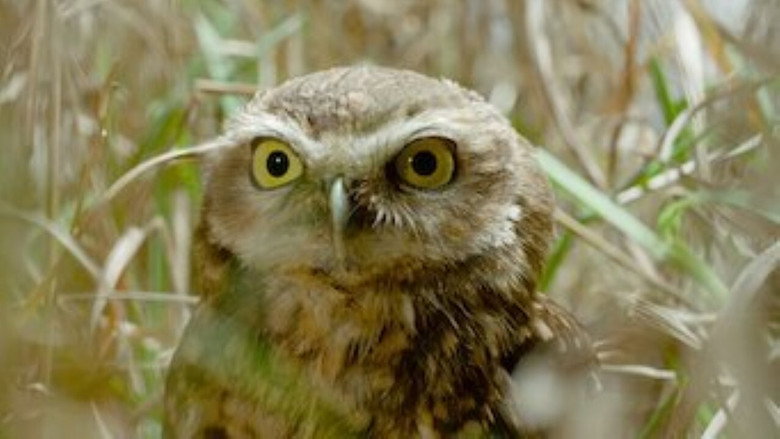
A burrowing owl evades caddies at a golf course before a ferret forces him far from the fairway. He'll have to outfox his opponents to get home.
| Runtime (min) | 25 |
|---|---|
| TMDB Rating | 7.0 (3 votes) |
| Air Date | 2020-08-07 |
| Genres | Documentary |
| TV Rating | TV-PG |
| Network(s) | Netflix |
Storyline
In this episode set in Minnesota, a burrowing owl finds himself navigating the unexpected challenges of a busy golf course. The small raptor must dodge golf carts, avoid curious caddies, and stay clear of golfers as he attempts to hunt and rest on the manicured fairways. His presence on the course creates a series of close calls as he tries to maintain his territory in this human-dominated landscape.
The owl's day takes a more serious turn when a black-footed ferret arrives on the scene, transforming the golf course into contested ground. Forced to abandon his familiar hunting spots near the fairway, the burrowing owl must use his speed, agility, and cleverness to outmaneuver both the ferret and the ongoing human activity around him. His journey becomes a test of survival skills as he works to find his way back to safer territory while avoiding multiple threats in an environment where he's far from the only creature trying to make a living.
What parents say
Parents have praised the Tiny Creatures series for its stunning cinematography and ability to hold young children's attention with real wildlife footage rather than animation. Many appreciate that the show presents nature authentically, showing predator-prey relationships and survival challenges without graphic violence, making it accessible for preschool and early elementary audiences.
Some parents note that the narration style, which anthropomorphizes the animals and creates suspenseful moments, can be intense for very sensitive children, particularly when predators chase prey or when animals face danger. Parents of children under four sometimes preview episodes first to gauge their child's comfort level with the tension. However, most parents report that the show strikes a good balance, teaching about ecosystems and animal behavior while keeping the tone adventure-focused rather than frightening.
Parents frequently mention using the series as a springboard for conversations about habitats, adaptation, and why wild animals behave the way they do, appreciating that each episode offers concrete examples of survival strategies in different North American environments.
What kids learn
This episode teaches children about adaptation and resourcefulness when facing unexpected challenges. The burrowing owl demonstrates how animals must constantly adjust their behavior based on their surroundings, whether that means avoiding human activity on a golf course or responding to the arrival of a competitor or predator. Children see that survival in the wild requires quick thinking and flexibility, not just physical abilities.
Young viewers learn about the concept of territory and competition for resources. The episode illustrates how different species may want to use the same space for different reasons, and how animals must sometimes relocate when their current habitat becomes unsafe or contested. The interaction between the owl and the ferret shows that wild animals are constantly navigating relationships with other species, making decisions about when to stand their ground and when to move on.
Children also gain insight into how human spaces like golf courses intersect with wildlife habitats. The episode demonstrates that animals don't always stay in pristine wilderness areas—they adapt to live alongside human activity, finding opportunities in unexpected places while managing the risks that come with proximity to people and their equipment.
Parents' top 5 questions
| Question | Answer |
|---|---|
| Is the confrontation between the owl and ferret too scary for young children? | The episode presents the encounter as a territorial conflict rather than a violent confrontation. The focus is on the owl's clever evasion and problem-solving rather than graphic predation. Most children ages four and up handle the suspenseful moments well, especially since the owl successfully navigates the challenges. The tone remains adventure-focused, and the cinematography doesn't linger on distressing imagery. Parents know their child's sensitivity best and can gauge reactions during the first few minutes. |
| Are these animals really filmed in Minnesota, or is it staged? | Tiny Creatures uses authentic wildlife footage captured in real locations across North America. The animals are filmed in their natural habitats exhibiting genuine behaviors, though the narrative structure and editing create a story arc. The golf course setting is real, and both burrowing owls and black-footed ferrets do inhabit regions where their territories can overlap with human recreational spaces. The cinematography captures actual animal behavior rather than trained or captive animals performing on cue. |
| What should I tell my child about why the ferret chases the owl away? | You can explain that wild animals often compete for the best hunting grounds and safe places to live. The ferret isn't being mean—it's trying to survive just like the owl. Both animals need space to find food and shelter, and sometimes that means one has to find a new spot. This is a natural part of how animals share the environment, and it helps children understand that animal behavior isn't about good guys and bad guys but about everyone trying to meet their needs. |
| Does the owl make it back home safely by the end? | The episode follows the owl's journey as he navigates away from the contested golf course territory and works to find his way back to safer ground. The narrative structure emphasizes his survival skills and adaptability throughout the challenges he faces. The show maintains an age-appropriate tone that focuses on the owl's resourcefulness and the natural cycle of territorial behavior rather than creating unresolved distress for young viewers watching his adventure unfold. |
| How can I use this episode to teach my child about respecting wildlife? | Point out how the golf course workers and players in the background don't intentionally harm the owl—they simply don't notice him. This opens conversation about being aware of wildlife in our spaces and giving animals room to move safely. You can discuss how the owl has to work hard to avoid people and their equipment, which shows why we should be careful in parks and outdoor areas. The episode demonstrates that even in places we think of as human spaces, wild animals are trying to live their lives. |
Writing
Directing
| Season # | Episode # | Episode Name |
|---|---|---|
| 1 | 1 | In Arizona, critters brave a harsh frontier, and a young kangaroo rat must be nimble to dodge a rattlesnake, a Gila monster — and a dirt bike. |
| 1 | 2 | While housemates are away, a pampered golden hamster will play. Will he slow his roll when he lands on the streets of NYC and finds true adventure? |
| 1 | 3 | A burrowing owl evades caddies at a golf course before a ferret forces him far from the fairway. He'll have to outfox his opponents to get home. |
| 1 | 4 | In a hostile Texas landscape, a ranch offers fast food to an agile mother mouse. But she must be clever to avoid turning into a barn owl's dinner. |
| 1 | 5 | Keen eyesight and a playful nature lead the way when a special squirrel explores a suburban home, the least likely place to meet his surprising match. |
| 1 | 6 | Intellect meets agility in the Florida Everglades as a high-stakes game of raven vs. rat goes down in a fishing hut. Can these foes ever be friends? |
| 1 | 7 | Rescued from the trash and ready to roam, a newly hatched lucky duckling tours her new habitat: a boy's bedroom. But her sanctuary teems with danger. |
| 1 | 8 | As night falls, a shy striped skunk prowls for grub till a roving rodent opens up her world. When confronted by a hawk, will she spray or will she go? |
This product uses the TMDB API but is not endorsed or certified by TMDB.