
Tiny Creatures - New Hampshire (S1E8)
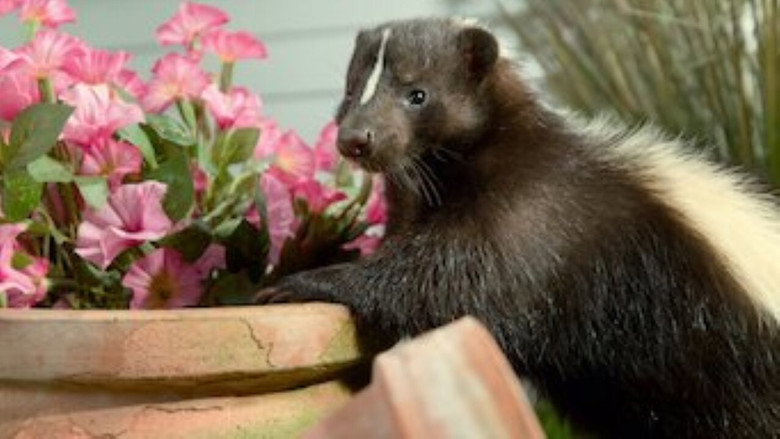
As night falls, a shy striped skunk prowls for grub till a roving rodent opens up her world. When confronted by a hawk, will she spray or will she go?
| Runtime (min) | 24 |
|---|---|
| TMDB Rating | 5.0 (2 votes) |
| Air Date | 2020-08-07 |
| Genres | Documentary |
| TV Rating | TV-PG |
| Network(s) | Netflix |
Storyline
In this episode of Tiny Creatures, the cameras follow a striped skunk as she emerges at dusk in the forests of New Hampshire to forage for food. The skunk uses her keen sense of smell to search for insects, grubs, and other small prey hidden beneath leaves and logs. Her solitary, methodical hunt is interrupted when she encounters a curious rodent—likely a mouse or vole—that leads her into new territory and expands her nightly range.
As the skunk continues her exploration, she faces a sudden threat: a hawk spots her from above. The episode captures the tension of this predator-prey moment, showcasing the skunk's famous defense mechanism. Viewers watch as the skunk assesses the danger, raises her tail in warning, and decides whether to deploy her notorious spray or rely on other tactics to escape. The encounter highlights the skunk's instinctive behavior and the delicate balance of survival in the wild.
What parents say
Parents have praised Tiny Creatures for its stunning cinematography and ability to hold the attention of young children while teaching them about wildlife. Many appreciate that the series presents animals in their natural habitats without anthropomorphizing them, allowing kids to observe authentic animal behavior. The narration by Mike Colter is frequently mentioned as calm and engaging, making the show accessible for preschoolers and early elementary viewers.
Some parents note that the show does depict predator-prey dynamics, which can prompt questions from sensitive children. However, most feel the series handles these moments gently, focusing on the animals' survival strategies rather than graphic outcomes. Parents also appreciate the short runtime of each episode, which fits well into bedtime routines or serves as a brief educational screen-time option. Overall, families recommend the series as a high-quality nature program that sparks curiosity about the animal kingdom.
What kids learn
Children watching this episode learn about the nocturnal lifestyle of skunks and how these animals use their senses—especially smell—to find food in the dark. They observe that skunks are omnivores who forage for insects, grubs, and other small creatures, gaining an understanding of how different animals fill specific roles in their ecosystems. The episode also introduces the concept of solitary versus social animals, as the skunk hunts alone rather than in a group.
The encounter with the hawk teaches kids about predator-prey relationships and the various defense mechanisms animals use to protect themselves. They see that skunks rely on warning signals—such as raising their tails and stamping their feet—before resorting to spraying. This demonstrates that animals often prefer to avoid conflict and use their most potent defenses only as a last resort.
The episode also reinforces the importance of adaptability and exploration. When the skunk follows the rodent into unfamiliar territory, children learn that animals sometimes expand their ranges in search of food and that curiosity can lead to new opportunities, even in the wild.
Parents' top 5 questions
| Question | Answer |
|---|---|
| Does the skunk actually spray in this episode? | The episode builds tension around whether the skunk will use her spray when confronted by the hawk, showcasing her warning behaviors like tail-raising and defensive posturing. The focus is on the skunk's decision-making process and her instinctive threat assessment. The show handles the moment in a way that emphasizes the skunk's survival strategy without graphic depictions, keeping the content appropriate for young viewers. |
| Is the hawk scene too scary for preschoolers? | The hawk encounter is filmed to create suspense rather than fear, and the cinematography keeps a respectful distance from any aggressive action. The narration remains calm and educational, explaining what both animals are doing and why. Most preschoolers handle the scene well, especially with a parent nearby to provide context. If your child is particularly sensitive to predator scenes, you might preview the episode or be ready to pause and discuss. |
| What does my child learn about skunks from this episode? | Children learn that skunks are nocturnal foragers who use their excellent sense of smell to find food like insects and grubs. The episode shows that skunks are generally shy and solitary, preferring to avoid confrontation. Kids also discover that the famous skunk spray is a defense mechanism used only when necessary, and that skunks give clear warning signals before spraying. This helps demystify skunks and presents them as interesting, non-aggressive animals. |
| How does the rodent change the skunk's behavior? | When the skunk encounters the rodent during her foraging, the smaller animal's movements lead the skunk into areas she might not have explored on her own. This interaction demonstrates how animals sometimes influence each other's behavior and territory use, even without direct cooperation. It's a gentle way to show children that wildlife interactions can be complex and that animals respond to their environment and the creatures around them in adaptive ways. |
| Is this episode educational enough to count as learning time? | Absolutely. The episode offers genuine wildlife observation, teaching children about animal behavior, ecosystems, nocturnal adaptations, and predator-prey dynamics. The cinematography captures real moments in nature, and the narration provides age-appropriate scientific context. Many parents and educators consider <em>Tiny Creatures</em> a valuable educational resource that builds observational skills, vocabulary, and respect for wildlife, making it a worthwhile choice for purposeful screen time. |
Writing
Directing
| Season # | Episode # | Episode Name |
|---|---|---|
| 1 | 1 | In Arizona, critters brave a harsh frontier, and a young kangaroo rat must be nimble to dodge a rattlesnake, a Gila monster — and a dirt bike. |
| 1 | 2 | While housemates are away, a pampered golden hamster will play. Will he slow his roll when he lands on the streets of NYC and finds true adventure? |
| 1 | 3 | A burrowing owl evades caddies at a golf course before a ferret forces him far from the fairway. He'll have to outfox his opponents to get home. |
| 1 | 4 | In a hostile Texas landscape, a ranch offers fast food to an agile mother mouse. But she must be clever to avoid turning into a barn owl's dinner. |
| 1 | 5 | Keen eyesight and a playful nature lead the way when a special squirrel explores a suburban home, the least likely place to meet his surprising match. |
| 1 | 6 | Intellect meets agility in the Florida Everglades as a high-stakes game of raven vs. rat goes down in a fishing hut. Can these foes ever be friends? |
| 1 | 7 | Rescued from the trash and ready to roam, a newly hatched lucky duckling tours her new habitat: a boy's bedroom. But her sanctuary teems with danger. |
| 1 | 8 | As night falls, a shy striped skunk prowls for grub till a roving rodent opens up her world. When confronted by a hawk, will she spray or will she go? |
This product uses the TMDB API but is not endorsed or certified by TMDB.