
Tiny Creatures - Texas (S1E4)
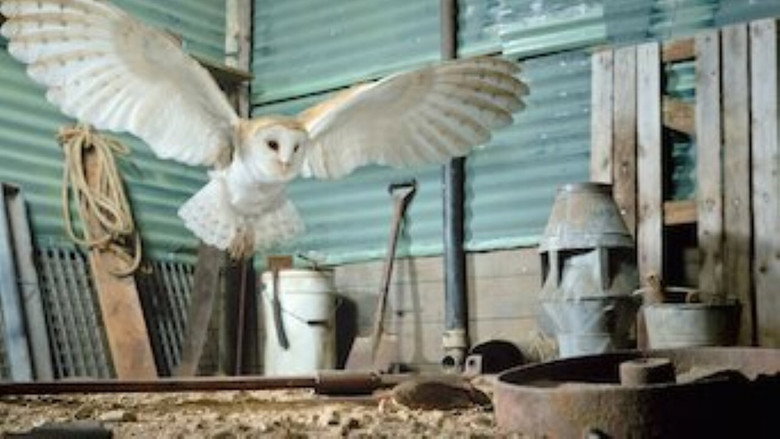
In a hostile Texas landscape, a ranch offers fast food to an agile mother mouse. But she must be clever to avoid turning into a barn owl's dinner.
| Runtime (min) | 26 |
|---|---|
| TMDB Rating | 7.0 (2 votes) |
| Air Date | 2020-08-07 |
| Genres | Documentary |
| TV Rating | TV-PG |
| Network(s) | Netflix |
Storyline
In the rugged landscape of a Texas ranch, a resourceful mother mouse navigates a world of danger and opportunity. The ranch provides a steady supply of food—grain stores, scattered feed, and other edible treasures—but accessing these resources requires speed, agility, and constant vigilance. The mother mouse must gather enough food to sustain herself and her young while avoiding the many predators that share her territory.
The episode's central tension revolves around the presence of a barn owl, a formidable nocturnal hunter with exceptional hearing and silent flight. As the mother mouse ventures out to forage, she must use her wits and knowledge of the ranch's hiding spots to evade the owl's talons. The episode captures the high-stakes game of survival playing out in barns, fields, and outbuildings, where every trip for food could be her last. Through close-up cinematography and careful observation, viewers witness the mother mouse's clever strategies for staying one step ahead of the predator that patrols the Texas night.
What parents say
Parents have praised the Tiny Creatures series for its stunning cinematography and ability to make the natural world accessible to young children. Many appreciate that the show presents predator-prey relationships honestly without being gratuitous or frightening. The narration, delivered by Mike Colter, strikes a balance that parents find age-appropriate—acknowledging danger while maintaining an educational tone that doesn't traumatize sensitive viewers.
Some parents note that the barn owl scenes in this episode may be intense for very young or anxious children, as the threat to the mother mouse is presented clearly and the stakes are real. However, most parents feel the show handles these moments with care, using the tension to teach about survival and adaptation rather than to shock. Parents of children interested in animals and nature documentaries have found the episode to be an excellent conversation starter about ecosystems, food chains, and the challenges animals face in the wild.
Overall, parents recommend previewing the episode with particularly sensitive children, but most find it educational and engaging for kids aged five and up who are ready to understand that nature involves both beauty and danger.
What kids learn
Children learn about the predator-prey relationship and how animals have evolved different strategies for survival. The mother mouse's agility, quick reflexes, and knowledge of her environment demonstrate how prey animals use speed and cleverness rather than size or strength to stay safe. Kids see firsthand how the mouse must constantly assess risk, plan escape routes, and time her foraging trips carefully—lessons in strategic thinking and awareness that translate beyond the animal world.
The episode also teaches children about adaptation to specific environments. The Texas ranch landscape presents unique challenges and opportunities, and both the mouse and the owl have developed specialized skills suited to this habitat. Children observe how the barn owl's silent flight and acute hearing make it a perfect nighttime hunter, while the mouse's small size and ability to squeeze into tight spaces provide crucial advantages. These complementary adaptations illustrate how different species occupy specific roles in an ecosystem.
Additionally, kids gain appreciation for the daily challenges animals face and the constant effort required to find food and protect offspring. The mother mouse's determination and resourcefulness model perseverance and parental dedication, helping children understand that survival in nature requires both physical skills and mental sharpness.
Parents' top 5 questions
| Question | Answer |
|---|---|
| Is the barn owl actually shown catching prey, or is the danger more implied? | The episode focuses on the tension and near-misses rather than graphic predation. The barn owl is shown hunting and the threat is very real and present throughout, but the filmmakers handle these moments with care. The mother mouse's clever escapes are emphasized, and while the danger is clear, the episode avoids showing graphic captures. The suspense serves an educational purpose, helping children understand the realities of the food chain without traumatizing imagery. |
| What age is appropriate for children to watch this episode? | Most children aged five and older who have shown interest in nature documentaries will handle this episode well. The predator-prey tension is real but not gratuitous, and the educational framing helps contextualize the danger. Very young children or those particularly sensitive to animals in peril might find the barn owl scenes stressful, so parents of preschoolers may want to preview first or watch together to provide reassurance and answer questions about what's happening. |
| How can I explain to my child why the owl is trying to catch the mouse? | Frame it as each animal doing what it needs to survive. The owl isn't mean or bad—it needs to eat to live, just as the mouse needs to find food for her babies. Explain that in nature, different animals have different diets, and owls are carnivores that hunt small animals. Emphasize that both animals are trying their best to survive and that this balance has existed for thousands of years, helping to keep animal populations healthy in the wild. |
| Does the mother mouse successfully protect her babies throughout the episode? | The episode follows the mother mouse's foraging trips and her strategies for avoiding the barn owl while gathering food for her young. The focus is on her resourcefulness and the techniques she uses to stay safe—her speed, her knowledge of hiding spots, and her careful timing. The episode maintains tension around whether she'll make it back safely from each trip, which drives the narrative and keeps children engaged while teaching about survival strategies in the wild. |
| What can my child learn about Texas wildlife from this episode? | Children learn that Texas ranches create unique ecosystems where wild animals live alongside human agricultural activity. They'll see how structures like barns provide shelter for both mice and owls, and how stored grain attracts rodents, which in turn attract predators. The episode illustrates how human landscapes become habitats for wildlife and how animals adapt to take advantage of resources people inadvertently provide. It's an excellent introduction to understanding how wildlife and human spaces overlap. |
Writing
Directing
| Season # | Episode # | Episode Name |
|---|---|---|
| 1 | 1 | In Arizona, critters brave a harsh frontier, and a young kangaroo rat must be nimble to dodge a rattlesnake, a Gila monster — and a dirt bike. |
| 1 | 2 | While housemates are away, a pampered golden hamster will play. Will he slow his roll when he lands on the streets of NYC and finds true adventure? |
| 1 | 3 | A burrowing owl evades caddies at a golf course before a ferret forces him far from the fairway. He'll have to outfox his opponents to get home. |
| 1 | 4 | In a hostile Texas landscape, a ranch offers fast food to an agile mother mouse. But she must be clever to avoid turning into a barn owl's dinner. |
| 1 | 5 | Keen eyesight and a playful nature lead the way when a special squirrel explores a suburban home, the least likely place to meet his surprising match. |
| 1 | 6 | Intellect meets agility in the Florida Everglades as a high-stakes game of raven vs. rat goes down in a fishing hut. Can these foes ever be friends? |
| 1 | 7 | Rescued from the trash and ready to roam, a newly hatched lucky duckling tours her new habitat: a boy's bedroom. But her sanctuary teems with danger. |
| 1 | 8 | As night falls, a shy striped skunk prowls for grub till a roving rodent opens up her world. When confronted by a hawk, will she spray or will she go? |
This product uses the TMDB API but is not endorsed or certified by TMDB.