
Tiny Creatures - Washington (S1E7)
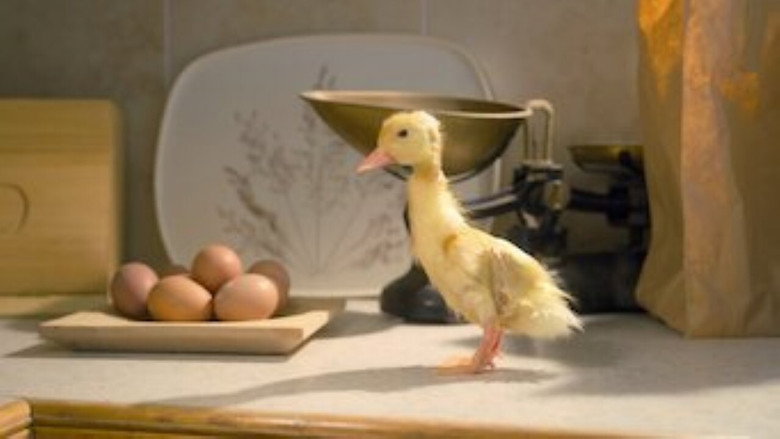
Rescued from the trash and ready to roam, a newly hatched lucky duckling tours her new habitat: a boy's bedroom. But her sanctuary teems with danger.
| Runtime (min) | 25 |
|---|---|
| TMDB Rating | 5.0 (2 votes) |
| Air Date | 2020-08-07 |
| Genres | Documentary |
| TV Rating | TV-PG |
| Network(s) | Netflix |
Storyline
In this episode of Tiny Creatures, a newly hatched duckling is rescued from a trash bin and brought into a young boy's bedroom, where she will live until she's strong enough to be released into the wild. The boy has transformed his room into a makeshift sanctuary, complete with water dishes, soft bedding, and hiding spots. From the duckling's perspective, this indoor habitat is vast and filled with both wonder and peril.
As the tiny duckling explores her new surroundings, she encounters everyday household objects that loom large and threatening from her miniature vantage point. She must navigate around furniture, avoid being stepped on, and learn to find food and water in this unfamiliar environment. The episode captures her tentative first steps, her instinctive behaviors, and the challenges of adapting to life indoors. Throughout her journey, the boy watches over her carefully, ensuring she stays safe while she grows stronger and prepares for eventual freedom in her natural habitat.
What kids learn
Children watching this episode learn about the vulnerability of newborn animals and the importance of compassionate intervention when wildlife is in danger. The duckling's rescue from the trash demonstrates how human actions can both harm and help animals, teaching kids to be mindful of their impact on the natural world. They see that even small creatures deserve care and protection, and that sometimes animals need temporary human assistance to survive.
The episode also teaches children about animal behavior and adaptation. As the duckling explores the bedroom, kids observe her natural instincts at work—her need for water, her cautious movements in unfamiliar territory, and her gradual adjustment to new surroundings. This helps children understand that animals have specific needs and behaviors shaped by their biology, even when they're removed from their natural habitats.
Finally, the episode reinforces the concept of temporary stewardship and wildlife rehabilitation. Children learn that the goal of rescuing a wild animal is not to keep it as a pet, but to help it grow strong enough to return to nature. This teaches responsibility, patience, and respect for the natural order, showing that true care sometimes means letting go.
Parents' top 5 questions
| Question | Answer |
|---|---|
| Is it safe to bring a wild duckling into a home like the boy does in this episode? | The episode depicts a temporary rescue situation where the duckling needs immediate care before being released. In reality, parents should contact wildlife rehabilitation professionals rather than attempting to raise wild animals at home. The boy's setup is presented as a short-term sanctuary with adult supervision, not a permanent arrangement. This is a good opportunity to discuss with children when to call experts and why wild animals belong in nature. |
| What dangers does the duckling face in the bedroom? | From the duckling's tiny perspective, the bedroom presents several hazards: she could be accidentally stepped on, become trapped behind furniture, fall into containers, or become dehydrated if she can't locate water. The episode shows these dangers from her viewpoint, helping children understand how everyday objects can be threatening to small creatures. The boy's careful monitoring demonstrates the constant vigilance required when caring for vulnerable animals. |
| Will this episode make my child want to rescue and keep wild animals? | The episode emphasizes temporary care rather than permanent keeping, though young children may still express interest in rescuing animals. Use this as a teaching moment to explain that wildlife rehabilitation requires special knowledge and that the goal is always to return animals to nature. Discuss appropriate ways to help animals, such as calling wildlife rescue organizations, rather than bringing them home. |
| What age is appropriate for watching this episode? | The episode is suitable for preschool and early elementary ages, with gentle pacing and no frightening content. The duckling faces challenges but is never shown in graphic peril. The nature documentary format presents real-life situations in an age-appropriate way. Very young children may need reassurance that the duckling is being cared for and will eventually be released to a safe habitat. |
| Does the episode show what happens to the duckling after she grows stronger? | The episode focuses on the duckling's initial exploration of the bedroom sanctuary and her adaptation to this temporary environment. While the narrative establishes that she will eventually be released into the wild, the episode centers on her immediate experience navigating the indoor habitat. This allows children to focus on her current needs and behaviors rather than rushing to a resolution. |
Writing
Directing
| Season # | Episode # | Episode Name |
|---|---|---|
| 1 | 1 | In Arizona, critters brave a harsh frontier, and a young kangaroo rat must be nimble to dodge a rattlesnake, a Gila monster — and a dirt bike. |
| 1 | 2 | While housemates are away, a pampered golden hamster will play. Will he slow his roll when he lands on the streets of NYC and finds true adventure? |
| 1 | 3 | A burrowing owl evades caddies at a golf course before a ferret forces him far from the fairway. He'll have to outfox his opponents to get home. |
| 1 | 4 | In a hostile Texas landscape, a ranch offers fast food to an agile mother mouse. But she must be clever to avoid turning into a barn owl's dinner. |
| 1 | 5 | Keen eyesight and a playful nature lead the way when a special squirrel explores a suburban home, the least likely place to meet his surprising match. |
| 1 | 6 | Intellect meets agility in the Florida Everglades as a high-stakes game of raven vs. rat goes down in a fishing hut. Can these foes ever be friends? |
| 1 | 7 | Rescued from the trash and ready to roam, a newly hatched lucky duckling tours her new habitat: a boy's bedroom. But her sanctuary teems with danger. |
| 1 | 8 | As night falls, a shy striped skunk prowls for grub till a roving rodent opens up her world. When confronted by a hawk, will she spray or will she go? |
This product uses the TMDB API but is not endorsed or certified by TMDB.