
Jane - Diceros bicornis (S1E8)
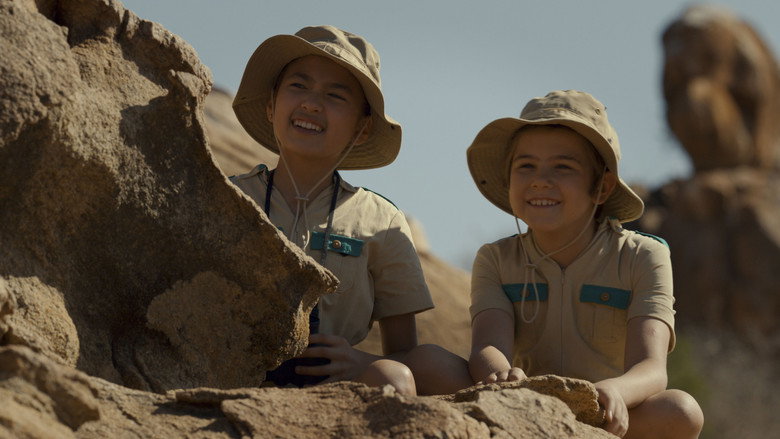
Jane, David, and Greybeard monitor a black rhino and a red-billed oxpecker, whose relationship teaches them the value of teamwork.
| Runtime (min) | 26 |
|---|---|
| Air Date | 2023-04-13 |
| Genres | Kids, Family, Animation |
| TV Rating | TV-G |
| Network(s) | Apple TV |
Storyline
In this episode, Jane, David, and Greybeard observe the fascinating relationship between a black rhinoceros and a red-billed oxpecker in their natural habitat. The team watches as the small bird lands on the rhino's back, feeding on ticks and other parasites that live on the rhino's skin. Through their careful observation, the young explorers discover how these two very different animals depend on each other for survival.
As Jane and her friends document the symbiotic partnership, they learn that the oxpecker benefits from a steady food source while the rhino enjoys relief from irritating pests and gains an early warning system, since the bird alerts the rhino to potential danger. The episode uses this real-world example of mutualism to illustrate how cooperation and teamwork create benefits that neither animal could achieve alone, reinforcing the importance of working together and helping one another.
What kids learn
Children learn about symbiotic relationships in nature through the concrete example of the black rhino and oxpecker partnership. The episode demonstrates that different species can work together in ways that help both parties, introducing young viewers to the concept of mutualism in an accessible, age-appropriate manner. Kids see that cooperation is not just a human value but a survival strategy found throughout the animal kingdom.
The episode also teaches observation skills and scientific thinking as Jane and her team watch, document, and draw conclusions about animal behavior. Children learn that careful watching and patience can reveal important patterns in nature, encouraging them to become more attentive observers of the world around them.
Beyond the science lesson, the episode reinforces social-emotional learning about teamwork and interdependence. By seeing how the rhino and oxpecker each contribute something valuable to their partnership, children understand that everyone has unique strengths and that working together often produces better outcomes than working alone.
Parents' top 5 questions
| Question | Answer |
|---|---|
| Is the rhino and oxpecker relationship accurately portrayed in this episode? | Yes, the episode depicts a real symbiotic relationship found in African ecosystems. Red-billed oxpeckers do feed on ticks and parasites living on rhinos and other large mammals, while also serving as sentries that alert their hosts to approaching threats. This mutualistic partnership is well-documented in wildlife biology and provides an excellent introduction to ecological relationships for young children. |
| What age group is this episode most appropriate for? | This episode is designed for preschool and early elementary-aged children, typically ages three to seven. The scientific concepts are presented through observation and simple explanation rather than complex terminology. The runtime of twenty-six minutes is appropriate for younger attention spans, and the focus on animal partnerships provides concrete examples that young children can understand and relate to their own experiences with teamwork. |
| How can I reinforce the teamwork lesson after watching? | After the episode, discuss examples of teamwork in your own family or classroom, drawing parallels to how the rhino and oxpecker help each other. You might ask your child to identify times when they've worked with others to accomplish something neither could do alone. Consider cooperative activities like building a puzzle together or preparing a meal, explicitly connecting these experiences to the animal partnership they observed in the episode. |
| Does this episode include any scary or intense moments? | The episode focuses on peaceful observation of the rhino and oxpecker relationship without predator-prey conflict or threatening situations. Black rhinos are large animals, but they are presented in their natural context as the oxpecker's partner rather than as dangerous creatures. The tone remains educational and gentle throughout, making it suitable for sensitive viewers who might be frightened by more dramatic wildlife content. |
| Are there opportunities to extend learning about endangered species? | Black rhinos are critically endangered, and this episode can serve as a gentle introduction to conservation topics for older preschoolers and early elementary students. Parents can explain that scientists like Jane help us learn about animals so we can protect them, connecting the observation work shown in the episode to real-world conservation efforts. Keep the conversation age-appropriate, focusing on how people are helping rhinos rather than dwelling on threats. |
Writing
Directing
| Season # | Episode # | Episode Name |
|---|---|---|
| 1 | 1 | Jane, David, and Greybeard track a polar bear in the Arctic Circle, inspiring Jane to convince her neighbor Mr. Jin to see trash differently. |
| 1 | 2 | While trying to tag a great white shark, Jane urges David's dad and Tata to rethink how they shop for groceries. |
| 1 | 3 | David shrinks Jane and Greybeard to honeybee size to explore a hive. But when a schoolmate threatens the bees, Jane swoops in. |
| 1 | 4 | The trio take off on a mission to aid the flying fox when Greybeard accidentally parachutes into a neighbor's yard. |
| 1 | 5 | Jane, David, and Greybeard try to sniff out why the gharial has a bulbed snout. A day at the pool points Jane toward an answer. |
| 1 | 6 | The three friends travel deep into the ocean to figure out why the blue whale sings, and Jane confronts a litterbug with a gifted voice. |
| 1 | 7 | A bug-sized Jane and Greybeard follow a monarch butterfly's journey to Mexico, leading Jane to seek assistance from Mr. Patel's green thumb. |
| 1 | 8 | Jane, David, and Greybeard monitor a black rhino and a red-billed oxpecker, whose relationship teaches them the value of teamwork. |
| 1 | 9 | Chasing a herd of caribou stirs up David's appetite. At lunch, David's grandpa tells a story about respect, responsibility, and sharing. |
| 1 | 10 | Jane and David stay up past their bedtime to track a tiger that prefers to come out at night, and they stumble upon something in the garden shed. |
| Season # | Episode # | Episode Name |
|---|---|---|
| 2 | 1 | Jane, David, and Greybeard must reunite a lost baby panda with its mother—and find out why they're the only bears with six fingers. |
| 2 | 2 | Tracking a wolf in the snowy mountains leads the trio to their neighbor's pug, who helps connect the dots between wolves, dogs, and people. |
| 2 | 3 | The three friends use their underground vessel to observe the elusive pink fairy armadillo, but a garden problem stops them in their tracks. |
| 2 | 4 | While exploring the Great Barrier Reef to determine if coral is a plant or an animal, the trio learn that looks can be deceiving. |
| 2 | 5 | With David sick in bed, Jane must partner with an unexpected ally to save Greybeard from a pride of lions. |
| Season # | Episode # | Episode Name |
|---|---|---|
| 3 | 1 | Jane, David, and Greybeard set off to find out why hippos give birth away from their pods, while trying to reunite a baby hippo with her mom. |
| 3 | 2 | The trio head underground to dig into wombat defense tactics. Jane wants the community BBQ menu to explore new options. |
| 3 | 3 | David joins Jane on a high-flying mission to chart an albatross' journey instead of helping his sister Millie. |
| 3 | 4 | Jane convinces her reluctant abuela to help get a baby elephant back to his family, where she uncovers why herds follow a matriarch. |
| 3 | 5 | Jane and Greybeard lose hope when they see how humans impact chimpanzees in the wild, but David and a special friend restore her faith. |
This product uses the TMDB API but is not endorsed or certified by TMDB.