
Jane - Rangifer tarandus (S1E9)
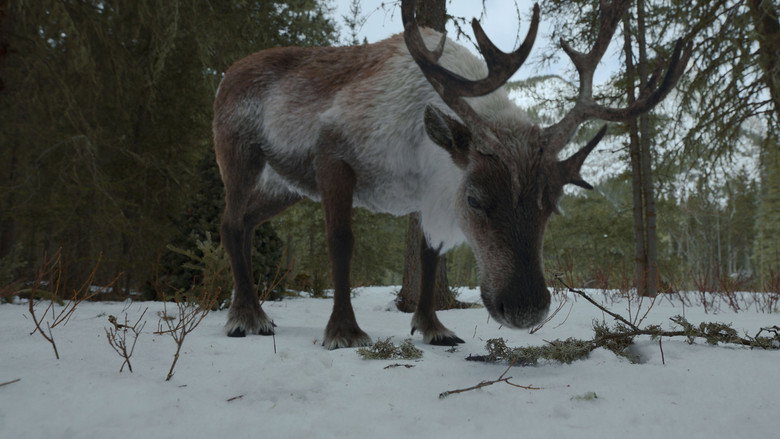
Chasing a herd of caribou stirs up David's appetite. At lunch, David's grandpa tells a story about respect, responsibility, and sharing.
| Runtime (min) | 22 |
|---|---|
| Air Date | 2023-04-13 |
| Genres | Kids, Family, Animation |
| TV Rating | TV-G |
| Network(s) | Apple TV |
Storyline
In this episode, David and his family observe a herd of caribou moving across the tundra. The sight of the animals triggers David's hunger, and the family gathers for lunch. During the meal, David's grandfather shares a traditional story that weaves together important cultural values centered on respect, responsibility, and the practice of sharing within the community.
The episode uses the caribou—known scientifically as Rangifer tarandus—as a natural springboard for intergenerational storytelling. As David listens to his grandfather's narrative, the episode connects the rhythms of the natural world with the teachings passed down through Inuit tradition. The story told by David's grandfather illustrates how the community's relationship with the land and its animals is guided by principles that ensure sustainability and collective well-being.
What kids learn
Children learn about the importance of respect for nature and the animals that share the environment. By watching David's family observe the caribou herd, young viewers see how Indigenous communities view wildlife not merely as resources but as part of a larger interconnected system that deserves care and consideration. The episode models a mindful approach to the natural world, encouraging children to think about their own relationship with animals and ecosystems.
The story shared by David's grandfather teaches children about responsibility and the value of sharing. These lessons are rooted in cultural practices that emphasize taking only what is needed and ensuring that resources are distributed fairly within the community. Children see how stories serve as vehicles for passing down wisdom across generations, and they learn that listening to elders can provide guidance on how to live thoughtfully and ethically.
The episode also introduces children to the concept of intergenerational learning. David's attentiveness to his grandfather's story demonstrates how younger family members can gain knowledge and perspective by engaging with the experiences and teachings of older relatives. This reinforces the idea that learning happens in many settings, not just formal ones, and that family stories carry meaningful lessons.
Parents' top 5 questions
| Question | Answer |
|---|---|
| What is the significance of the caribou in this episode? | The caribou serve as both a natural phenomenon that David's family observes and a catalyst for his grandfather's story. In many Indigenous cultures, caribou are central to traditional ways of life, providing food, clothing, and materials. The episode uses the herd to connect the family's daily experience with broader cultural teachings about respect for animals and the environment, illustrating how nature and cultural values are intertwined. |
| What lessons does David's grandfather's story teach? | The grandfather's story focuses on respect, responsibility, and sharing—core values in Inuit culture. These lessons teach David, and young viewers, about the importance of treating the natural world and community members with care. The story emphasizes taking only what is needed, sharing resources equitably, and understanding one's role within a larger community. It models how cultural knowledge is transmitted through storytelling across generations. |
| How can I talk to my child about intergenerational storytelling after watching? | You can ask your child what they noticed about how David listened to his grandfather and what they learned from the story. Encourage them to think about stories their own grandparents or older relatives have shared. You might also share a family story of your own, explaining why it's important to you. This reinforces the idea that everyone has valuable experiences and wisdom to pass along. |
| Is this episode appropriate for preschoolers? | Yes, the episode is gentle and age-appropriate for preschool audiences. It features observational moments in nature, a family mealtime, and a story told by an elder. There is no conflict, tension, or frightening content. The pacing is calm, and the themes of respect and sharing are presented in a straightforward, accessible way that young children can understand and discuss with a parent or caregiver. |
| What can my child learn about Indigenous culture from this episode? | Children gain insight into how Inuit families live in close relationship with the land and animals around them. The episode shows that cultural teachings are often shared through stories told by elders, and that values like respect, responsibility, and sharing are central to community life. It offers a window into a way of life that honors tradition, intergenerational connection, and sustainable practices, helping children appreciate cultural diversity. |
Writing
Directing
| Season # | Episode # | Episode Name |
|---|---|---|
| 1 | 1 | Jane, David, and Greybeard track a polar bear in the Arctic Circle, inspiring Jane to convince her neighbor Mr. Jin to see trash differently. |
| 1 | 2 | While trying to tag a great white shark, Jane urges David's dad and Tata to rethink how they shop for groceries. |
| 1 | 3 | David shrinks Jane and Greybeard to honeybee size to explore a hive. But when a schoolmate threatens the bees, Jane swoops in. |
| 1 | 4 | The trio take off on a mission to aid the flying fox when Greybeard accidentally parachutes into a neighbor's yard. |
| 1 | 5 | Jane, David, and Greybeard try to sniff out why the gharial has a bulbed snout. A day at the pool points Jane toward an answer. |
| 1 | 6 | The three friends travel deep into the ocean to figure out why the blue whale sings, and Jane confronts a litterbug with a gifted voice. |
| 1 | 7 | A bug-sized Jane and Greybeard follow a monarch butterfly's journey to Mexico, leading Jane to seek assistance from Mr. Patel's green thumb. |
| 1 | 8 | Jane, David, and Greybeard monitor a black rhino and a red-billed oxpecker, whose relationship teaches them the value of teamwork. |
| 1 | 9 | Chasing a herd of caribou stirs up David's appetite. At lunch, David's grandpa tells a story about respect, responsibility, and sharing. |
| 1 | 10 | Jane and David stay up past their bedtime to track a tiger that prefers to come out at night, and they stumble upon something in the garden shed. |
| Season # | Episode # | Episode Name |
|---|---|---|
| 2 | 1 | Jane, David, and Greybeard must reunite a lost baby panda with its mother—and find out why they're the only bears with six fingers. |
| 2 | 2 | Tracking a wolf in the snowy mountains leads the trio to their neighbor's pug, who helps connect the dots between wolves, dogs, and people. |
| 2 | 3 | The three friends use their underground vessel to observe the elusive pink fairy armadillo, but a garden problem stops them in their tracks. |
| 2 | 4 | While exploring the Great Barrier Reef to determine if coral is a plant or an animal, the trio learn that looks can be deceiving. |
| 2 | 5 | With David sick in bed, Jane must partner with an unexpected ally to save Greybeard from a pride of lions. |
| Season # | Episode # | Episode Name |
|---|---|---|
| 3 | 1 | Jane, David, and Greybeard set off to find out why hippos give birth away from their pods, while trying to reunite a baby hippo with her mom. |
| 3 | 2 | The trio head underground to dig into wombat defense tactics. Jane wants the community BBQ menu to explore new options. |
| 3 | 3 | David joins Jane on a high-flying mission to chart an albatross' journey instead of helping his sister Millie. |
| 3 | 4 | Jane convinces her reluctant abuela to help get a baby elephant back to his family, where she uncovers why herds follow a matriarch. |
| 3 | 5 | Jane and Greybeard lose hope when they see how humans impact chimpanzees in the wild, but David and a special friend restore her faith. |
This product uses the TMDB API but is not endorsed or certified by TMDB.