
Jane - Ailuropoda melanoleuca (S2E1)
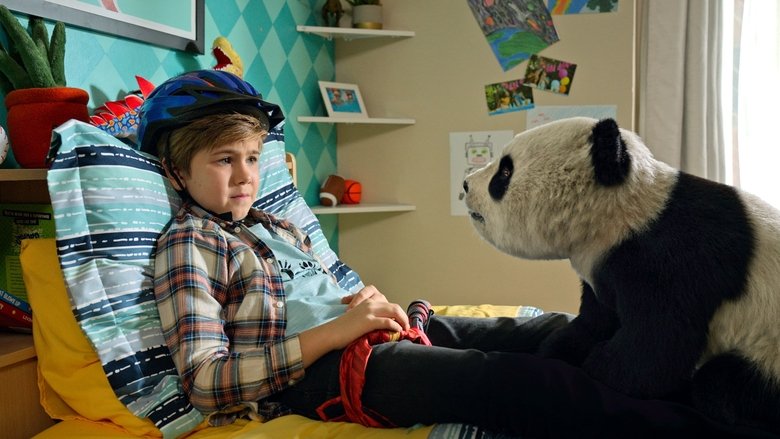
Jane, David, and Greybeard must reunite a lost baby panda with its mother—and find out why they're the only bears with six fingers.
| Runtime (min) | 23 |
|---|---|
| TMDB Rating | 6.0 (1 votes) |
| Air Date | 2024-04-18 |
| Genres | Kids, Family, Animation |
| TV Rating | TV-G |
| Network(s) | Apple TV |
Storyline
In this season premiere, Jane and her friends encounter a lost baby panda in the wild and take on the mission of reuniting it with its mother. The episode follows their journey through the panda's natural habitat as they track down the mother bear, navigating the challenges of keeping the cub safe and calm while searching. Along the way, the team observes the unique characteristics that make giant pandas so distinctive among bear species.
The scientific curiosity at the heart of the episode centers on a fascinating anatomical feature: pandas appear to have six digits on their paws instead of the typical five found in other bears. Jane, David, and Greybeard investigate this mystery, learning about the panda's specialized "pseudo-thumb"—an enlarged wrist bone that functions like an extra finger. This adaptation helps pandas grip and strip bamboo, their primary food source, with remarkable dexterity. The episode weaves together the rescue mission with this biological discovery, showing how form follows function in the natural world.
What kids learn
Children learn about animal adaptation and how species develop specialized features to survive in their environments. The episode demonstrates that the panda's sixth "finger" is not actually a true finger but an evolutionary modification that serves a specific purpose—gripping bamboo efficiently. This introduces young viewers to the concept that animals' bodies are shaped by what they need to do to find food and thrive, making evolution and natural selection more concrete and understandable.
The rescue storyline teaches empathy and responsibility toward wildlife. Jane and her team show patience, careful observation, and respect for wild animals, modeling how humans can help without interfering unnecessarily. Children see that reuniting the baby with its mother is the right course of action, reinforcing the importance of family bonds in the animal kingdom and the value of letting nature take its course when possible.
The episode also encourages scientific thinking and asking questions. When the team notices something unusual about the pandas, they don't just accept it—they investigate and seek to understand why. This models curiosity-driven learning and shows children that observation and inquiry are the foundations of discovering how the world works.
Parents' top 5 questions
| Question | Answer |
|---|---|
| Is the information about pandas having six fingers accurate? | Yes, the episode presents real science. Giant pandas have five true fingers plus an enlarged radial sesamoid bone that functions as a pseudo-thumb, giving them exceptional grip for handling bamboo. This anatomical feature is well-documented in zoology and helps children understand how animals adapt to their diets. The show uses age-appropriate language to explain this complex adaptation in a way that sparks curiosity about biology. |
| Will the separation of the baby panda from its mother upset my child? | The episode frames the separation as temporary and solvable, with Jane and her friends immediately working toward reunion. The tone remains hopeful and action-oriented rather than dwelling on distress. The baby panda is shown being cared for and kept safe throughout, and the focus is on the team's problem-solving efforts. For most children, the successful reunion provides reassurance and models how challenges can be overcome through persistence and care. |
| What age group is this episode best suited for? | The episode works well for preschool through early elementary audiences, roughly ages four through eight. The rescue mission provides engaging narrative stakes that hold younger viewers' attention, while the scientific content about panda anatomy offers learning opportunities for older children in the range. The twenty-three-minute runtime is appropriate for typical attention spans, and the combination of adventure and education serves mixed-age viewing well. |
| Does the episode encourage kids to approach wild animals? | The episode shows Jane and her team as trained experts working carefully with wildlife, not casual observers. The characters demonstrate caution, respect for the animals' space, and specialized knowledge. While very young children may not automatically grasp the distinction, parents can use the episode as a starting point to discuss that wild animals need distance and that helping wildlife is work for professionals and trained rescuers, not something children should attempt on their own. |
| What makes this a good season opener for returning viewers? | The episode reintroduces the core team dynamic and the show's blend of adventure and natural science without requiring knowledge of previous episodes. New viewers can jump in easily, while returning fans get a fresh mission that showcases what they love about the series. The panda focus offers visual appeal and child-friendly subject matter, and the anatomical mystery adds a layer of discovery that sets up the educational tone for the season ahead. |
Writing
Directing
| Season # | Episode # | Episode Name |
|---|---|---|
| 1 | 1 | Jane, David, and Greybeard track a polar bear in the Arctic Circle, inspiring Jane to convince her neighbor Mr. Jin to see trash differently. |
| 1 | 2 | While trying to tag a great white shark, Jane urges David's dad and Tata to rethink how they shop for groceries. |
| 1 | 3 | David shrinks Jane and Greybeard to honeybee size to explore a hive. But when a schoolmate threatens the bees, Jane swoops in. |
| 1 | 4 | The trio take off on a mission to aid the flying fox when Greybeard accidentally parachutes into a neighbor's yard. |
| 1 | 5 | Jane, David, and Greybeard try to sniff out why the gharial has a bulbed snout. A day at the pool points Jane toward an answer. |
| 1 | 6 | The three friends travel deep into the ocean to figure out why the blue whale sings, and Jane confronts a litterbug with a gifted voice. |
| 1 | 7 | A bug-sized Jane and Greybeard follow a monarch butterfly's journey to Mexico, leading Jane to seek assistance from Mr. Patel's green thumb. |
| 1 | 8 | Jane, David, and Greybeard monitor a black rhino and a red-billed oxpecker, whose relationship teaches them the value of teamwork. |
| 1 | 9 | Chasing a herd of caribou stirs up David's appetite. At lunch, David's grandpa tells a story about respect, responsibility, and sharing. |
| 1 | 10 | Jane and David stay up past their bedtime to track a tiger that prefers to come out at night, and they stumble upon something in the garden shed. |
| Season # | Episode # | Episode Name |
|---|---|---|
| 2 | 1 | Jane, David, and Greybeard must reunite a lost baby panda with its mother—and find out why they're the only bears with six fingers. |
| 2 | 2 | Tracking a wolf in the snowy mountains leads the trio to their neighbor's pug, who helps connect the dots between wolves, dogs, and people. |
| 2 | 3 | The three friends use their underground vessel to observe the elusive pink fairy armadillo, but a garden problem stops them in their tracks. |
| 2 | 4 | While exploring the Great Barrier Reef to determine if coral is a plant or an animal, the trio learn that looks can be deceiving. |
| 2 | 5 | With David sick in bed, Jane must partner with an unexpected ally to save Greybeard from a pride of lions. |
| Season # | Episode # | Episode Name |
|---|---|---|
| 3 | 1 | Jane, David, and Greybeard set off to find out why hippos give birth away from their pods, while trying to reunite a baby hippo with her mom. |
| 3 | 2 | The trio head underground to dig into wombat defense tactics. Jane wants the community BBQ menu to explore new options. |
| 3 | 3 | David joins Jane on a high-flying mission to chart an albatross' journey instead of helping his sister Millie. |
| 3 | 4 | Jane convinces her reluctant abuela to help get a baby elephant back to his family, where she uncovers why herds follow a matriarch. |
| 3 | 5 | Jane and Greybeard lose hope when they see how humans impact chimpanzees in the wild, but David and a special friend restore her faith. |
This product uses the TMDB API but is not endorsed or certified by TMDB.